A local pro for your water heater installation
Gas or electric water heater for an Arkansas home
Most homes in Arkansas already run on electricity, and power here is cheap, so the choice isn't as simple as it looks on paper. It depends on your gas line, your tank, and what you're paying now. Answer those questions below, then send over the details and a contractor who installs water heaters in your area will reach out to go over your options.
Find my proFor most homes in Arkansas, electric is the simpler choice, mainly because electric water heaters cost less to install and most houses here already have the wiring for one. Gas can still win if your home already has a gas line run to the water heater, since gas heats water faster and tends to cost less to run month to month. But if there's no gas line nearby, bringing one in adds real cost to the job, often enough to erase what gas would save you over time. So the real question isn't which fuel heats water better. It's what's already running into that closet or utility room, and whether your current setup matches what you're paying for power and gas now.


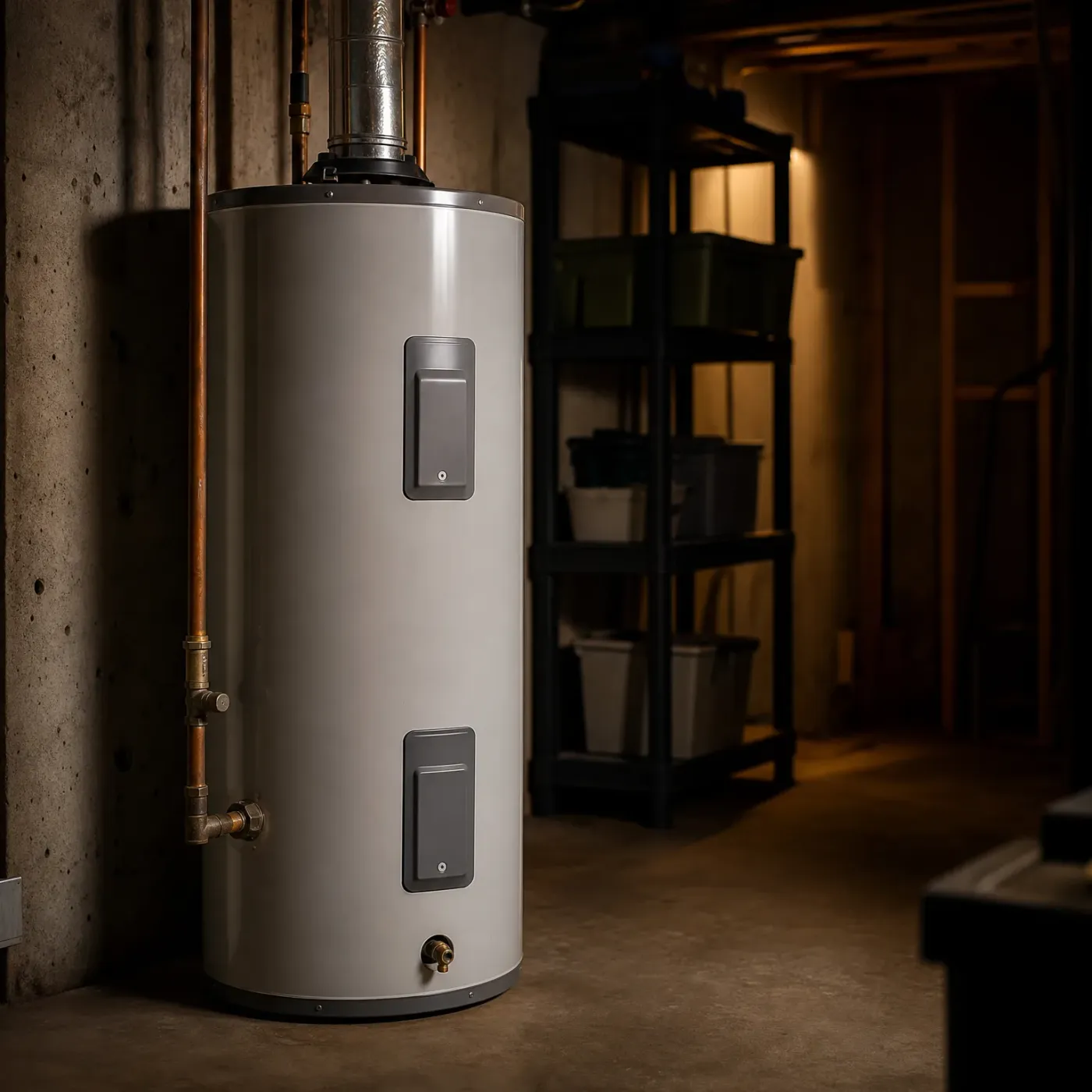
An electric water heater works through two elements inside the tank, one near the top and one near the bottom, switching on and off to hold the temperature you set. A gas unit works differently. A burner sits underneath the tank and fires directly against the metal, so the water heats faster than it does with elements working from inside. That speed is the main thing gas has going for it in a straight comparison.
The harder part with gas is getting it there. The burner needs fuel, which means a gas line run to the water heater itself, not just to the meter or the furnace. If that line was never run, someone has to open a wall or crawl space to put it in. Electric skips all of that. It needs a 240-volt circuit and a water line, nothing more, which is why most electric installs go in without much disruption to the house.
One more difference worth knowing: a gas water heater keeps working in a power outage, since the burner and thermostat run on gas, not electricity.
How each one actually heats
- A gas water heater needs a dedicated vent pipe to the outside, separate from the gas line itself.
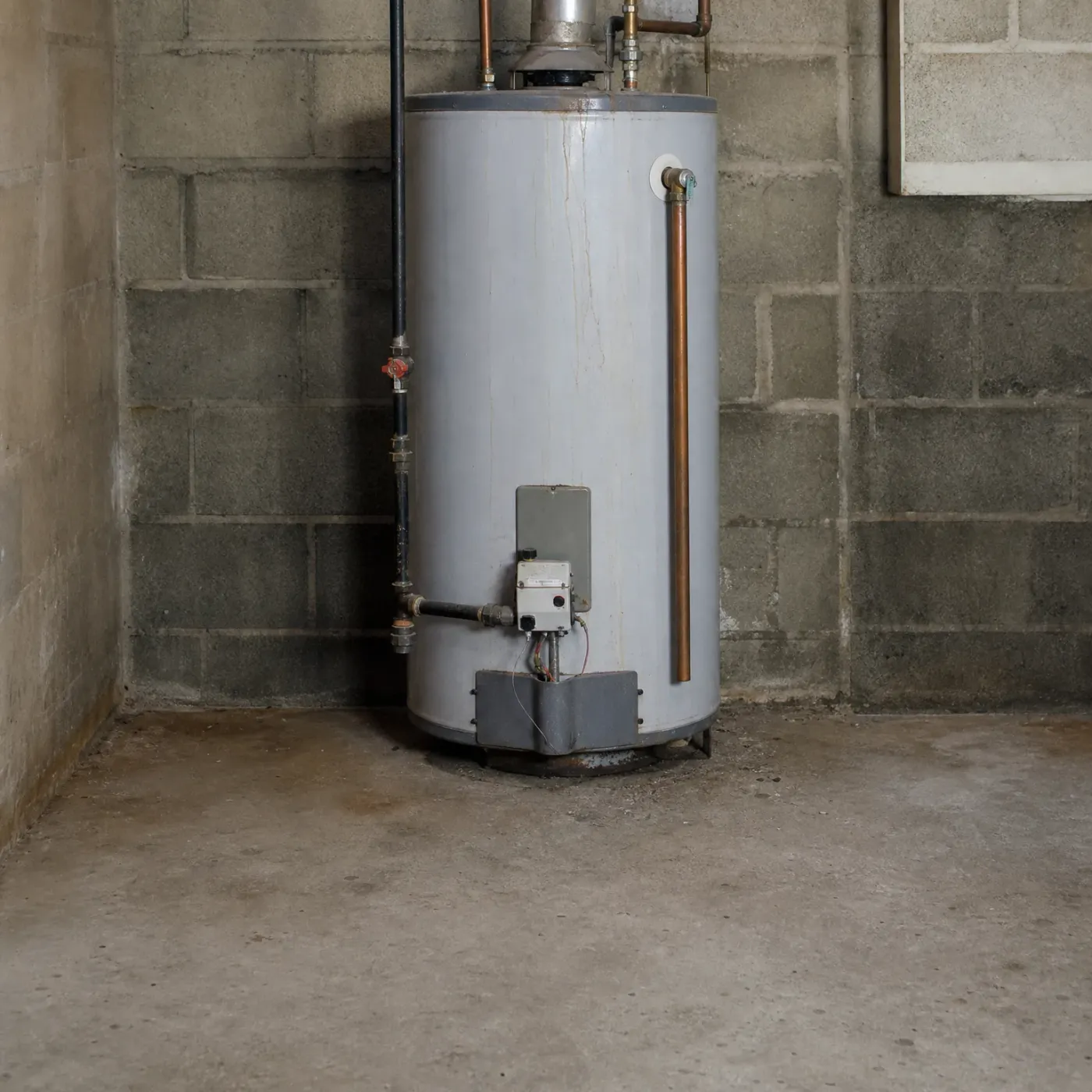
- Electric water heaters draw from two heating elements, an upper and a lower, that cycle on and off to keep the tank at temperature.
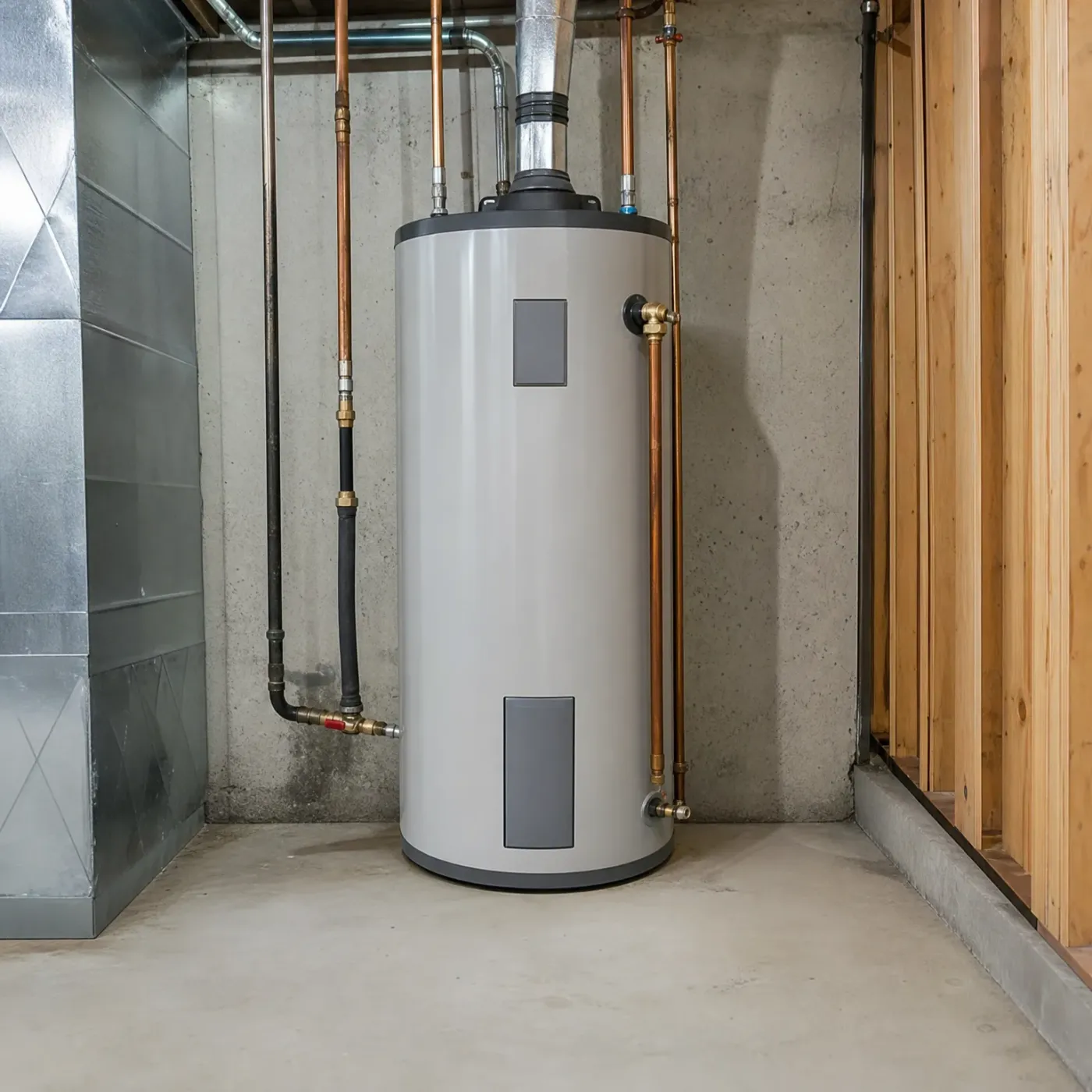
- Gas units heat faster because the burner fires directly under the tank instead of through elements submerged in the water.
- If the gas line stops at the meter or the furnace, running it to the water heater means opening a wall or crawl space.
- An electric water heater only needs a 240-volt circuit and a water line, which is why most installs take less work.
- A gas unit without power still makes hot water, since the burner and thermostat run on gas alone, not electricity.




What the gas line decides
If your home has no gas line running to where the water heater sits, that's the deciding fact. Running one means cutting into a wall or a slab and tying into the meter, work well beyond swapping one tank for another. A house already piped for a gas water heater, gas furnace, or gas range usually has that line close by, which changes the math. No gas line anywhere near the tank, and electric is the straightforward answer, not because of the elements or the recovery rate, but because there's no pipe to connect to in the first place.
What the two elements mean for you
An electric water heater keeps two elements in the tank, an upper and a lower, and they take turns switching on to hold the temperature steady. Only one runs at a time under normal use, which is part of why electric units are simpler to install and simpler to fix later. A gas water heater has a single burner at the bottom and a flue running up through the tank to vent the exhaust outside. That flue is the extra step gas installation always carries, on top of the gas line itself, and it's why gas costs more upfront even in a home already wired and piped for both.
Get the right pro for your water heater
Send it once and finding someone is no longer on you.
A local installer who puts in water heaters gets your project.
No charge to send it. You decide if you hire them.

What this looks like in your house
Walk down to where your water heater sits and look for a gas line. If there's none, and no vent pipe running outside, you're looking at an electric install, and that's the easier path. If you already have gas run to that spot, you've got a real decision, not just a default.
Either way, the choice touches your wiring or your venting, and that's not a judgment call you want to make alone standing in the garage. Send in what you've got, your gas line situation, your current tank, what you're paying now, and a contractor who handles these installs in your area will follow up. From there it's their read on your setup, not more guessing on your end.


A contractor checks whether a gas line already reaches the water heater.
For electric, the old unit is disconnected from its circuit and drained.
For gas, the new tank is vented outside before the gas line is connected.
The new water heater is set, hooked up, and tested for leaks.
53.7% of homes statewide heat with electricity
More than half the homes in Arkansas already run on electricity, and that includes most of the wiring a water heater needs. If your house falls into that group, an electric install uses what's already there instead of adding a gas line to reach the tank.
ACS 2020-2024 5-year B25040
Gas Line or No Gas Line
- Most Arkansas homes already have the wiring for electric, which is why it ends up the simpler install for most people.
- A gas water heater only makes sense if a gas line already reaches the tank, since running a new one means cutting into a wall or slab.
- Gas units heat water faster, but that speed only matters if the gas line is already in place.
- Electric water heaters rely on an upper and lower element cycling to hold the tank temperature, with no venting required.
- A gas tank needs its own vent pipe to the outside, separate from the gas line itself.
- Check your water heater for a gas line and a vent pipe before deciding, since that single detail settles the question for most houses.
The question comes down to one thing: what's already run to where your water heater sits. Most homes in Arkansas were wired for electric from the start, and power here is cheap enough that there's little reason to add a gas line where none exists. That's why electric ends up the simpler, more common install across the state. Gas still makes sense in the houses that already have a line reaching the tank. In that case the install is straightforward, since the hard part, the trenching or the wall work, was done years ago. What's left is connecting the new tank and running a vent pipe outside, separate from the gas line, to carry off exhaust. Skip that vent and the unit isn't safe to run. Electric skips all of that. There's no vent, no combustion to account for, just an upper and lower element cycling inside the tank to hold the water at temperature. That's also why electric units tend to cost less upfront to install even where gas is available. Gas heats water faster once it's running, but that advantage only shows up if the line is already there. For a house starting from zero, the cost of bringing gas to the tank outweighs what the faster recovery saves. Look at your own setup first. A gas line and a vent pipe already in place point one way. Their absence points the other, and for most Arkansas homes, it does.


Water Heater Installation
A pro who works on water heaters
Send the form and stop researching installers for the new water heater.
