How long a water heater lasts in Arkansas

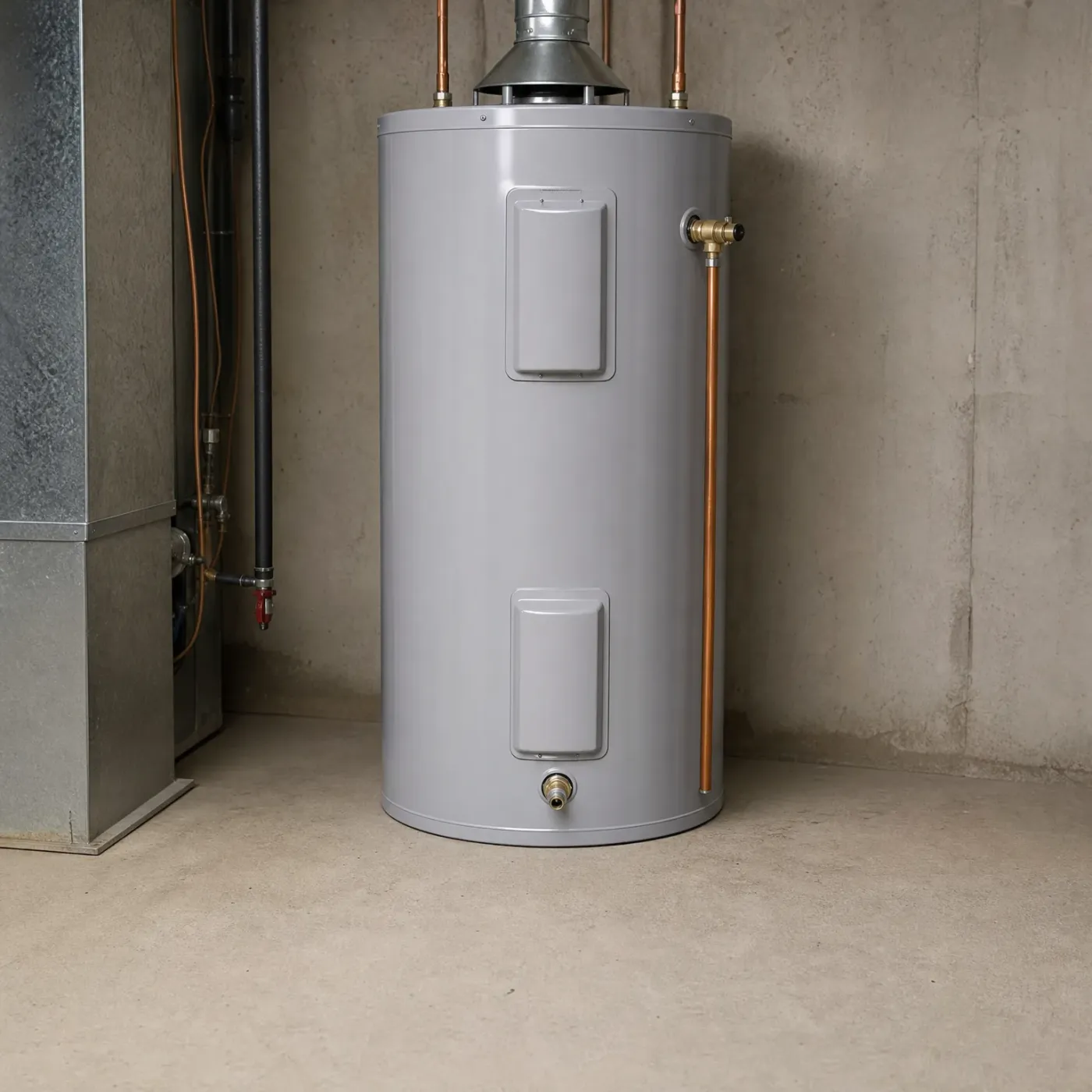
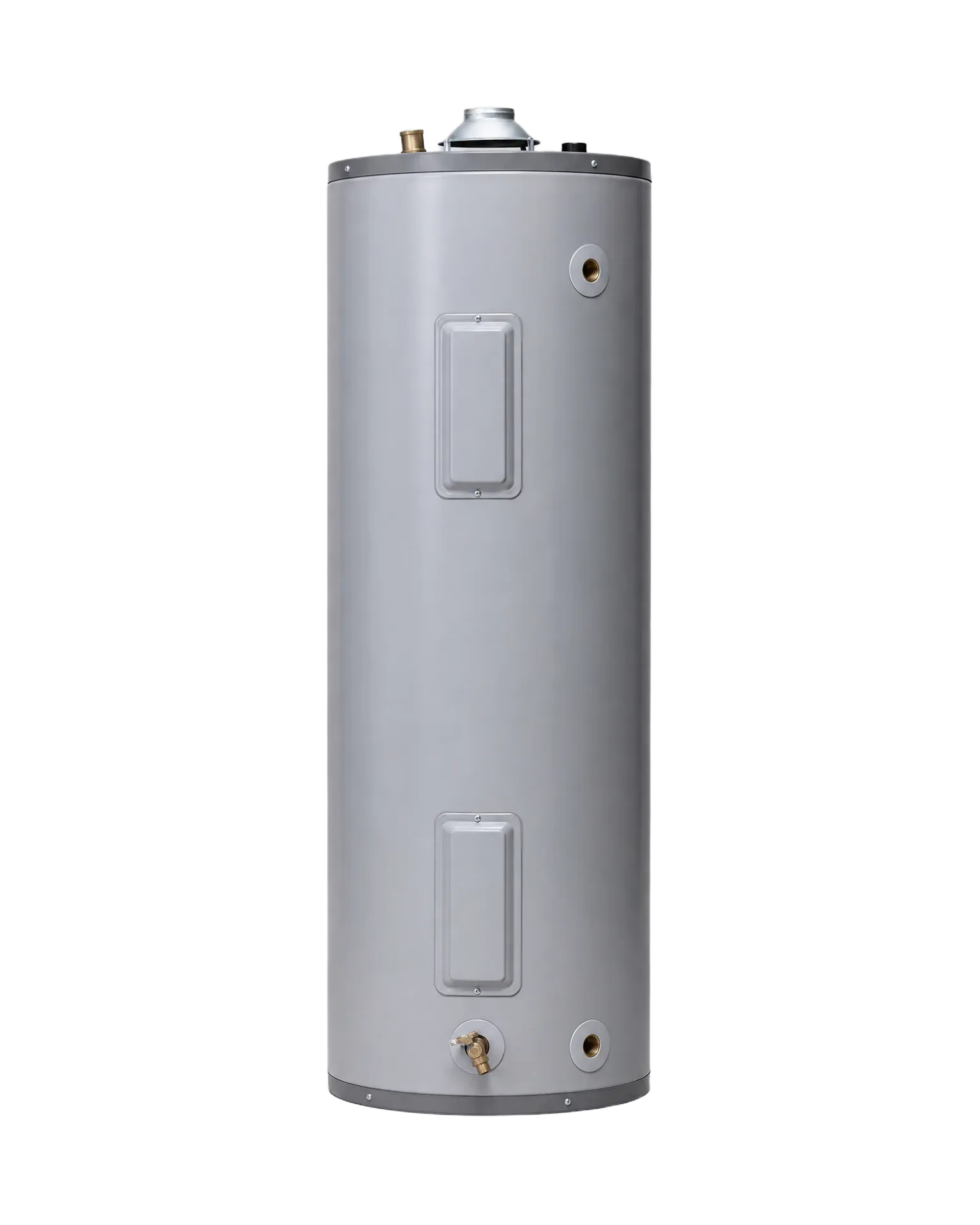
A tall cylindrical gray water heater with two access panels, brass fittings and a drain valve, standing against a plain light gray background.
Get my match

A water heater in Arkansas lasts 8 to 12 years, with tank units on the shorter end of that range and well-maintained systems reaching toward the longer end. Most homes here run on electric water heaters, and the heating element inside takes the brunt of the wear, especially in homes with harder water that leaves mineral buildup on the tank bottom and element itself. That buildup makes the unit work harder to heat the same amount of water, which shortens its life even with power rates on the low side. Once a tank passes the 10 year mark, a leak or failed element is more likely to mean replacement than another repair. If yours came with the house and you don't know its age, the data plate inside the access panel or near the top of the tank will tell you the manufacture date.

An older man with gray hair and a beard, wearing a dark coat dusted with snow, stands smiling in a doorway of a warmly lit home with a sofa, lamp and window visible behind him.
An older man with grey hair and a beard, wearing a dark coat dusted with snow, stands in a dimly lit entryway with a ceiling lamp, a side table with two shaded lamps, and a lit fireplace visible in a room beyond.
A bearded older man in a dark snow-dusted coat and scarf stands just inside a home's front door, with a lamp-lit room and snowy window visible behind him.
An older man with gray hair and a beard stands in a doorway of a home, wearing a dark coat dusted with snow, with a lit fireplace and lamp visible in the blurred room behind him.

What actually wears out inside

  • Sediment settles at the bottom of the tank and the lower heating element has to push through it to heat the water.
  • Once that element is coated, it cycles on and off more often, and that wear adds up over years.
  • The anode rod inside the tank corrodes on purpose, drawing the rust away from the steel tank walls.
  • Once the anode rod is used up, the tank itself starts to corrode, and that is the failure that ends most tanks.
  • A thermostat that runs hotter than it needs to shortens the life of both the element and the rod.
  • Electric water heaters have no flue or burner to fail, so the tank and its parts are usually what decide how long it lasts.

Electric water heaters fail from the inside out, and the process is slow enough that most homeowners never see it happening. Water carries minerals, and over years those minerals settle as sediment at the bottom of the tank. The lower heating element sits right in that layer. It has to heat through the sediment to heat the water above it, so it works harder and cycles more often than it should. That extra cycling is wear, and wear adds up.

Inside the tank is a second part doing quieter work: the anode rod. It's a length of metal wired to corrode before the tank does, pulling rust toward itself and away from the steel walls. That's its whole job, and it's built to be used up. Once it's gone, there's nothing left standing between the water and the tank, and the tank starts corroding instead. That's the failure that ends most water heaters. It isn't a sudden break. It's a wall that's been thinning for years until it finally gives out, usually as a leak at the bottom of the tank.

A thermostat set higher than it needs to be speeds up both of these at once, running the element harder and the rod down faster. None of this involves a flue or a burner, since electric units don't have either. What decides how long the tank lasts comes down to the tank and the parts inside it.

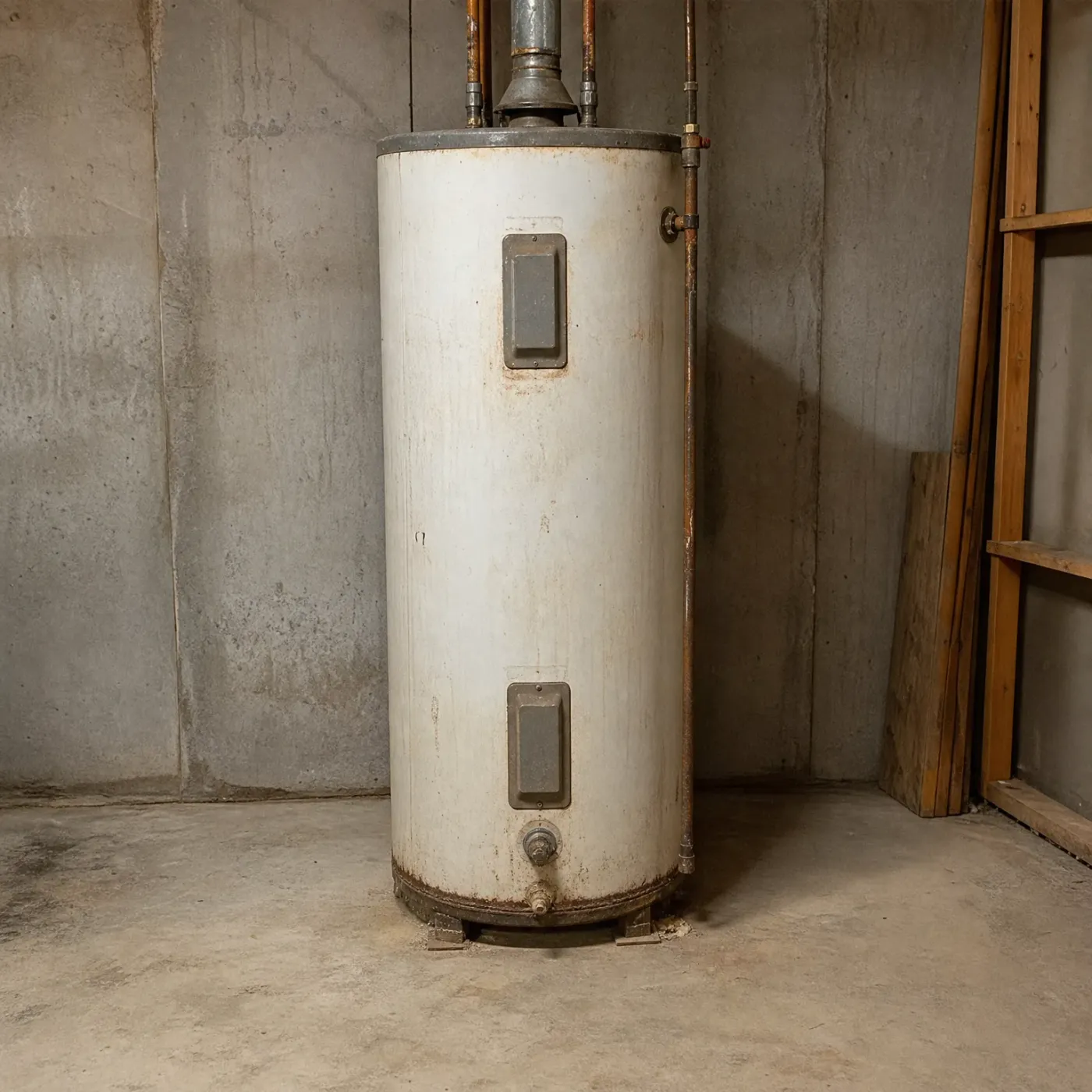
A rusted white cylindrical water heater with two access panels stands in a concrete-walled basement corner, with pipes rising from its top and wooden boards leaning against the wall at right.
Before you get your water heater installation
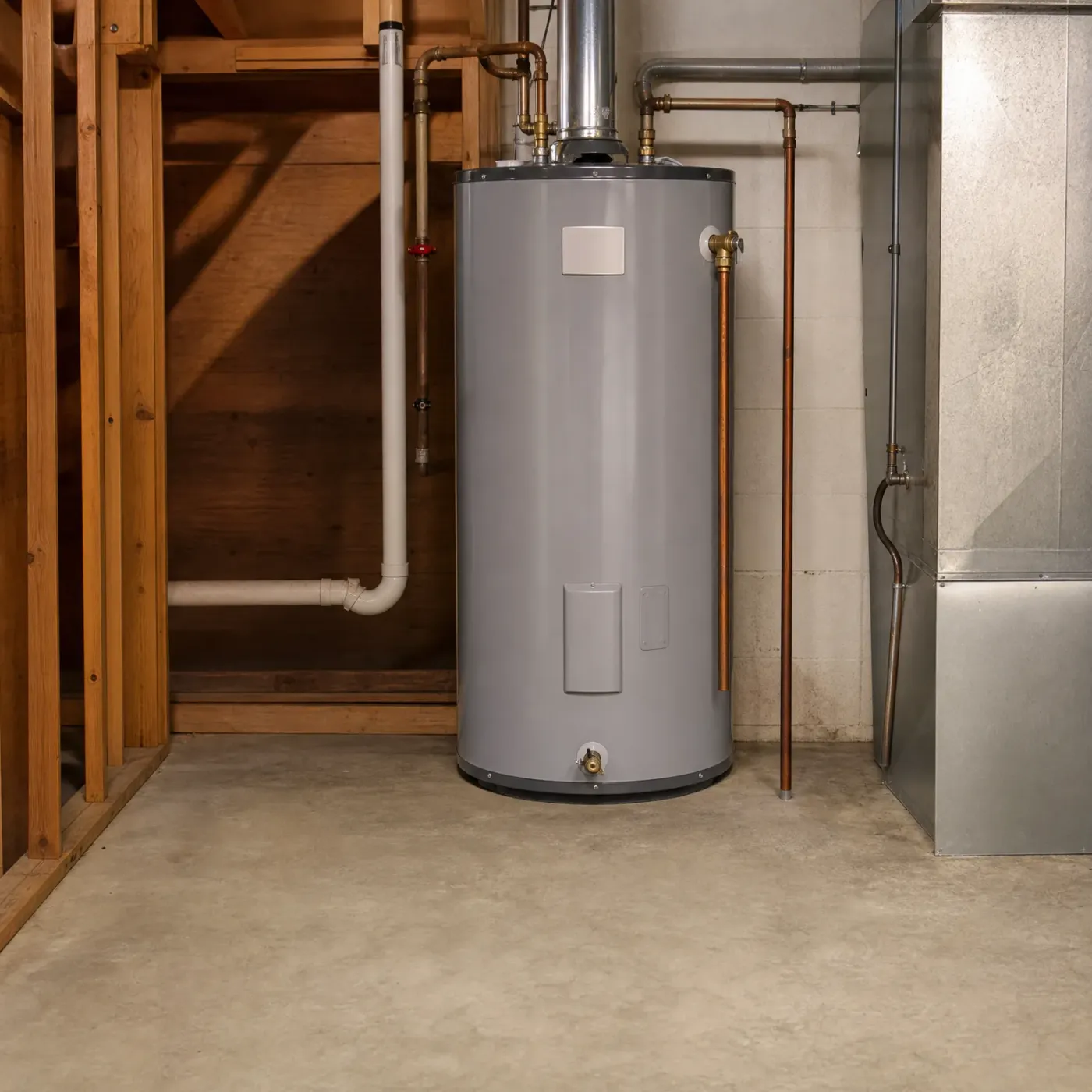
A gray cylindrical water heater stands on a concrete basement floor between an unfinished wood stud wall and a metal furnace duct, with copper and PVC pipes running along the concrete block wall.
After you get your water heater installation

A water heater pro near you

Skip collecting and comparing quotes for the new water heater.

Sending the form costs nothing.

Why electric tanks wear this way

An electric water heater has two heating elements, one near the top and one near the bottom. The bottom element sits closest to where sediment collects, so it works harder and fails sooner on well water or untreated city water. Once that element burns out, some homeowners replace just the element, but the tank itself keeps aging underneath. By year 8 or 9, the steel lining has usually taken enough corrosion that a second element failure often means the tank is close behind it. That's why the lower end of the 8 to 12 year range tends to catch electric units first.

What a dead anode rod signals

The anode rod is a rod of magnesium or aluminum that corrodes on purpose, so the steel tank doesn't have to. Once it's used up, usually within the first several years, the tank starts corroding instead. There's no gauge for this. The only way to know is to pull the rod and look at it, and most people never do. A water heater that makes it to 10 or 12 years usually had a rod that was checked or replaced at least once along the way. One that fails at year 7 or 8 usually didn't.

53.7% of homes statewide heat with electricity

More than half of homes in Arkansas run on electric water heaters, same as yours probably does. That element working against sediment year after year is the thing that decides whether you get 8 years out of the tank or 12.

ACS 2020-2024 5-year B25040

A gray cylindrical water heater with copper piping and a flue stands on a concrete floor in a basement corner beside ductwork and metal equipment.

Still doing its job

This is what a tank looks like when it's keeping up. The panels, the relief valve, the discharge pipe all sit clean and dry. No rust on the floor, no staining on the tank. At this point it's just a matter of keeping an eye on it as the years pass.

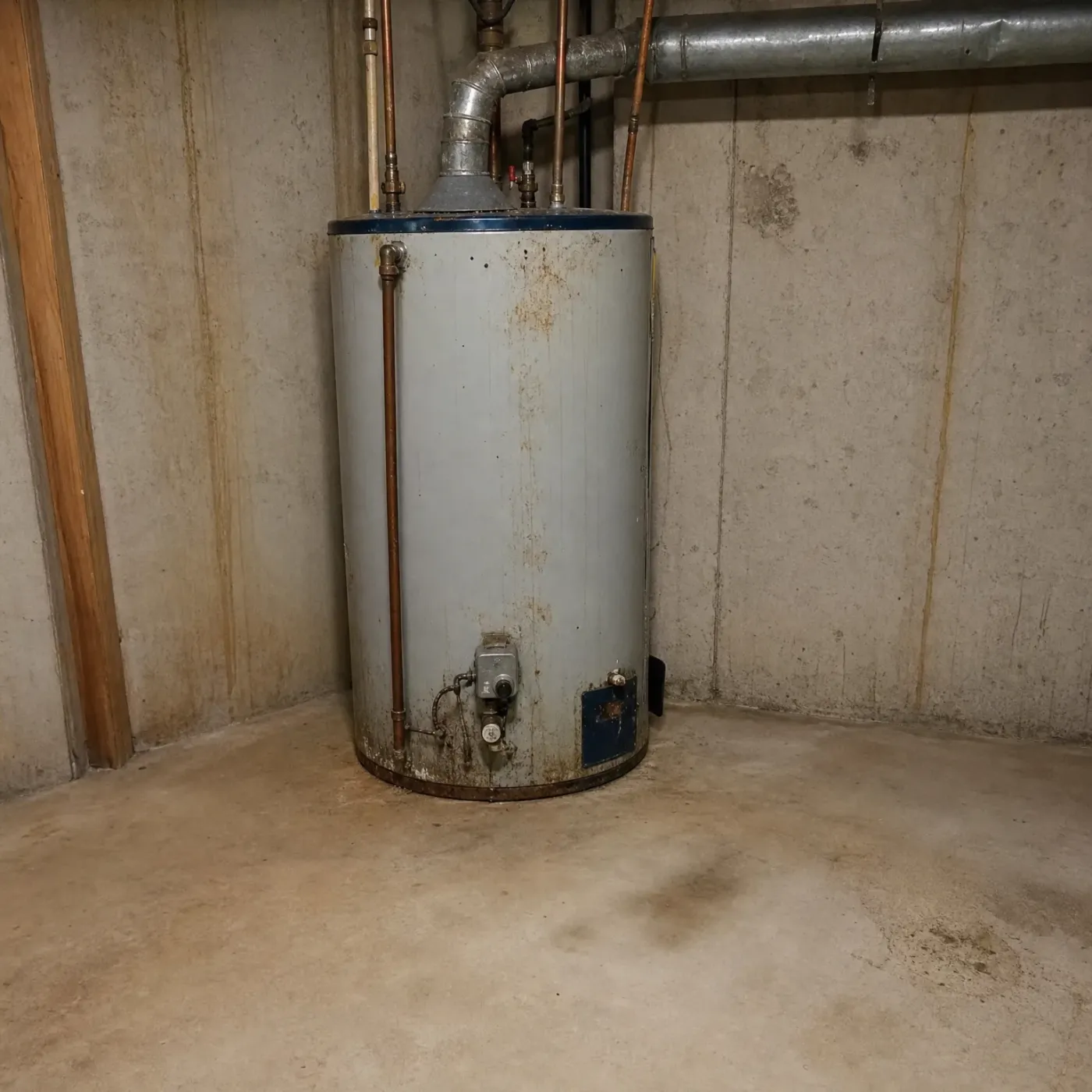
An aging gas water heater with rust streaks stands in the corner of a concrete-walled basement, with copper pipes and a metal flue duct running overhead.

Past the point of trusting it

Rust like this on the tank body means the steel is failing from the inside out. Staining on the floor around the base means it has already let go somewhere. A gas water heater in this shape in an Arkansas basement isn't a maybe anymore.

A woman stands in the open black front door of a white-sided house with a dark shingled roof while a man in a navy jacket approaches along the walkway, with lantern wall lights, a potted shrub, and flowering garden beds nearby.

Somewhere in that 8 to 12 years, yours will need replacing

Most electric water heaters in Arkansas get 8 to 12 years before the tank or the elements give out for good. Yours might go longer if the lower element hasn't had to fight sediment the whole time. It might go shorter if it has. Either way, you don't have to watch for the signs alone or figure out on your own who's free to come look at it.

When the time comes, you can skip calling around, explaining the same problem to every company in the phone book, and sorting through quotes that all sound different for reasons you can't tell apart. A contractor who installs water heaters in your area gets matched to what your home needs and reaches out to you directly. You pick up the phone once.

Interior corner of a dining room with a round wooden table, a ceramic vase holding olive branches, a dark spindle-back chair near a curtained window, and a sideboard with a lamp against beige walls.
A modern two-story house with dark siding and stone base at dusk, with lit soffit lights, a path of large rectangular pavers set in dark gravel, planting beds, a lawn, and an orange and blue sunset sky above distant trees and water.

Water Heater Installation

A local pro for your water heater installation

Step 1 of 3: Equipment
  • A pale ceramic vase holding dried hydrangea blooms sits on a wooden windowsill in sunlight, with green foliage blurred beyond the window glass.
    • Say what's going on with your water heater, and a pro who works on them reaches out.
    • A local pro who knows water heaters gets your details and gets in touch.
  • Sunlit window seat with a cushioned bench and three textured throw pillows beside a dark wooden round side table holding a small stone bowl and a potted green plant.
    • One request ends the search for a water heater installer.
    • Once you send the form, finding a pro is off your list.
  • A potted olive-like tree in a wide beige ceramic planter sits on a pale stone ledge beside a black-framed window with blurred greenery outside.
    • Describe the project once instead of to every installer.
    • Answer a few questions instead of calling shop after shop.
  • A wooden bench by a black-framed window holds a beige striped pillow, a fringed knit throw, and a pale ceramic vase with olive branches, with green foliage and a white house visible outside.
    • One installer gets your project, so there's no bidding war over it.
    • Your request goes to one pro, not a list of companies.