




Get Hot Water Arkansas

How long a water heater lasts in Fort Smith, AR

Send the form and the search for an installer is over.

Hand it off

How long does a water heater last in Fort Smith, AR?

You're probably asking because yours is making noise, leaking, or just old enough that you're wondering if it's on borrowed time. Maybe you're buying a house and want to know what you're inheriting. Either way, you want a straight number, not a brochure answer, so you can decide whether to watch it or replace it.

8 to 12 years, most commonly

Most tank water heaters last 8 to 12 years before they start failing or leaking. The tank itself is what gives out, usually from sediment buildup and corrosion that wears through the metal from the inside over time. Fort Smith water runs hard enough that sediment collects faster than it would in some other areas, which tends to push wear toward the earlier end of that range rather than the later one. If yours is electric, which most homes here run on, the heating elements can also wear out sooner if sediment builds up around them. Once a tank is past 8 years, a leak or failure becomes a real possibility rather than a distant one, so it's worth knowing the age of yours and keeping an eye on it.

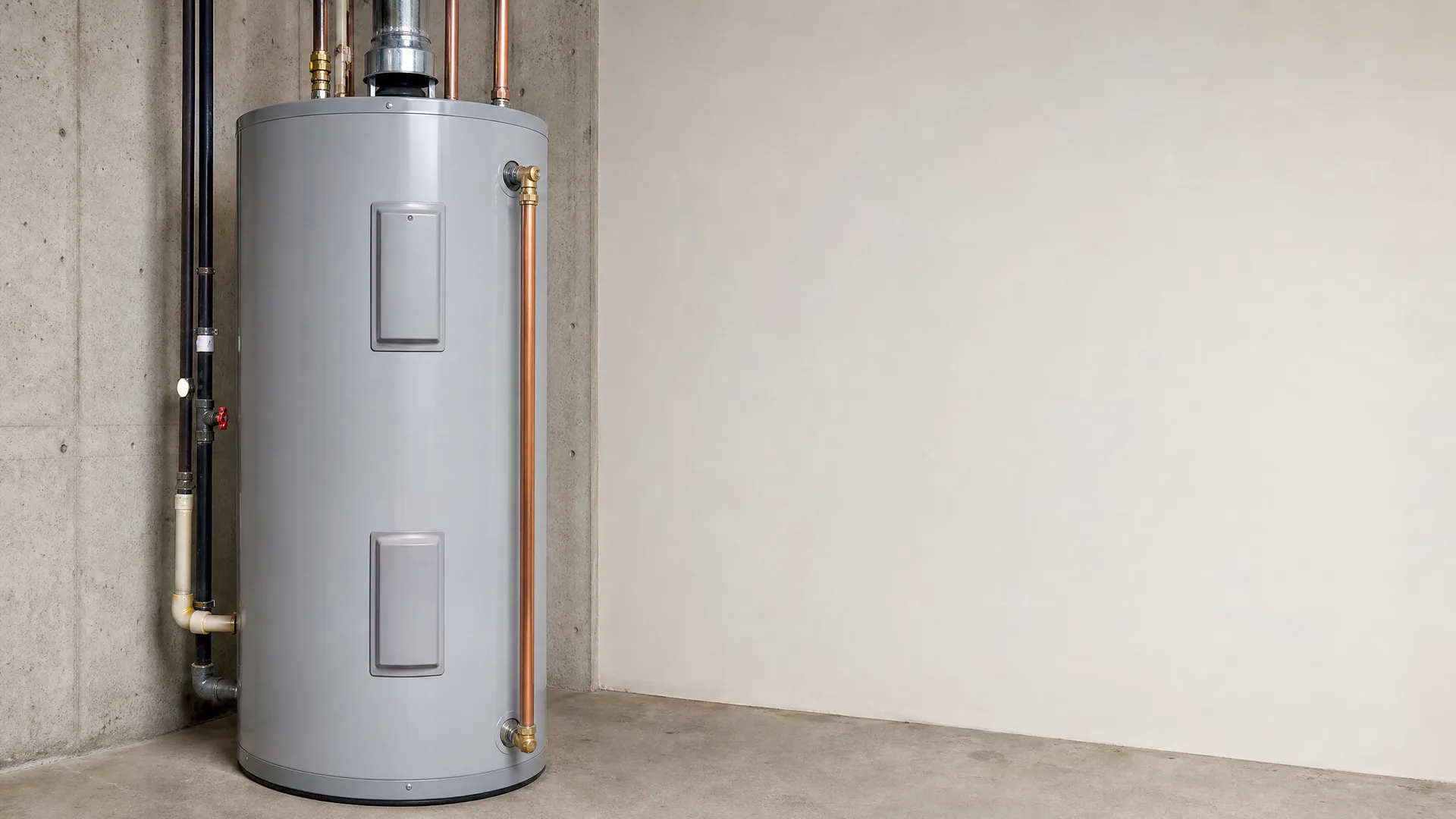
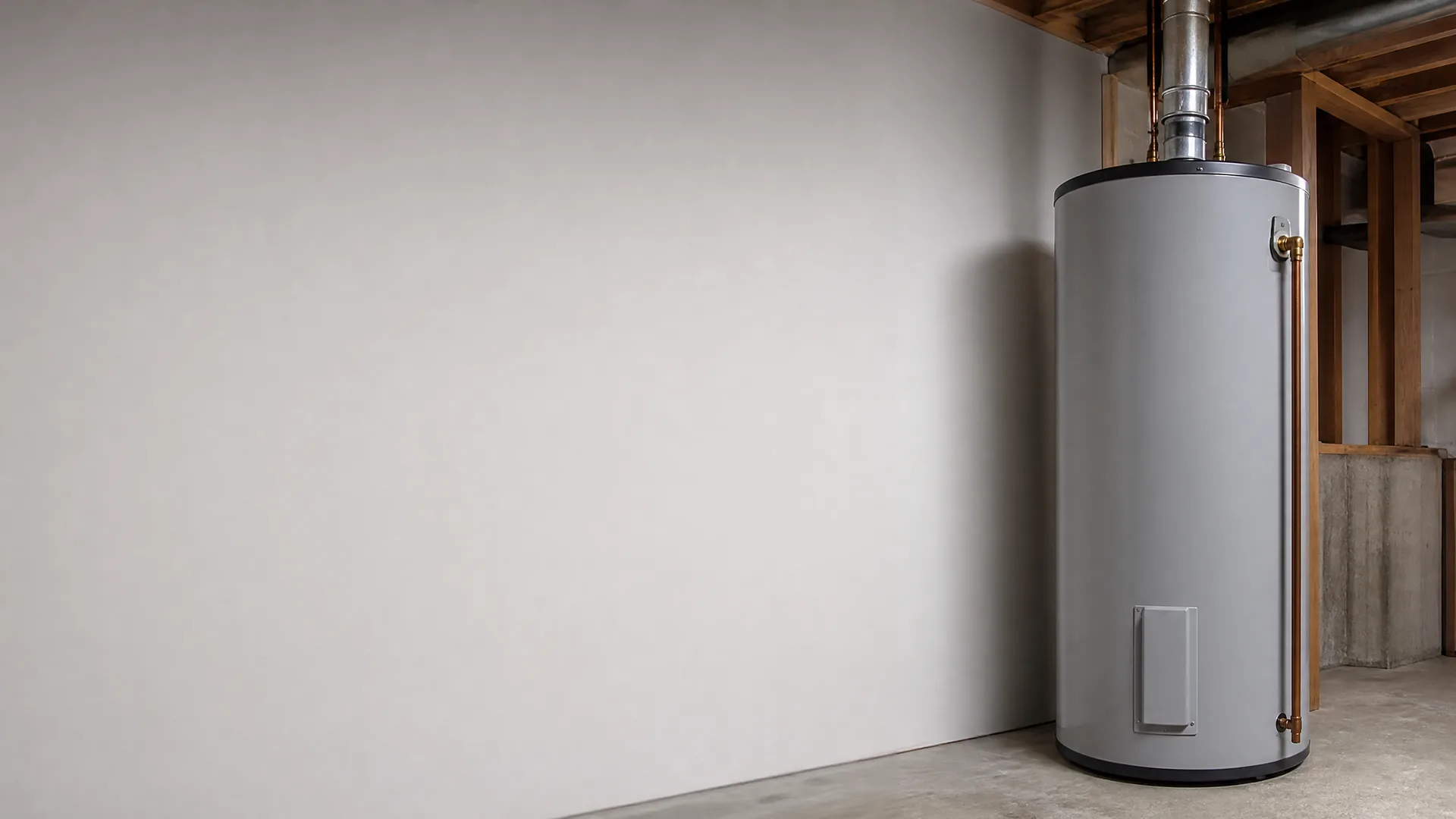
A gray cylindrical water heater with two access panels stands in a corner against a concrete wall, with copper and black pipes running up beside it on a bare concrete floor.

Why electric tanks run longer here

Most homes around Fort Smith heat water with electricity, and an electric tank has no burner, no flue, and no gas valve to wear out. The heat comes from two elements inside the tank, much like the ones in a stove. That simpler setup is part of why electric water heaters often outlast gas ones. The tank itself is still the part that fails first, usually from the inside, long before the elements do.

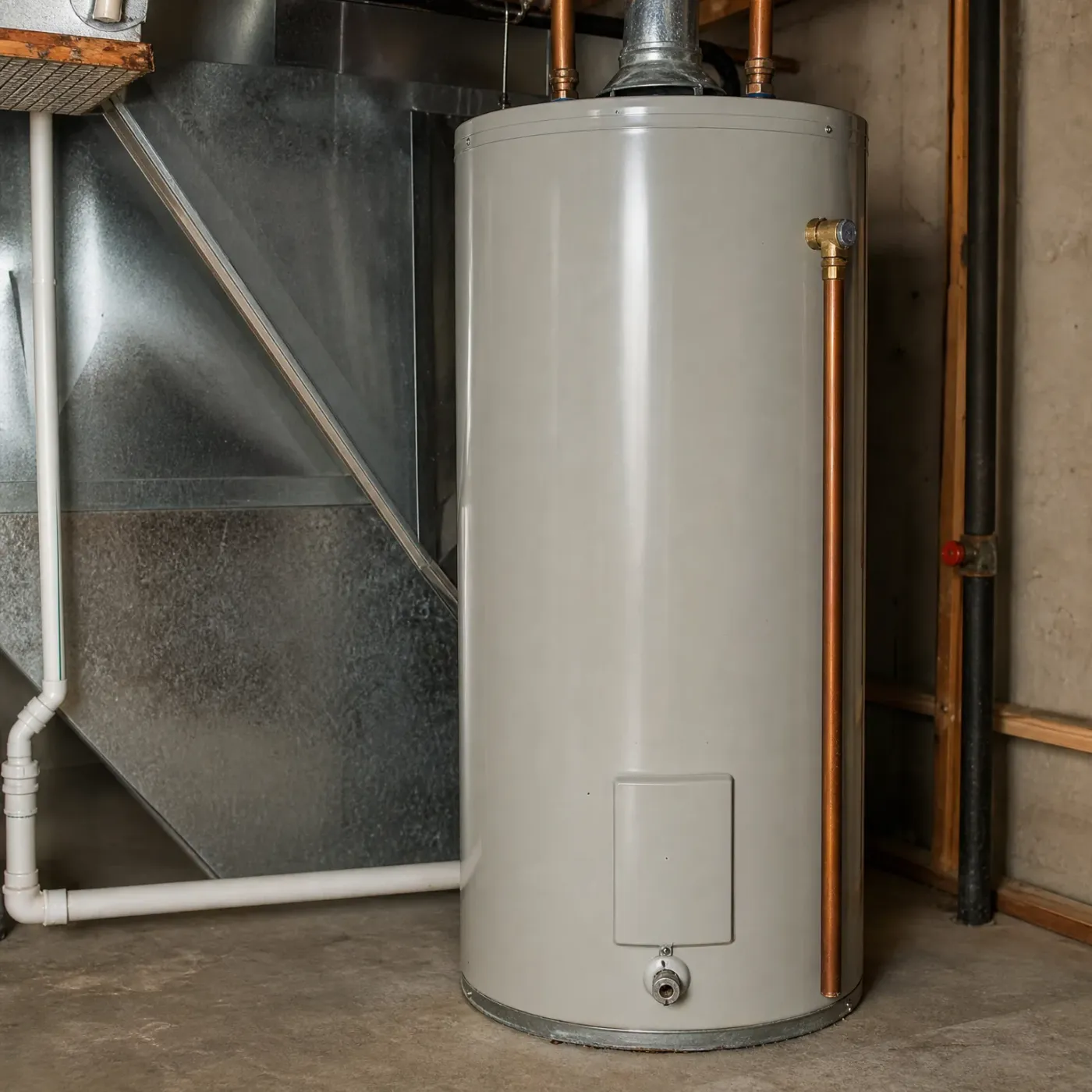
A gray cylindrical water heater with a metal flue pipe and copper piping stands in the corner of a bare room with light walls, a concrete floor, and exposed wood framing.

What hard water does over time

Sediment settles at the bottom of the tank as minerals drop out of the water, and over the years that layer insulates the heating element from the water it's supposed to heat. The element works harder to do the same job, and the tank bottom sits under more stress than it did when it was new. Draining a few gallons from the tank now and then clears some of this out, but most owners never do it, and the sediment just keeps building until something gives.

What does your household mean for your water heater?

  • 2.43 people per household on average

    The average home here has 2.43 people in it, and that's enough to put real demand on a tank every day. A household that size runs the water heater hard, morning and night, year round.

  • Half the homes here were built by 1981

    Half the homes in Sebastian County were built in 1981 or earlier. If yours is one of them, the water heater has almost certainly been swapped out since, maybe more than once.

  • 52.4% of homes heat with electricity

    Electricity heats 52.4% of homes here, more than any other fuel. An electric tank has no burner or flue to fail, which is part of why it tends to outlast a gas one.

ACS 2020-2024

What's actually happening inside the tank

  • Sediment settles at the bottom of the tank and the lower element has to burn through it to heat the water above it.
  • A water heater anode rod attracts corrosion instead of the tank, and once it's used up the steel starts rusting from the inside.
  • The thermostat tells each element when to fire, and a stuck thermostat makes the backup element run longer than it should.
  • A temperature and pressure relief valve lets the tank vent if pressure builds past a safe point, and a valve that won't reseat is a sign of a bigger problem.
  • The dip tube sends incoming cold water to the bottom of the tank, and a cracked one lets cold water mix in near the top where the hot water draws from.
  • Hard water leaves mineral scale on the elements themselves, and scale makes an element work harder to reach the same temperature.

A water heater fails from the inside, and the order it happens in is pretty consistent. Sediment is usually first. It settles at the bottom of the tank, and if you've got an electric tank, the lower element sits down in it, trying to heat water through a layer of grit that keeps building. That element works harder than it should for years before anyone notices. Meanwhile the anode rod is doing its job quietly, drawing corrosion to itself so the steel tank doesn't rust. It's a sacrificial piece, and once it's spent, the tank itself is next. Nobody sees this happen because it's bolted inside the top of the tank. The thermostat is supposed to manage all this, switching elements on and off as needed, but a thermostat that sticks will run the backup element far more than it's built for. Up top, the temperature and pressure relief valve is the safety net, venting the tank if pressure climbs too high. A valve that won't reseat after it opens is telling you the tank has a problem bigger than the valve itself. The dip tube matters more than people think. It's a plastic tube that pushes incoming cold water to the bottom, and when it cracks, cold water leaks out near the top of the tank and mixes with the hot water you're trying to draw. And with the water here, scale forms directly on the elements, which means they're pushing through a coating of minerals just to reach the temperature you set.

Power here costs 12.56 cents per kilowatt-hour

At 12.56 cents per kilowatt-hour, running an electric water heater here doesn't put much strain on your bill. That low rate means an aging unit can keep working past the point it should be replaced, since the cost of letting it limp along stays hidden until a leak forces the issue.

EIA-861 2025

Tank storage versus tankless flow

A standard tank holds 40 or 50 gallons and keeps that water hot around the clock, waiting for you to use it. It fails when the tank itself gives out, usually from corrosion working through the steel from the inside. A tankless unit heats water only as it passes through, so there's no tank to rust out. Gas or electric, tankless units tend to outlast tank models by a decade or more, since the part that fails first on a tank, the tank, isn't there to fail. What usually ends a tankless unit's life is the heat exchanger, and that holds up a long time if the water running through it isn't left to cake it with scale.

What that trade-off costs you

A tank is simple. If an element burns out or a thermostat fails, a contractor swaps the part and the tank keeps running for years. A tankless unit is a more complicated machine, with more that can go wrong beyond the heat exchanger itself, and when something does fail it usually takes a specialist to sort out rather than a quick part swap. Installing one also isn't a straight swap for a tank, since the gas line, venting, or electrical feed often has to change to match what the unit needs. The longer life is real, but it comes with a different kind of upkeep and a different kind of repair when something does go wrong.

A gray-haired man in a dark long-sleeve shirt sits on a gray sofa in a living room, looking toward a sunlit window with sheer curtains.
A gray-haired man in a dark green sweatshirt sits on a sofa in a living room, looking toward a bright window, with a houseplant, lamp, fireplace and framed art behind him.
A gray-haired bearded man in a dark green collared sweater sits on a sofa in a living room with a window, houseplant, floor lamp and bookshelves, looking off to the side.
A gray-haired man in a dark green sweater sits on a sofa in a sunlit living room, looking off to the side, with a framed landscape painting, dining table and shelving behind him.
A beige cylindrical water heater with copper pipes and a brass valve stands on a concrete floor in a basement beside galvanized ductwork, white PVC piping, and a black vertical pipe along a concrete wall.

One request and it's handed off

A licensed installer who works in Sebastian County gets your project.

Send it once and finding someone is no longer on you.

Reach a local pro

No fee to send it, and nothing to sign.

Repair the tank or replace it

Keep repairing

  • A failed heating element runs a fraction of what a new tank costs, so one repair rarely tips the scale toward replacing.
  • If the tank itself is still sound and only the thermostat or element has failed, swapping that part buys you more good years.
  • You already know how the unit behaves, so a repair means you're not learning the quirks of a new system right away.
  • A unit under eight or nine years old with a single failed part is usually worth fixing rather than retiring early.
  • Repair keeps you on the same fuel type and tank size you already have, so nothing else in the house has to change.

Replace now

  • Once the tank itself is rusting from the inside, no part replacement stops it, since the steel is what's failing, not an element.
  • A unit past the ten to twelve year mark that needs a repair is usually close enough to the end that the repair just delays the same decision.
  • Replacing now gets you a new anode rod and a tank with no sediment buildup yet, instead of patching a tank already working against both.
  • If the unit has needed more than one repair in the past year or two, that pattern usually means more failures are coming.
  • A new installation can be sized and set up for your household's actual demand, rather than matched to what was there before.
  • Replacing lets you choose between another tank or a tankless system, a decision a repair doesn't give you.
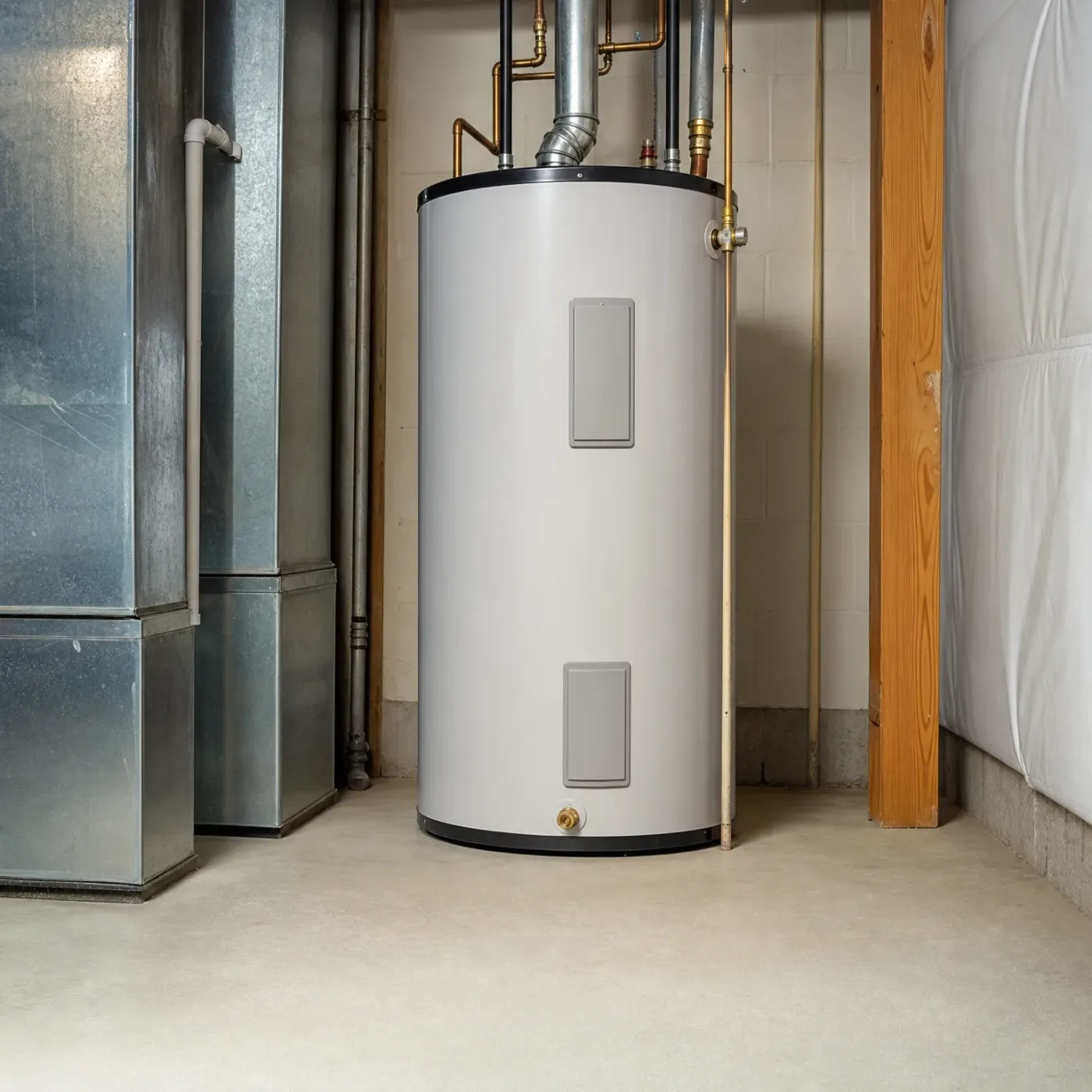
A white cylindrical water heater with two access panels stands on a concrete floor in a basement corner, beside galvanized ductwork, copper and metal pipes, a wooden post, and a concrete block wall.

Still doing its job

This is what a water heater looks like when it's fine. No rust streaks down the tank, no corrosion at the fittings, the drain valve dry. The copper and galvanized connections at the top are tight, and the panels on the front haven't needed opening. Nothing here says replace it yet.
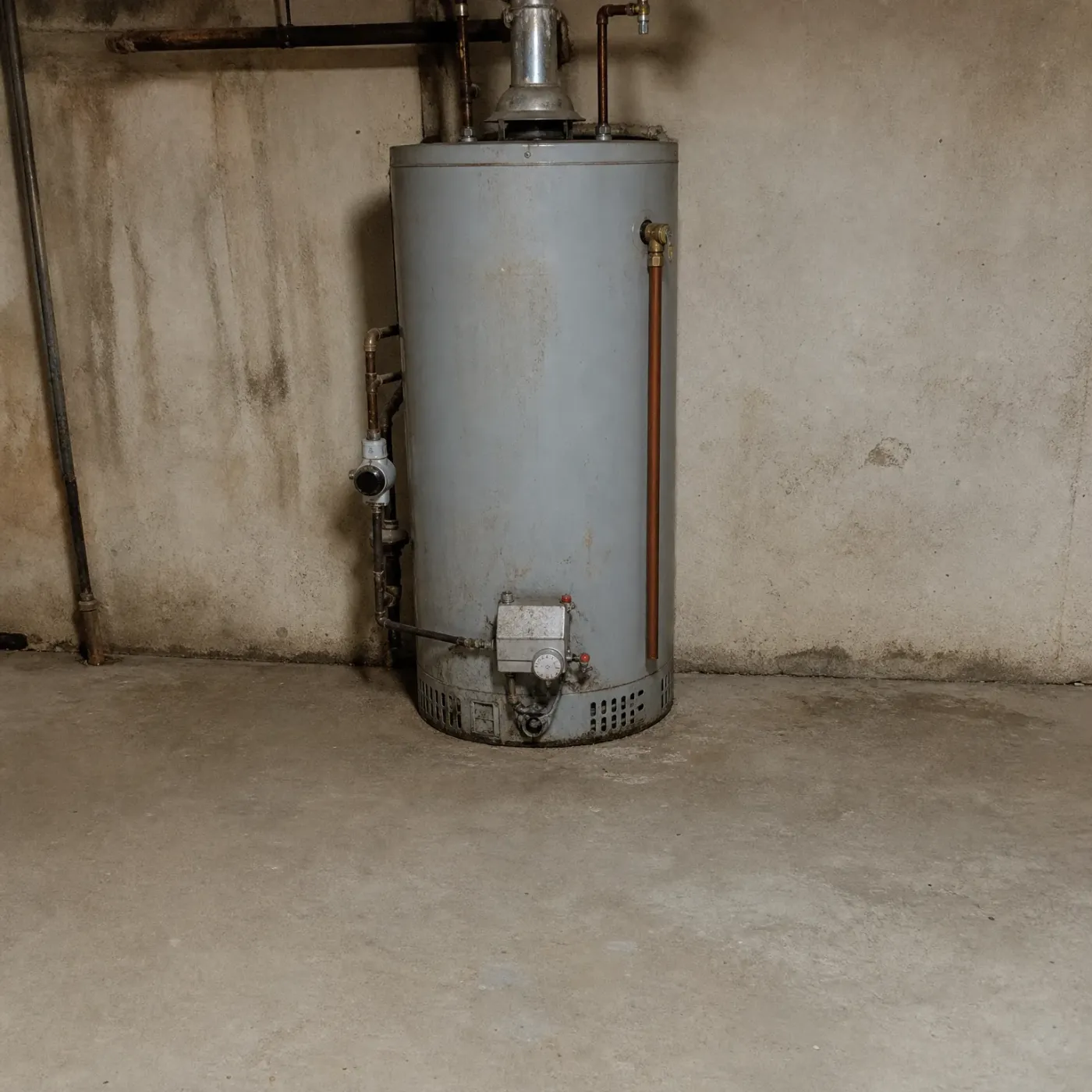
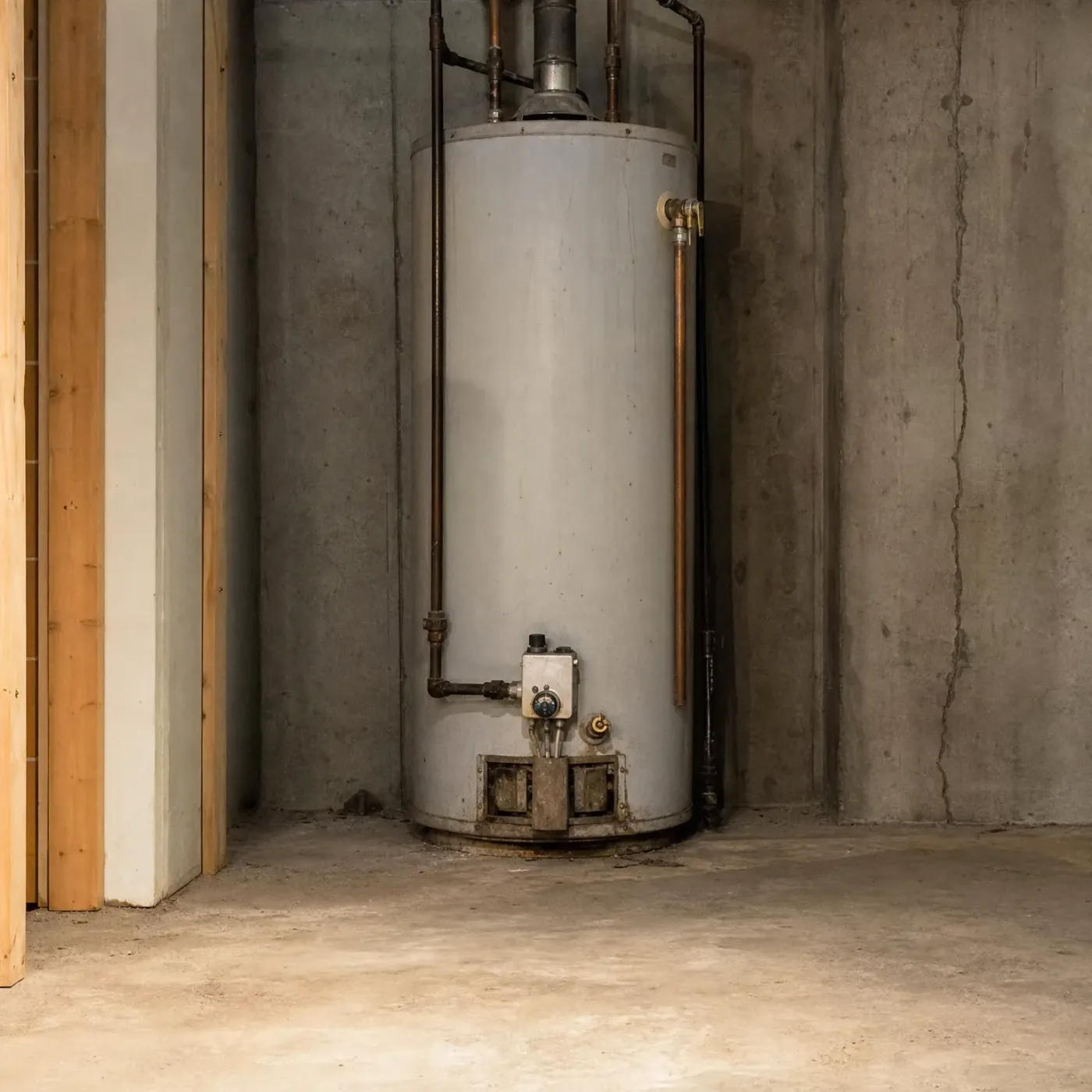
An older gray cylindrical gas water heater with copper and steel piping and a flue, standing on a concrete floor against a stained concrete wall.

Past where it should be

Bare concrete, an old gas tank, and a flue vent at the top that's doing more work every year than it used to. At this age the tank has likely rusted from the inside before it shows on the outside. A pressure relief valve this old is worth checking too, not just the tank itself.

What's your water heater trying to tell you?

You walk past it in the garage or the closet and you notice things you didn't used to. A rumbling or popping sound when it kicks on, which usually means sediment has built up at the bottom and is hardening around the elements. Water that takes longer to get hot, or doesn't get as hot as it used to. Rust-colored water from the hot tap, or a faint metallic smell. Maybe there's a damp spot on the floor near the base, or the drain valve seeps when you touch it. None of this fails you all at once. It is a tank wearing from the inside, and left alone long enough, it ends with water on the floor and a cleanup instead of a planned swap.

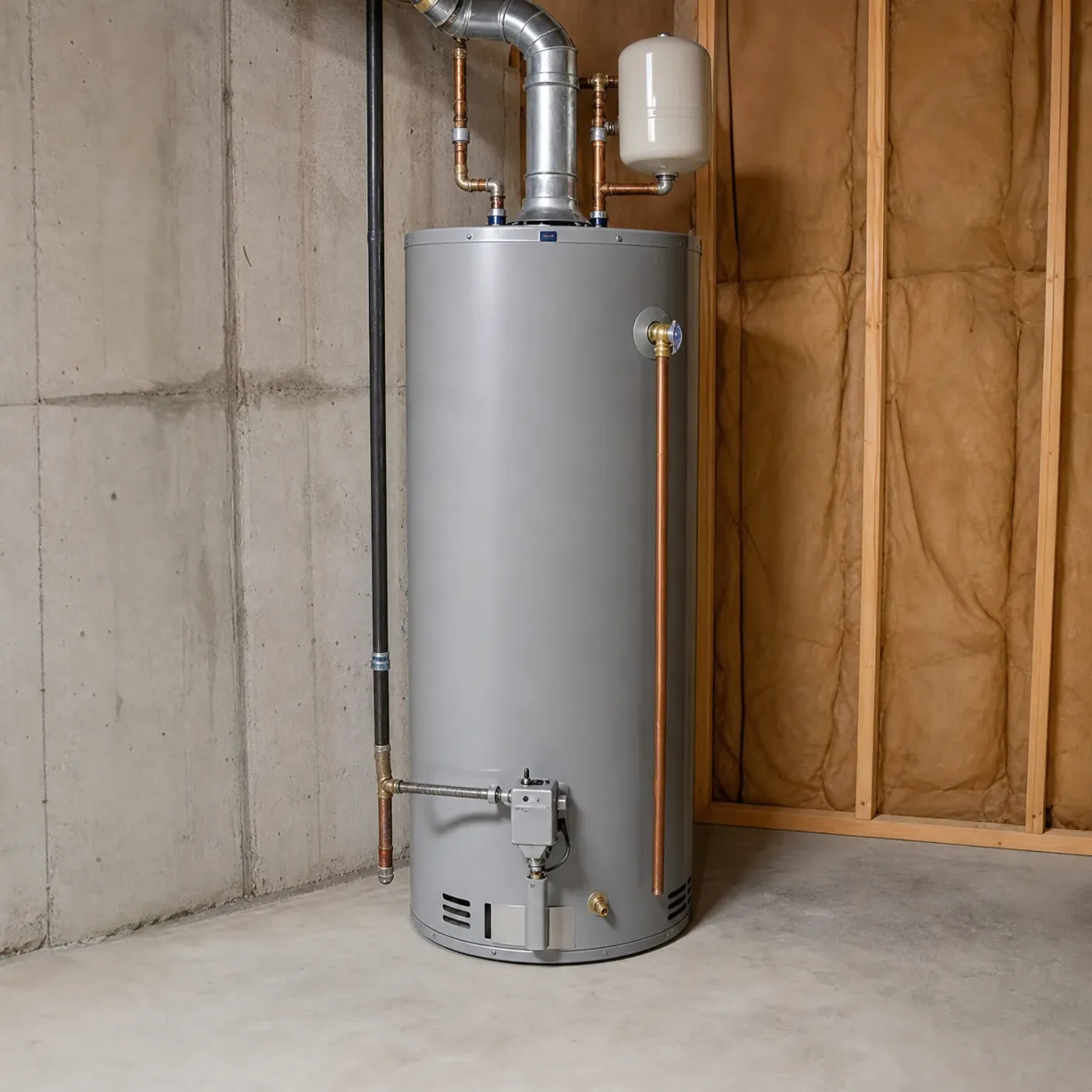
A gray cylindrical gas water heater with copper piping, flue vent, and a small expansion tank stands in a basement corner between a concrete wall and an insulated stud wall.
A gas tank like this still has a working flue and a tight gas valve, with no rust at the fittings.
An older gas water heater with copper and black pipes stands in the corner of a bare concrete basement next to a wood-framed partition wall.
A gas valve at the base like this is worth checking if the tank is old enough to be near the end.
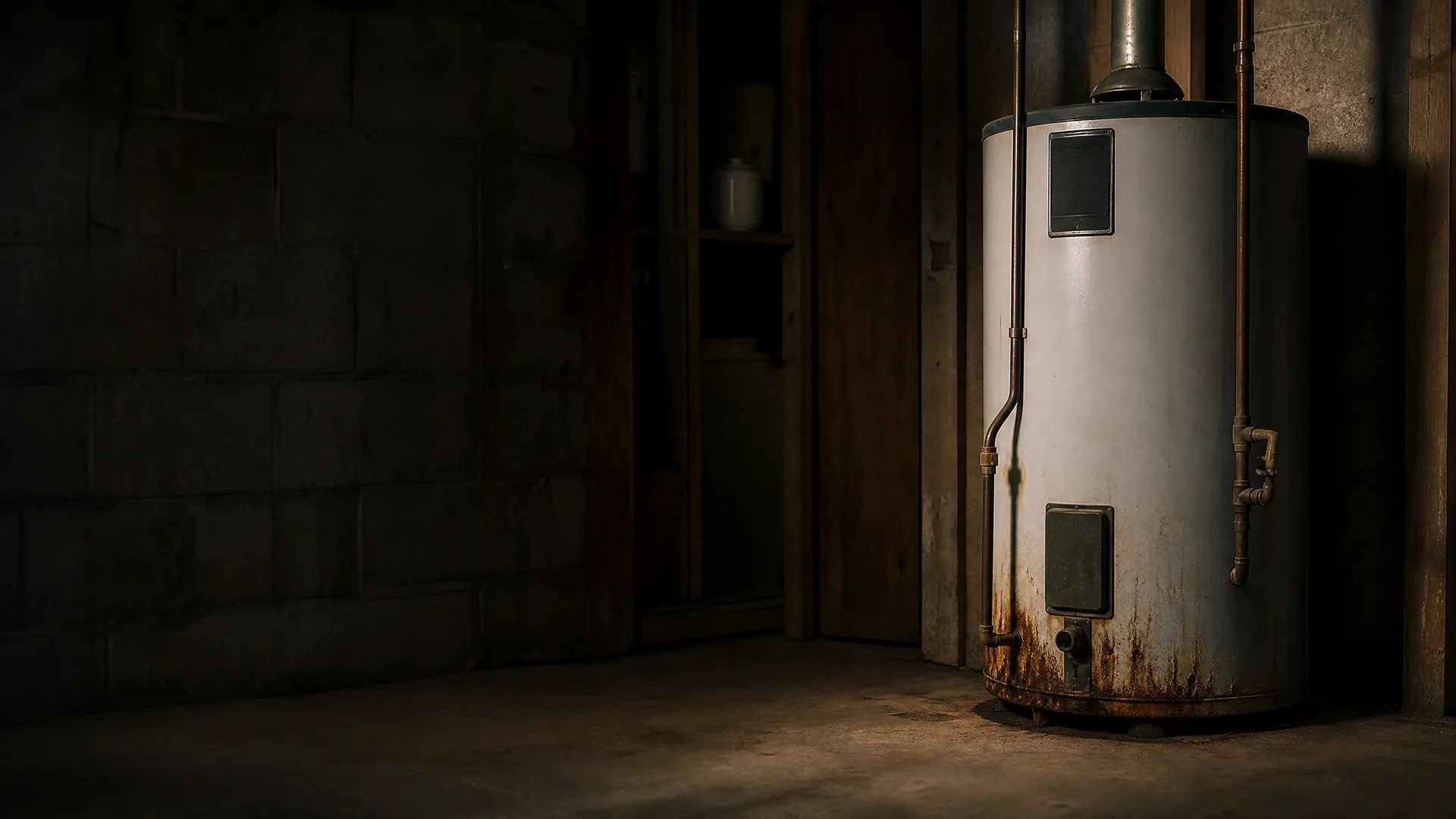
A rusting cylindrical water heater with attached pipes and flue stands in a dim basement corner beside a concrete block wall and a wooden door.

You go down to check the breaker after supper and the utility room light is already on. It's early evening, the window above the washer gone dark. The old tank sits in the corner the way it always has, and this time you crouch down for a closer look. Rust streaks run down the side from the seam near the top, pooling faint and orange where the tank meets the base. The concrete under it is darker than it should be. You press a finger to the streak and it's dry tonight, but you know it won't stay that way. You stand there a minute, not ready to deal with it, but not able to unsee it either.

A water heater in Fort Smith lasts somewhere around 10 to 15 years, less if sediment and the anode rod never get attention, more if someone keeps an eye on both. Beyond that range you're watching for the signs already covered here: rust at the fittings, a rumbling tank, water that won't get hot like it used to. Once you see them, the question stops being how long it will last and starts being who you want handling the tank in your closet or garage. A local installer who works on these units all year knows which brands hold up in this water and which ones fail early, and knows it from doing the work, not from a manual. Request a quote and you're matched with one licensed contractor for your area, not a handful of companies competing for your callback. That's one visit, one person who already knows what usually goes wrong with a tank your age, looking at your actual unit instead of guessing from a list of symptoms.

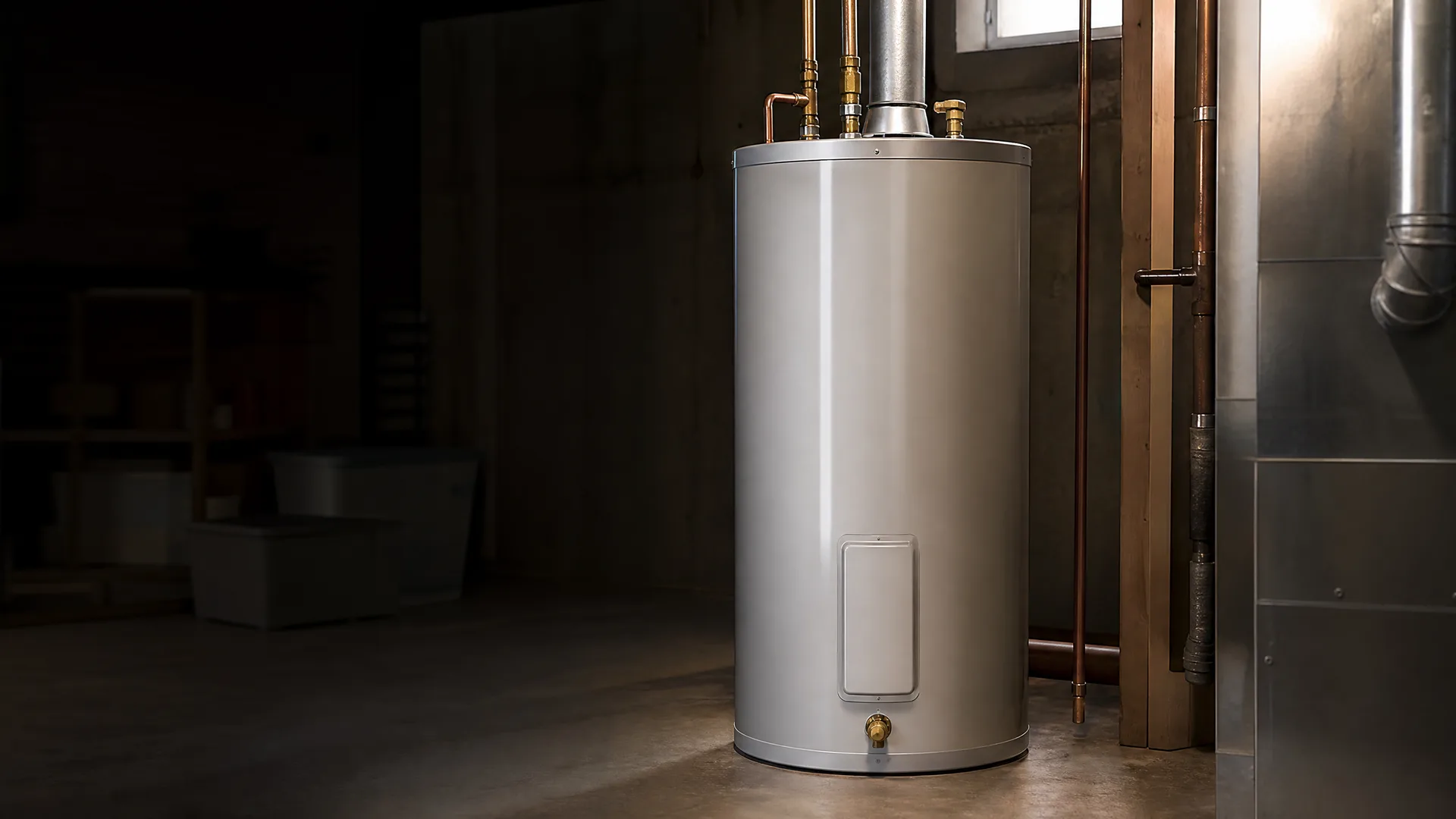
A gray cylindrical water heater with copper pipes and a flue stands on a concrete floor in a dim basement, with metal ductwork and storage bins nearby.

Done looking for a water heater pro

Step 1 of 3: Equipment