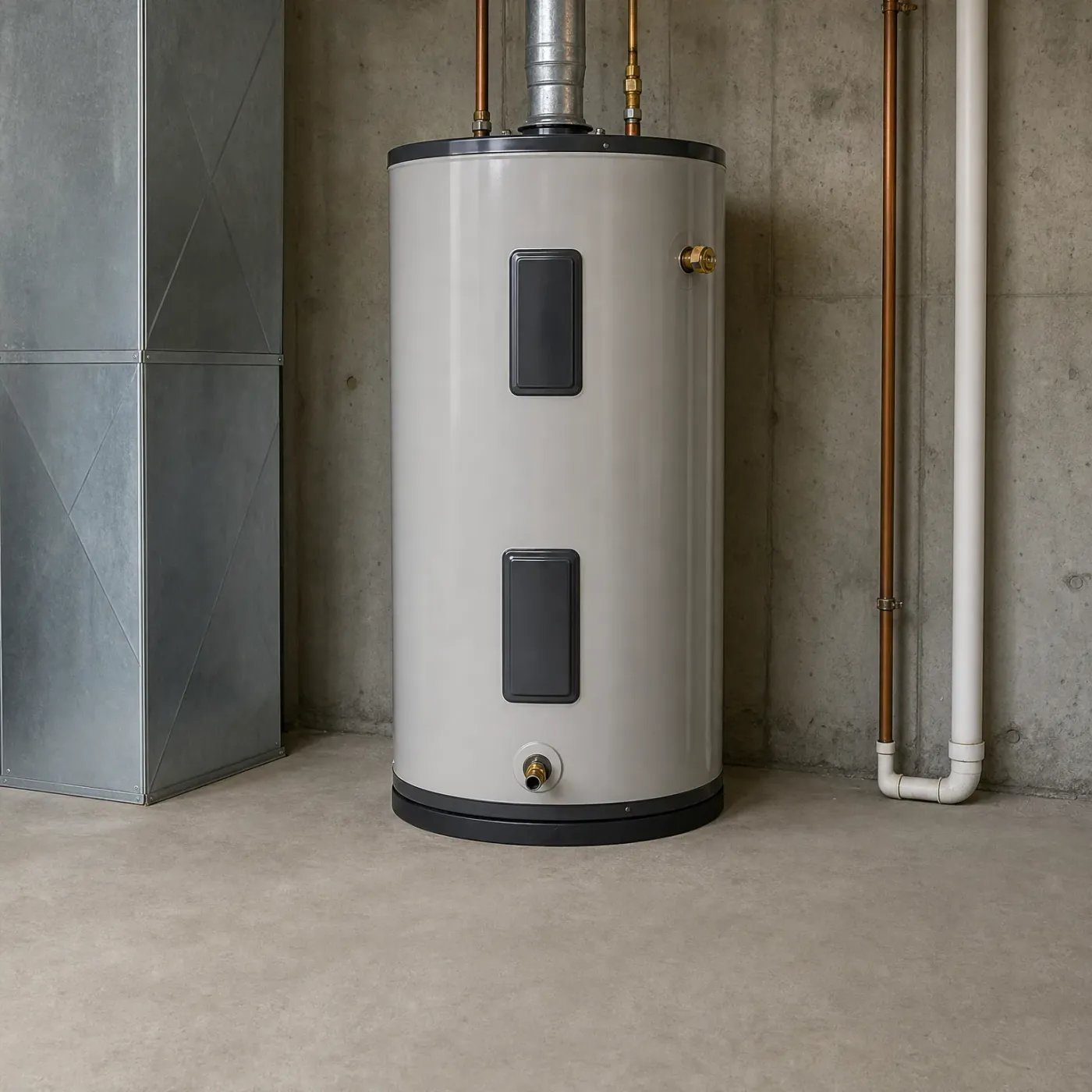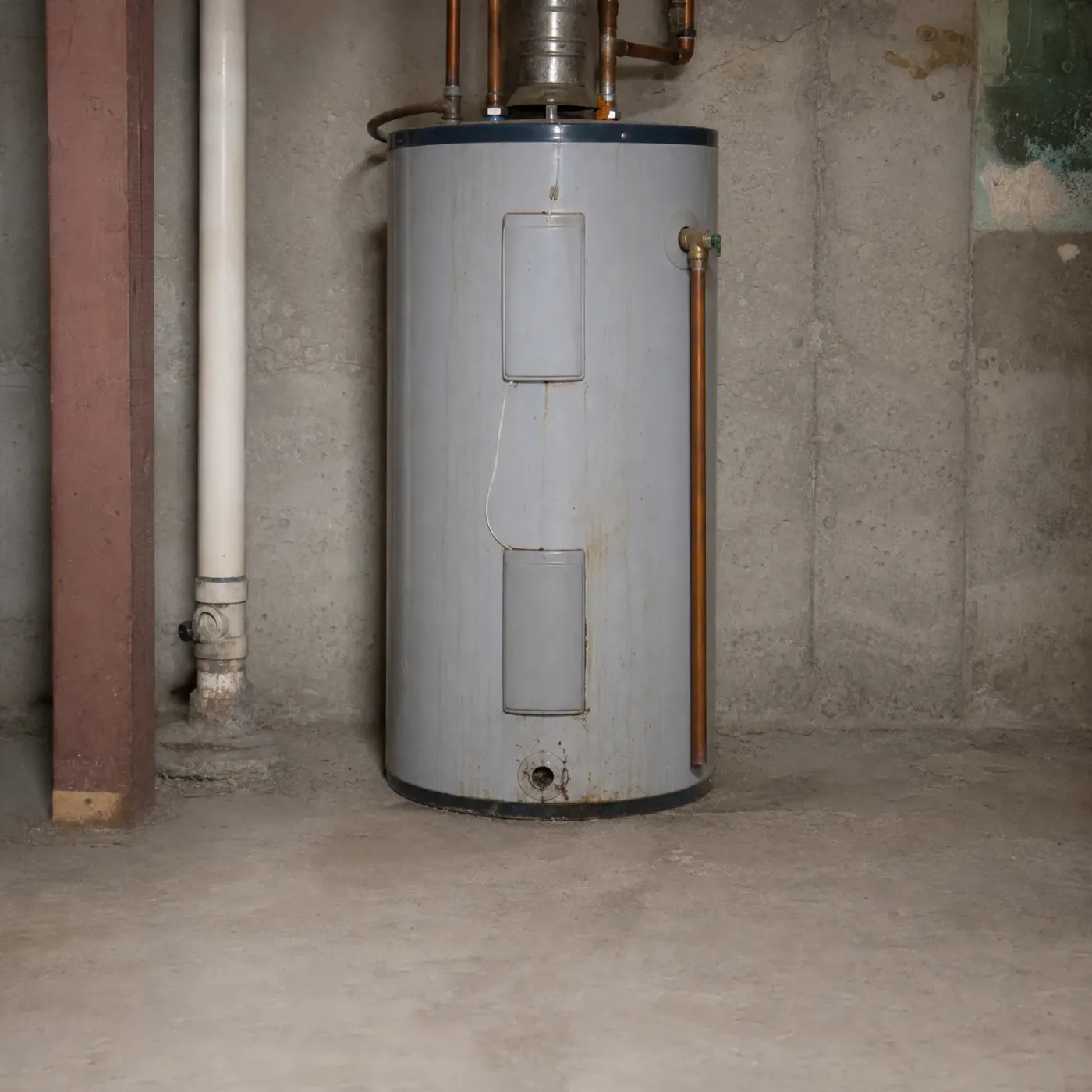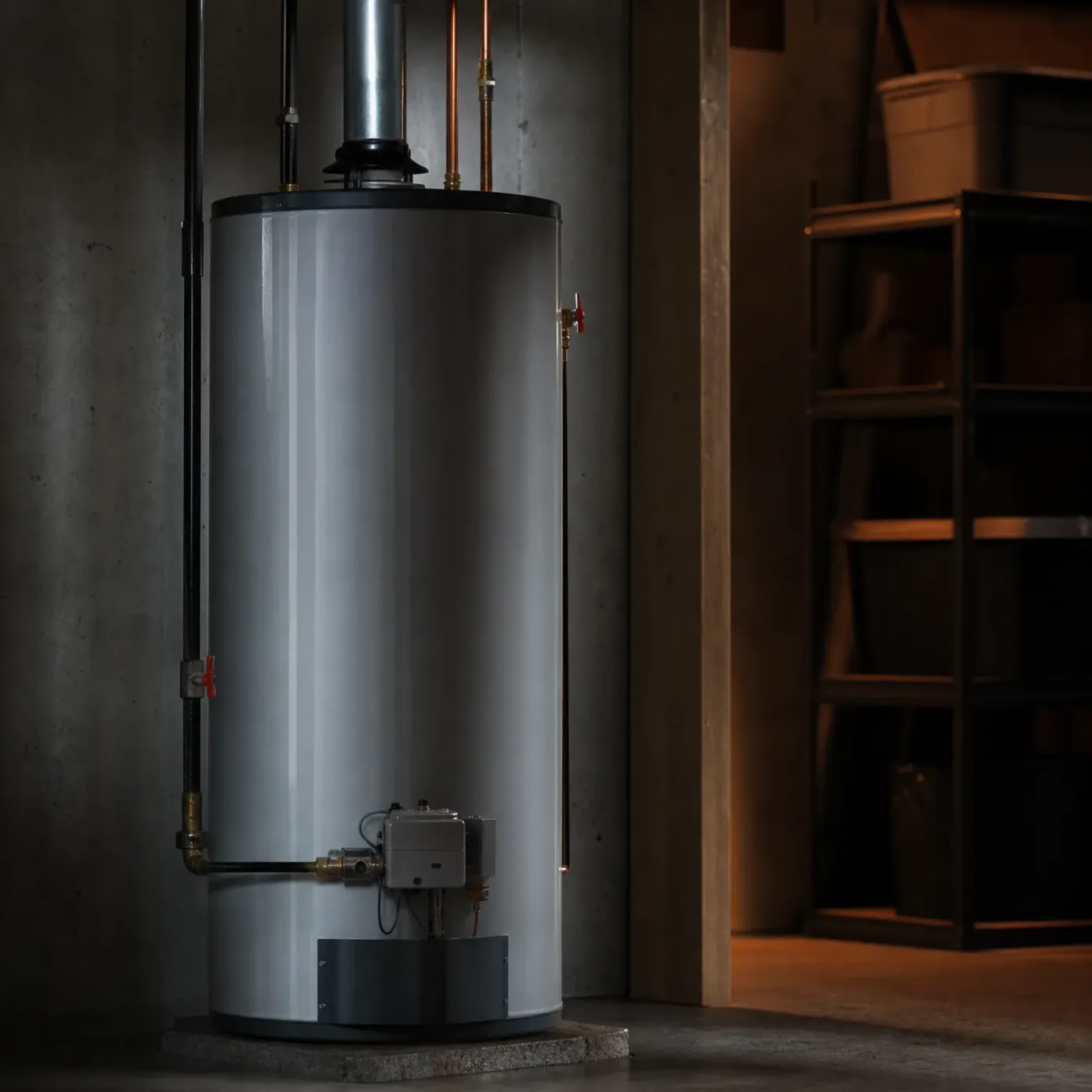


A large gray cylindrical gas water heater with copper and black pipes and a flue stack, standing on a concrete pad against a concrete wall, with a dark metal shelving unit in the background.

Get the right pro for your water heater

How often to flush a water heater in Arkansas

You want to know how often to flush your water heater in Arkansas, since Arkansas water and your habits affect how fast sediment builds up in the tank. This page gets into what that buildup does and what a flush schedule should look like. If you'd rather have a local contractor who knows this equipment take a look, you can ask for that below.

Get matched

Once a year is the right rhythm for most water heaters in Arkansas. Flushing the tank clears out the sediment that settles at the bottom, and that sediment matters more here than the name suggests. Most homes in Arkansas heat water with electric elements, and when sediment covers the lower element, that element has to work through a layer of grit to heat the water above it. It burns out faster that way, and the tank takes longer to recover between uses, which shows up on your power bill even with cheap electricity. Hard water speeds up the buildup, so if your water leaves spots on glasses or a white crust around faucets, once a year may not be often enough. A tank that never gets flushed tends to run louder over time, a rumbling or popping sound as water works around the sediment. That sound is often the first sign something was skipped.

A beige cylindrical water heater with copper pipes and a black drain pan stands in a corner of a basement with white walls, a concrete wall and small window at left, and a concrete floor.

Why sediment hurts electric elements

An electric water heater keeps its elements submerged in the tank. Once sediment covers the bottom, the lower element has to heat through that layer to reach the water above it. It cycles longer to do the same job. Some homeowners hear popping or rumbling from the tank, which is water trapped under the sediment coming to a boil. That sound usually means a flush is overdue, not that the heater is failing.

A gray cylindrical water heater with two black access panels stands on a concrete floor against a white wall, with copper pipes and a flue above it and ductwork to the right.

What a flush actually removes

Opening the drain valve at the bottom of the tank lets the sediment layer wash out with the water. On a tank that has gone a year without a flush, the first water out often runs cloudy or carries visible grit before it clears. A tank that gets flushed on schedule drains clear almost right away, since there is little left at the bottom to stir up.

What happens if I don't flush my water heater?

You want to know how often to flush your water heater in Arkansas, since Arkansas water and your habits affect how fast sediment builds up in the tank. This page gets into what that buildup does and what a flush schedule should look like. If you'd rather hand this off, you can get matched with a local contractor who handles it.

The sediment stays and keeps building until it causes a failure

Nothing happens right away, and that's what makes it easy to put off. Skip a flush and the sediment layer at the bottom just keeps growing, year after year. The electric element has to work through more of it each time, so your heater runs longer to get the same hot water. Eventually that layer traps heat against the tank wall itself, and the metal underneath takes the stress. That's how tanks develop leaks years before they should. Some heaters also start popping or rumbling as water works its way through the buildup and boils underneath it. None of this shows up on your bill until the element burns out or the tank gives way, and by then the fix costs more than a flush ever would.

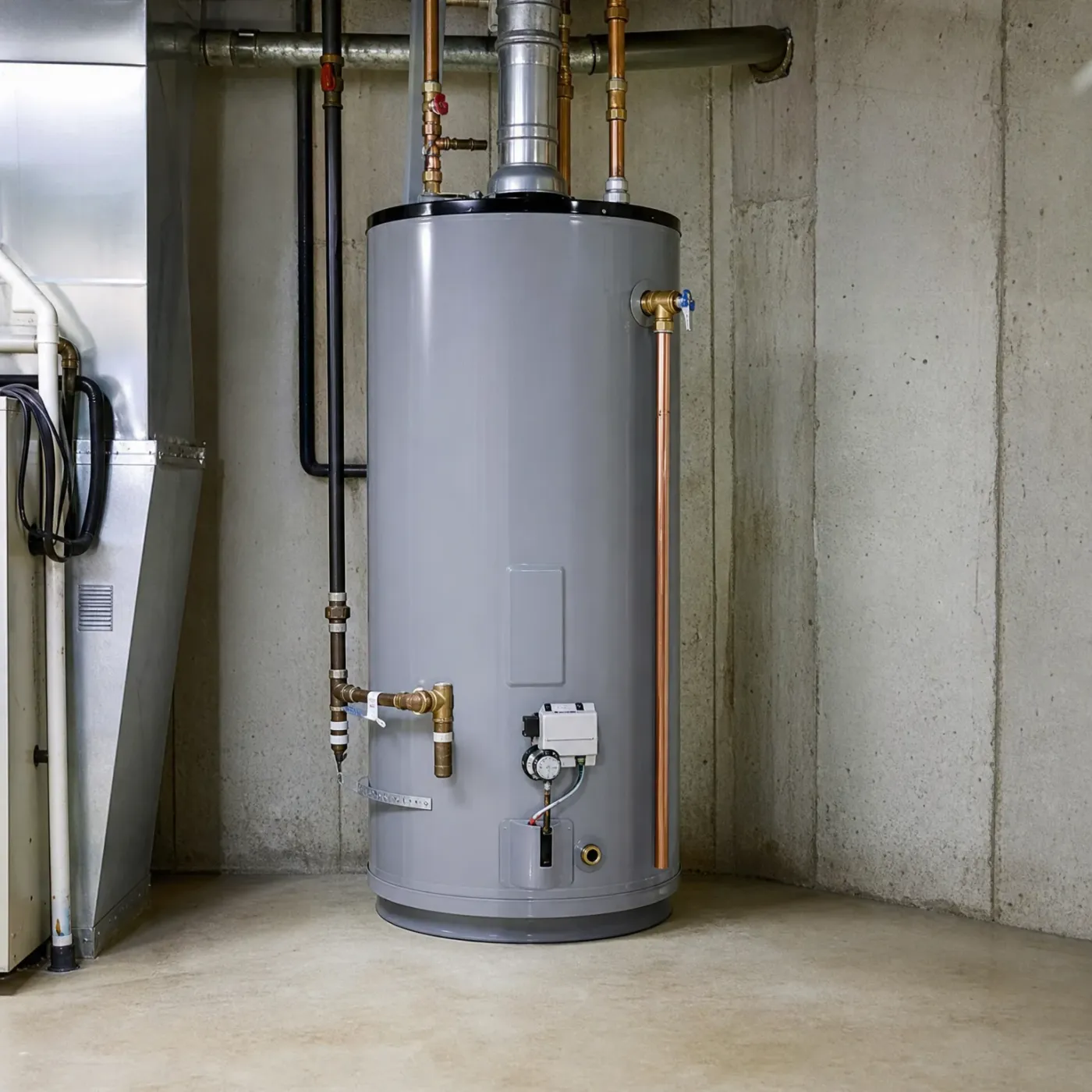
A gray cylindrical water heater stands on a concrete floor against a concrete wall, with copper and black pipes running overhead and a metal duct and dark equipment cabinet to the right.

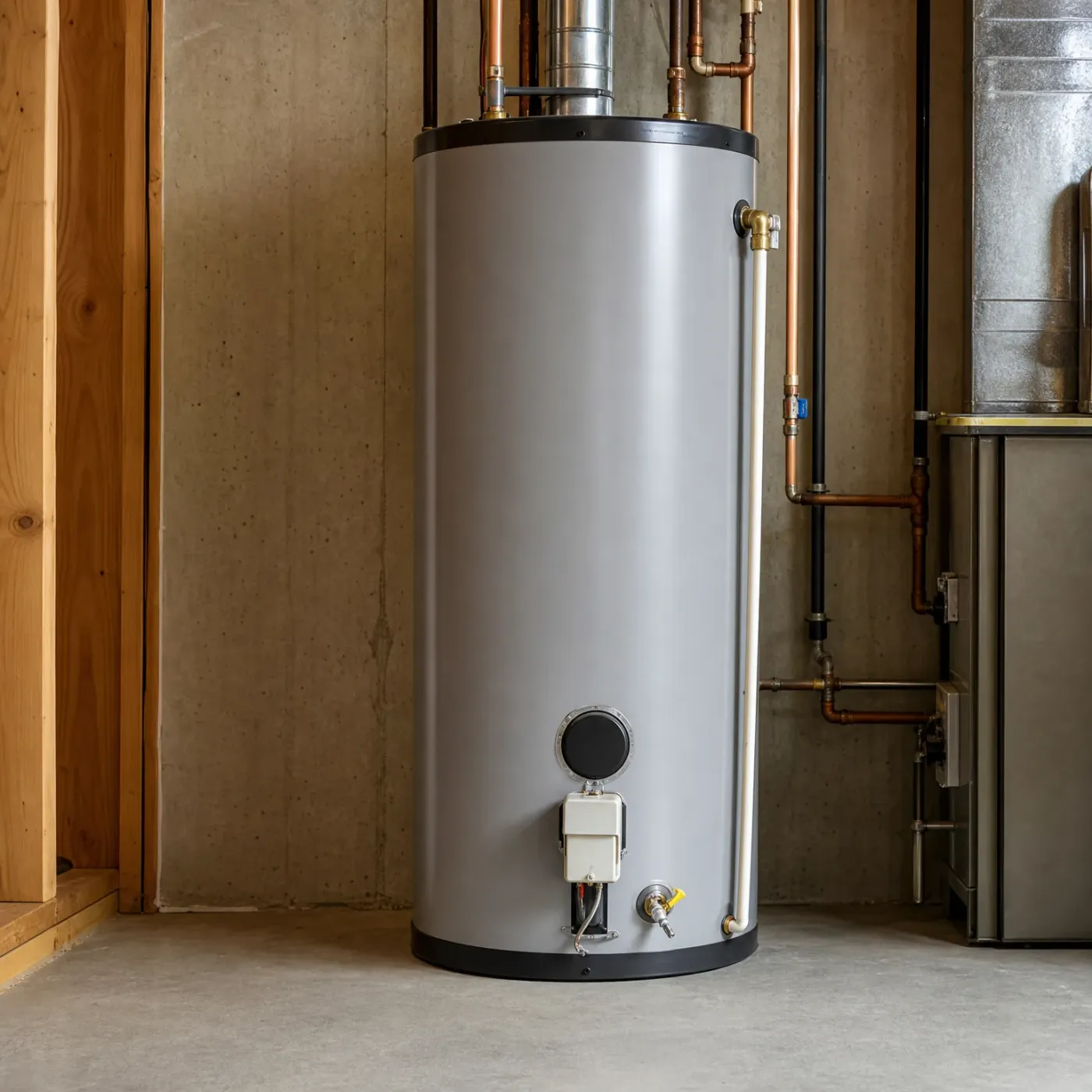
Tank flushed on schedule

The connections are clean and dry, and the tank itself shows no rust or staining. A water heater that gets flushed every year keeps its lower section clear, so the element or burner only has to heat water, not fight through sediment to reach it.
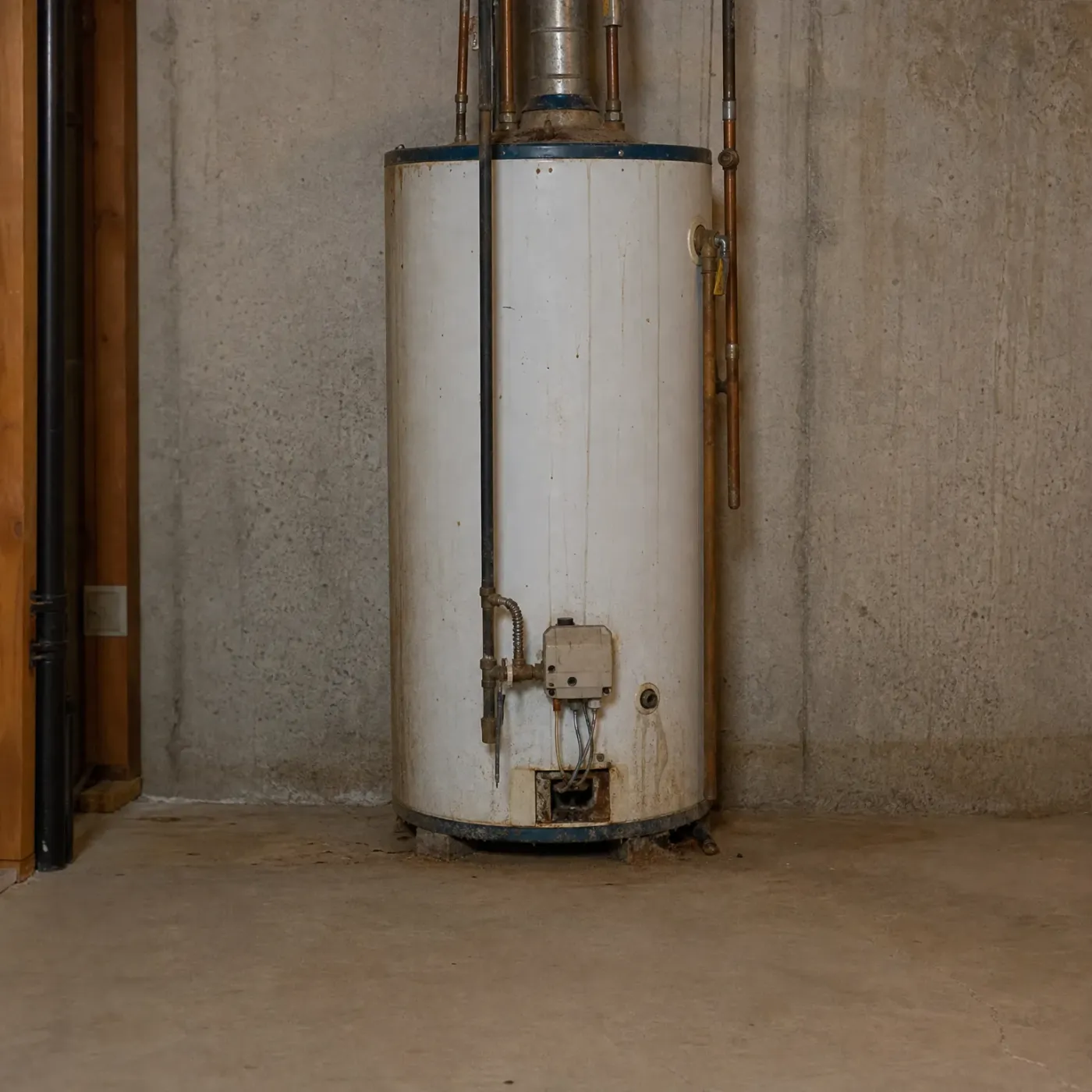
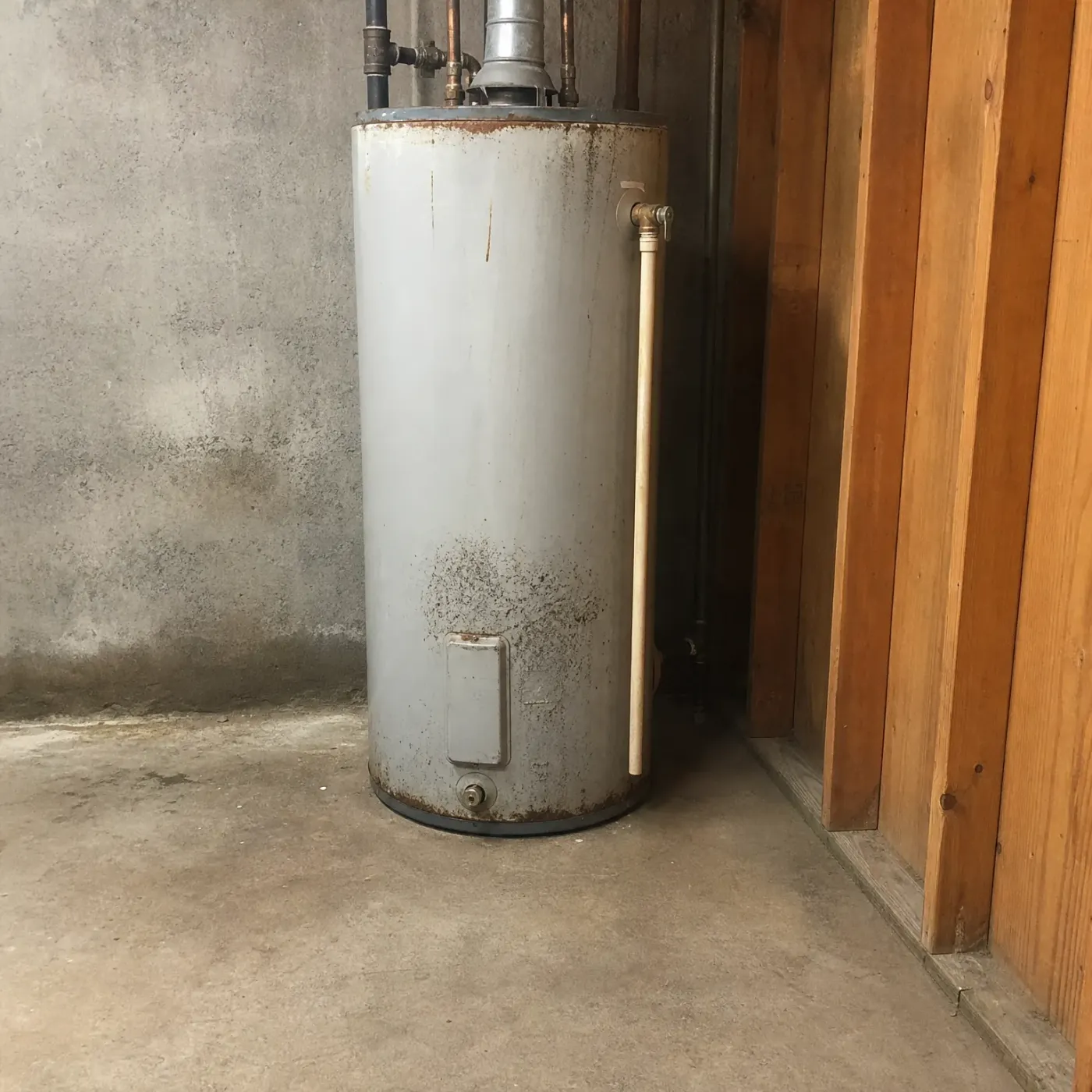
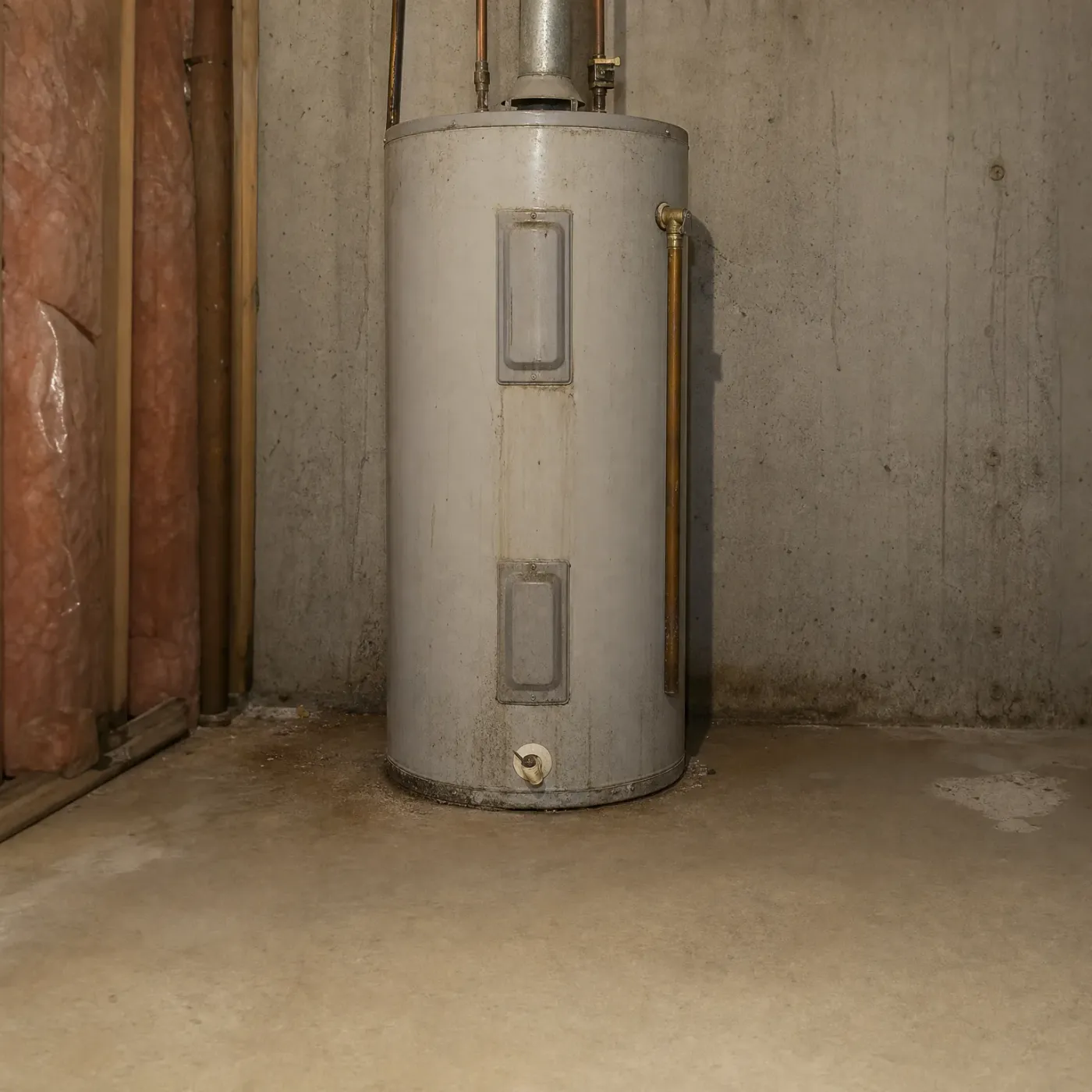
An old white gas water heater with rust stains, copper pipes and a flue stands in the corner of a concrete-walled room with a bare concrete floor and a wooden door frame at left.

Tank gone too long without one

Rust streaks run down the side and the flue pipe has started to corrode. Sediment that sits for years hardens, and it can hold water against the steel long enough to start the rust that ends with a leak at the bottom of the tank.

A rusting gray cylindrical water heater with copper pipes and a drain tube stands on a concrete floor against a concrete wall beside vertical wood paneling.
Before you get your water heater maintenance
A cylindrical beige water heater with two dark access panels stands on a concrete floor against a concrete wall, with copper and white pipes to the right and sheet-metal ductwork to the left.
After you get your water heater maintenance

53.7% of homes statewide heat with electricity

More than half the homes in Arkansas heat water with electricity, and yours is likely one of them. That lower element sits down in the tank, right where sediment collects first. Skip a flush and that element is the one working through the buildup.

ACS 2020-2024 5-year B25040

A woman wrapped in a thick beige fleece blanket sits on a sofa with an open book on her lap, beside a lit table lamp, with a frost-covered window behind her.
A smiling older woman with gray hair in a cream knit sweater stands in a dimly lit kitchen beside a window showing snow outside, with a round loaf of bread on the counter in the foreground.

A pro who works on water heaters

A licensed local pro takes the request for your water heater tune-up.

There's no charge for the request.

A large gray cylindrical gas water heater stands in a concrete-walled basement corner, connected to copper and black pipes and a metal flue, with ductwork at left.
A water heater kept on a yearly flush schedule runs clean, with tight connections and no rust creeping up the tank.
A gray cylindrical water heater with two access panels and copper piping stands in the corner of a concrete-walled basement next to exposed pink insulation.
Years of skipped flushes leave sediment, rust staining, and corrosion the drain valve alone can no longer fix.

Flushing It Yourself vs. Calling a Contractor

Flush it yourself

  • You need a garden hose, a bucket, and a way to shut off power to the elements or gas to the burner before you start.
  • Electric water heaters need the power cut at the breaker first, since the elements can burn out if they run dry during the drain.
  • Draining a full tank through a standard hose takes a while, and sediment packed hard at the bottom may not clear with water pressure alone.
  • If the drain valve is plastic and hasn't been used in years, it can crack or clog when you try to open it.
  • You're the one who has to notice if the tank is rusting, the valve is failing, or the anode rod needs attention while you're in there.

Have a contractor flush it

  • A local contractor who services water heaters all year knows how hard Arkansas water tends to run and what that does to a tank over time.
  • They'll check the drain valve, the anode rod, and the connections while the tank is open instead of just running water through it.
  • If the valve is stuck or starting to corrode, they can deal with it on the spot rather than leaving you with a bigger problem later.
  • Getting matched with one contractor means one company handling the job, not several calls competing for the work.
  • They've seen what a few years of skipped flushes looks like inside a tank, so they know what to check for even if nothing seems wrong yet.
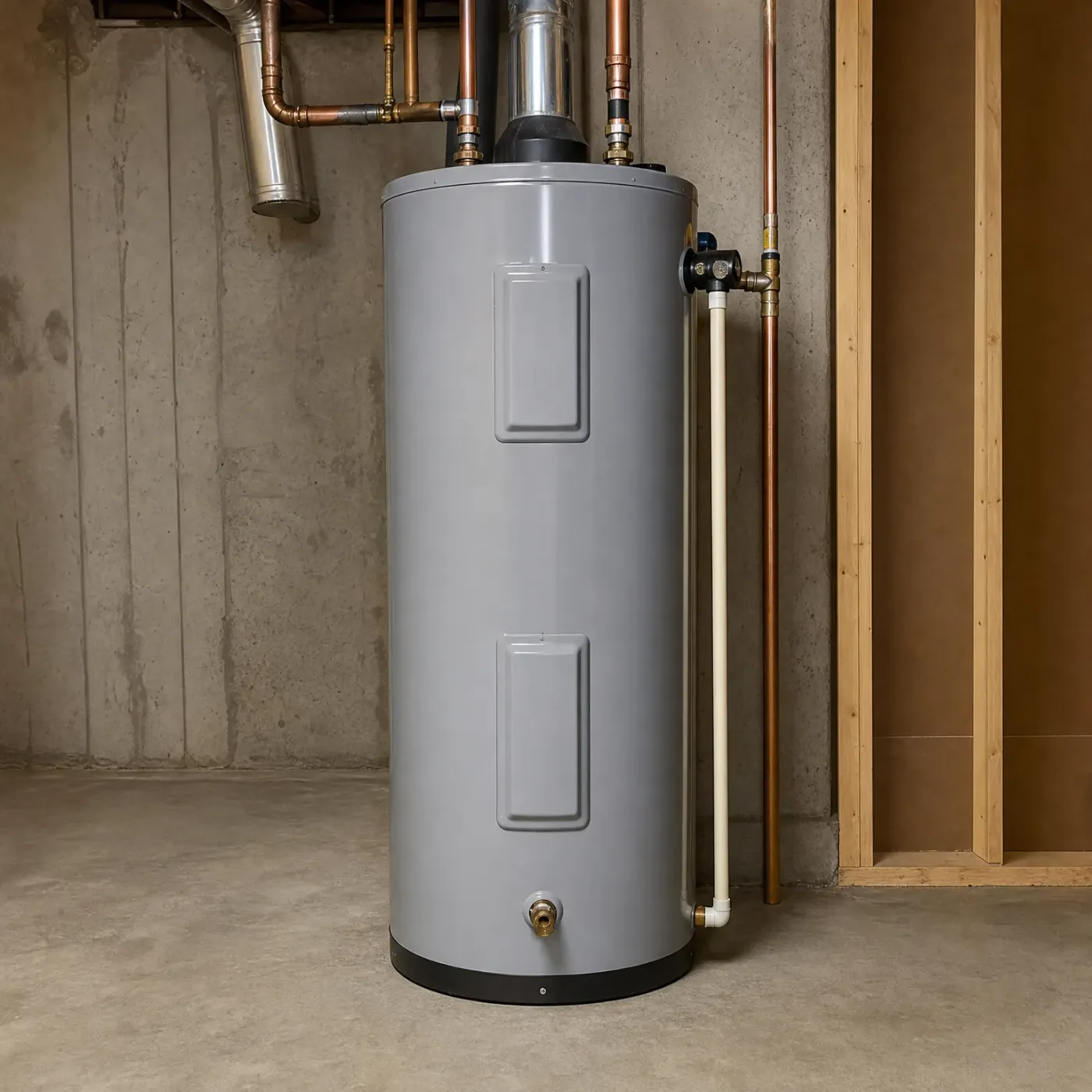
A gray cylindrical water heater stands against a concrete basement wall, connected to copper pipes and a metal flue overhead, with a white discharge pipe running down its right side and exposed wood framing to the right.

Tank in good shape

This is what a water heater looks like when the flushes keep up. The valve and fittings stay dry, the panels sit clean, and the tank itself shows no staining. Nothing here has had the chance to sit and corrode.

A gray cylindrical water heater with copper piping stands against a concrete basement wall beside a white vertical pipe and a wooden post.

Tank gone too long

Rust has worked its way up the base, and the metal around it shows its age. Once corrosion reaches this point, a flush alone won't clear it. A contractor looking at a tank like this is often checking whether it still has good years left.

A woman in a cream sweater and jeans stands in the open doorway of a white stucco house, holding the dark door, while a man in a dark quilted jacket seen from behind walks toward the entry past potted plants.

Once a year keeps it working

A yearly flush is what keeps a water heater in Arkansas doing its job without strain. Skip it for a few years and the sediment stops being a minor drag on the element and starts being the reason the tank fails early.

If your water heater hasn't been flushed in a while, or you're not sure when it last was, a local contractor who works on these tanks all year can look at yours and tell you where it stands. You'll be matched with one contractor, not several, someone who already knows what tends to fail in water heaters around here and can tell you if yours just needs a flush or something more.

Interior corner with a beige sofa holding a dark green and a light cushion and a textured throw, a potted small-leaved tree beside a white-framed window, and a dark shallow bowl on a wooden coffee table in the foreground.
A gray-haired, bearded man in a dark coat dusted with snow stands smiling in a dimly lit room with a lamp, mirror, framed art, and a sofa in the background.
An older man with white hair and a beard, wearing a dark snow-dusted coat and scarf, stands in a warmly lit interior hallway with a framed landscape picture, a table lamp and a potted plant behind him, and a snowy view through a window at left.
An older man in a dark snow-flecked overcoat and scarf stands smiling in a warmly lit home entryway, with a glass-paned door showing darkness outside and a lamp-lit room visible through a doorway behind him.
An older man with gray hair and a beard, wearing a dark snow-dusted jacket and scarf, stands smiling in a warmly lit interior hallway with a lit table lamp, a vase of dried branches, and a framed picture in the background.

Water Heater Maintenance

Get your water heater to the right pro

Your request goes to one pro, not a list of companies.

A black smartphone standing upright against a plain light gray background, its screen filled with solid green.
Step 1 of 3: Equipment