

Still working the way it should
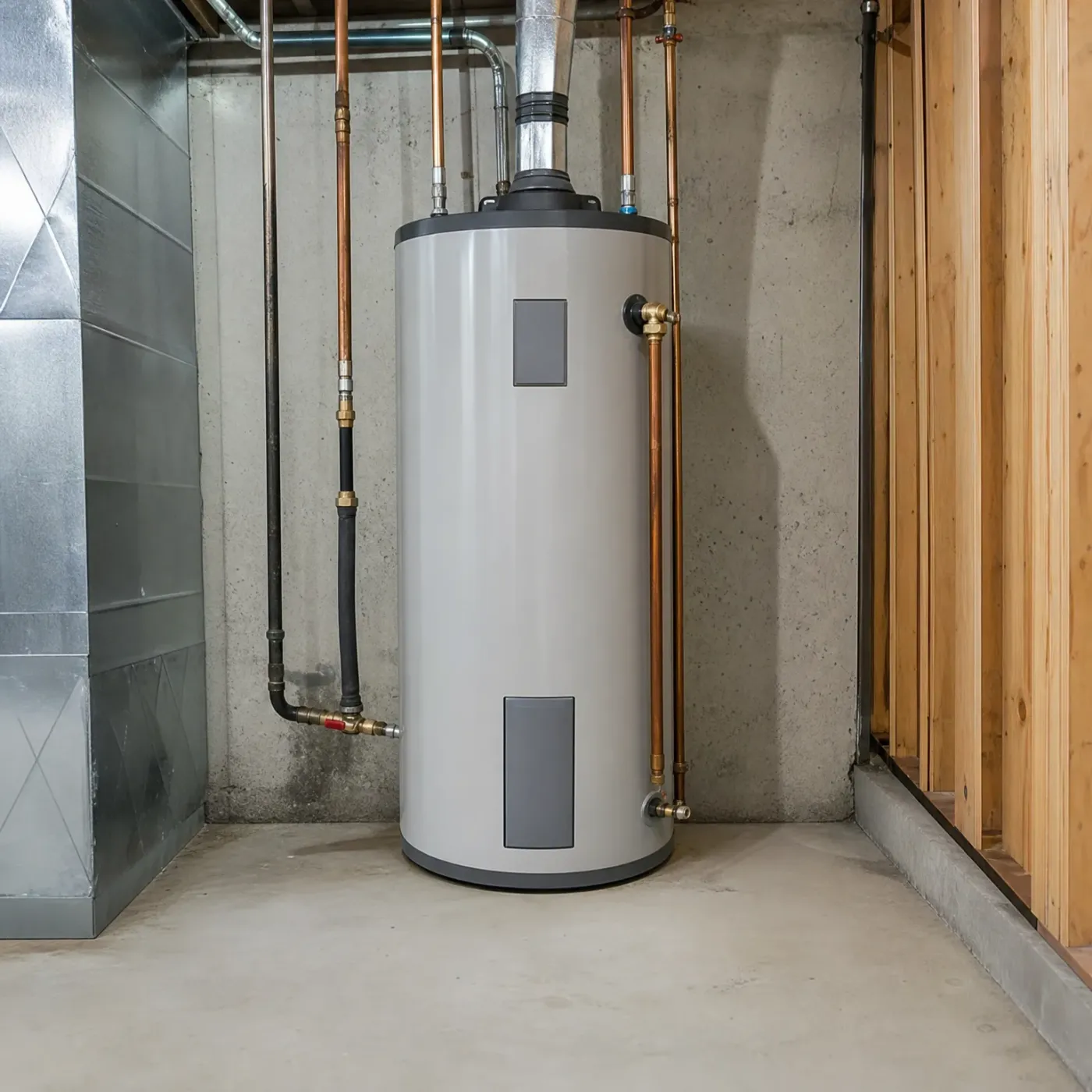
Water heats on schedule, the tank holds steady, and there's no rust or moisture anywhere on the body. The valve and connections stay dry. A unit in this shape just needs to be left alone to keep doing its job.
Once you send the form, finding a pro is off your list.
Hand it offRusty water, a tank that's leaking, or water that won't get hot anymore are the clearest signs it's time to replace it. Most tanks last 8 to 12 years, and once the inside starts rusting, there's no fixing it, only replacing it. A puddle at the base usually means the tank itself has split, not just a loose fitting. Popping or rumbling sounds mean sediment has built up at the bottom, and that buildup makes the unit work harder to heat the same amount of water. With cheap power here, most homes in Arkansas run electric water heaters, and a failing electric element can leave you with lukewarm water even on a heater that still turns on. If your water heater came with the house and you don't know its age, check the label on the tank for the manufacture date. Past 10 years or so, a new leak or a drop in hot water is worth taking seriously.

Water heats on schedule, the tank holds steady, and there's no rust or moisture anywhere on the body. The valve and connections stay dry. A unit in this shape just needs to be left alone to keep doing its job.

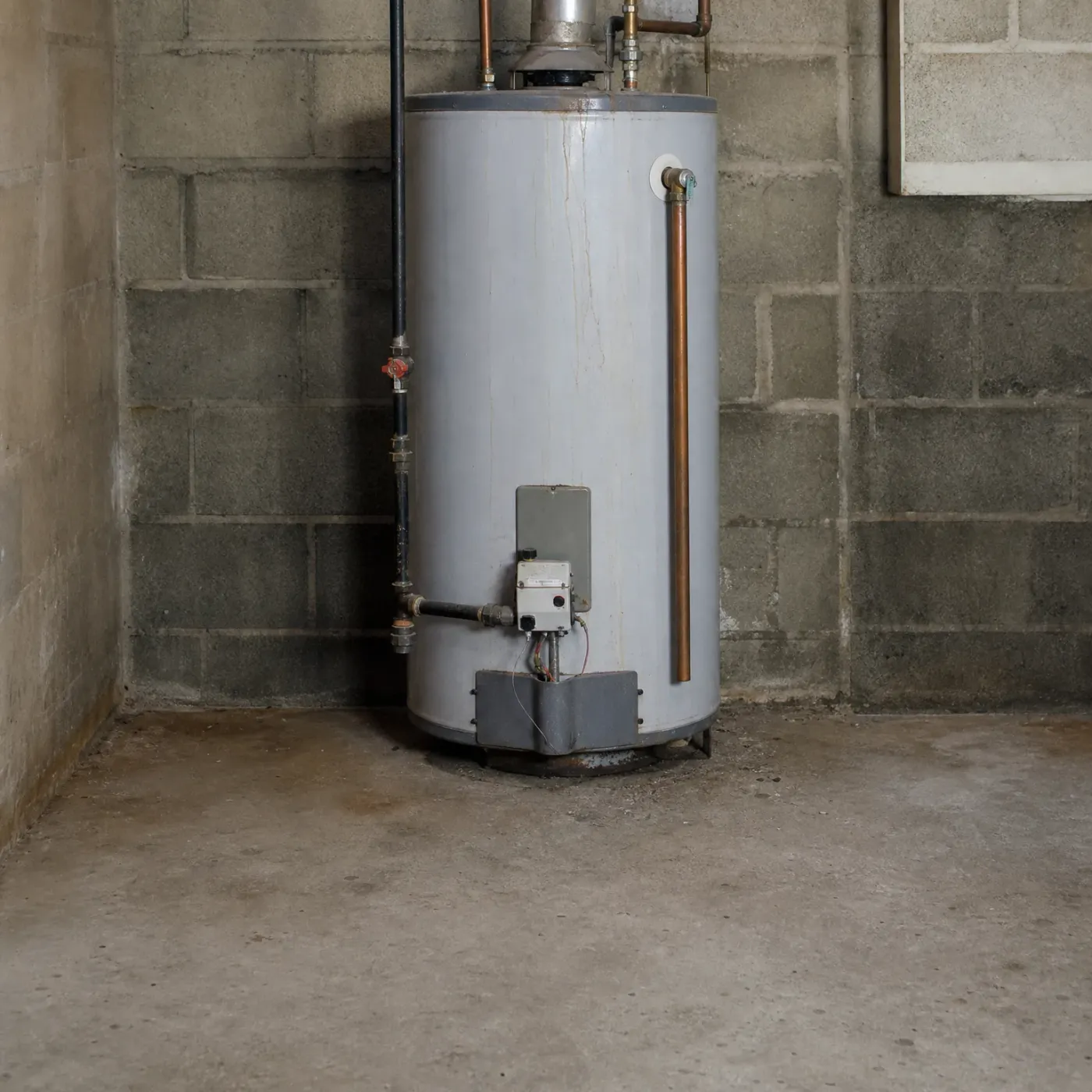
Rust along the base and up the sides means the tank itself is breaking down, not just a part. Once corrosion gets this far, patching it won't hold. That rust is the tank failing, and it only goes one direction from here.




That's the typical working life of a tank water heater. Past that range, the odds of rust and failure climb fast, even if it's still running today.
Since most Arkansas homes heat water with electricity, a local installer who works on these systems knows which parts tend to fail first and what to check.
Why does my water heater take so long to heat up now?
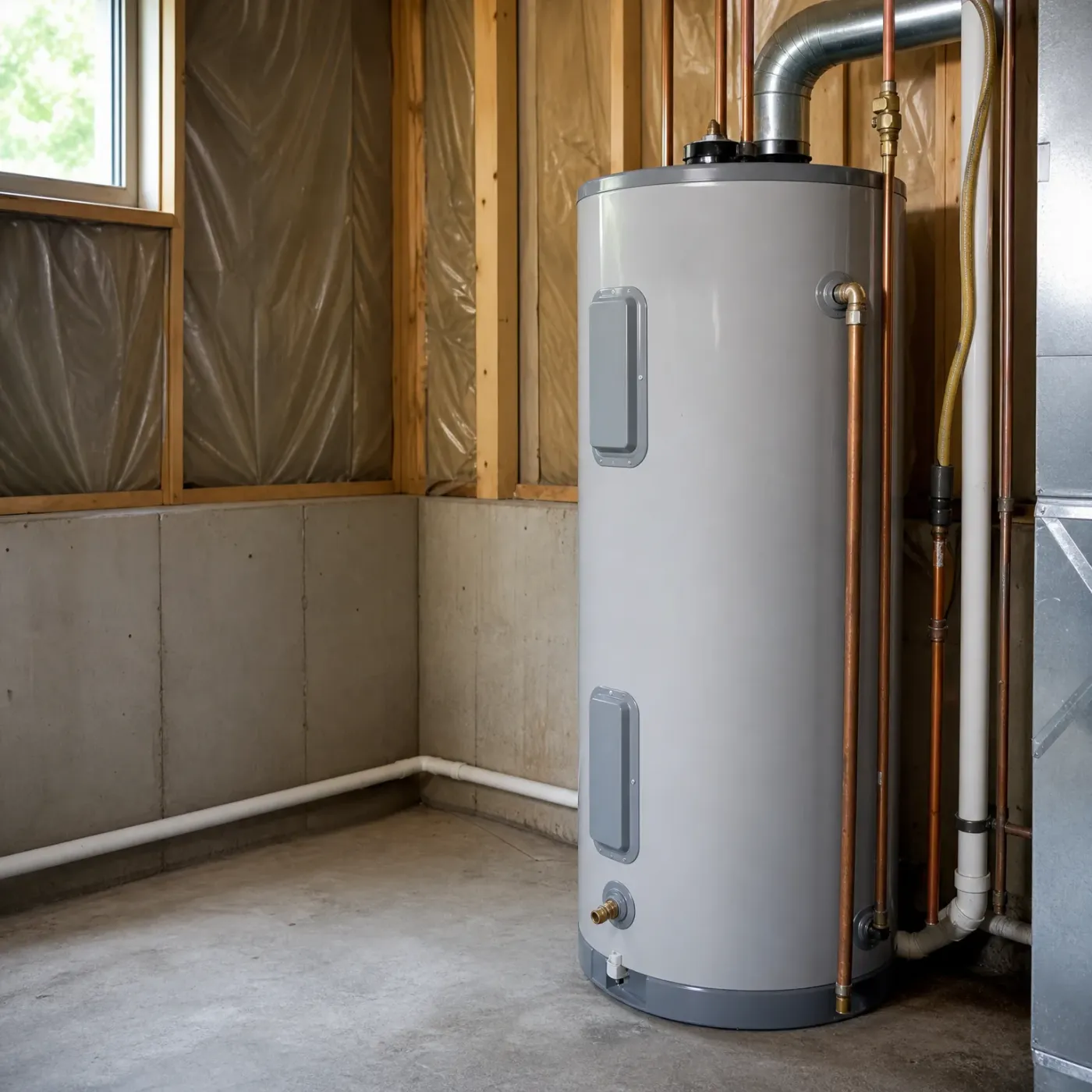
An electric tank uses one or two heating elements inside the tank to warm the water. When one burns out, the other has to do the job alone, so recovery time roughly doubles. Sediment causes the same slowdown a different way. It settles at the bottom of the tank and sits between the lower element and the water, so the element has to work through that layer before it heats anything. Since most homes here run electric water heaters, a worn element is the more common cause. Either way, a tank that used to keep up and now lags behind is telling you it's working harder for less heat, which is usually a sign the tank is wearing out, not just that one part failed.
Sediment settles at the bottom of the tank over time.
The heating element has to work through that layer to heat water.
The element overheats and burns out sooner than it should.
Rust forms inside once the tank's protective lining wears through.
One installer gets your project, so there's no bidding war over it.
Send the form and the search for an installer is over.
You're not committing to anything by asking.


With over half of Arkansas homes running electric heat, chances are your water heater is electric too, with two heating elements doing the work instead of a gas burner. When one element fails, the other often keeps limping along, which is why the water runs lukewarm instead of cutting out completely.
ACS 2020-2024 5-year B25040
Rust-colored water, a leak at the base, or a tank that won't heat anymore means it's time for a new unit, not another repair. Eight to twelve years is the normal run for a tank, and once the inside has started rusting, that's the end of the line. A tank that's still heating on schedule, holding steady, and dry around the valve and connections doesn't need any of this. Leave it alone, or swap the one part that failed, and it'll keep going.
If you've read this far because your water heater matches the signs, the next step is getting someone out to look at it who knows the equipment. A contractor working on tanks across Arkansas every year has seen which failures are a quick fix and which mean the tank itself is done. That's not a guess made from a description over the phone. It's knowing that an electric tank with two elements often keeps limping along on one, or that a tank this old with rust already showing isn't worth patching.
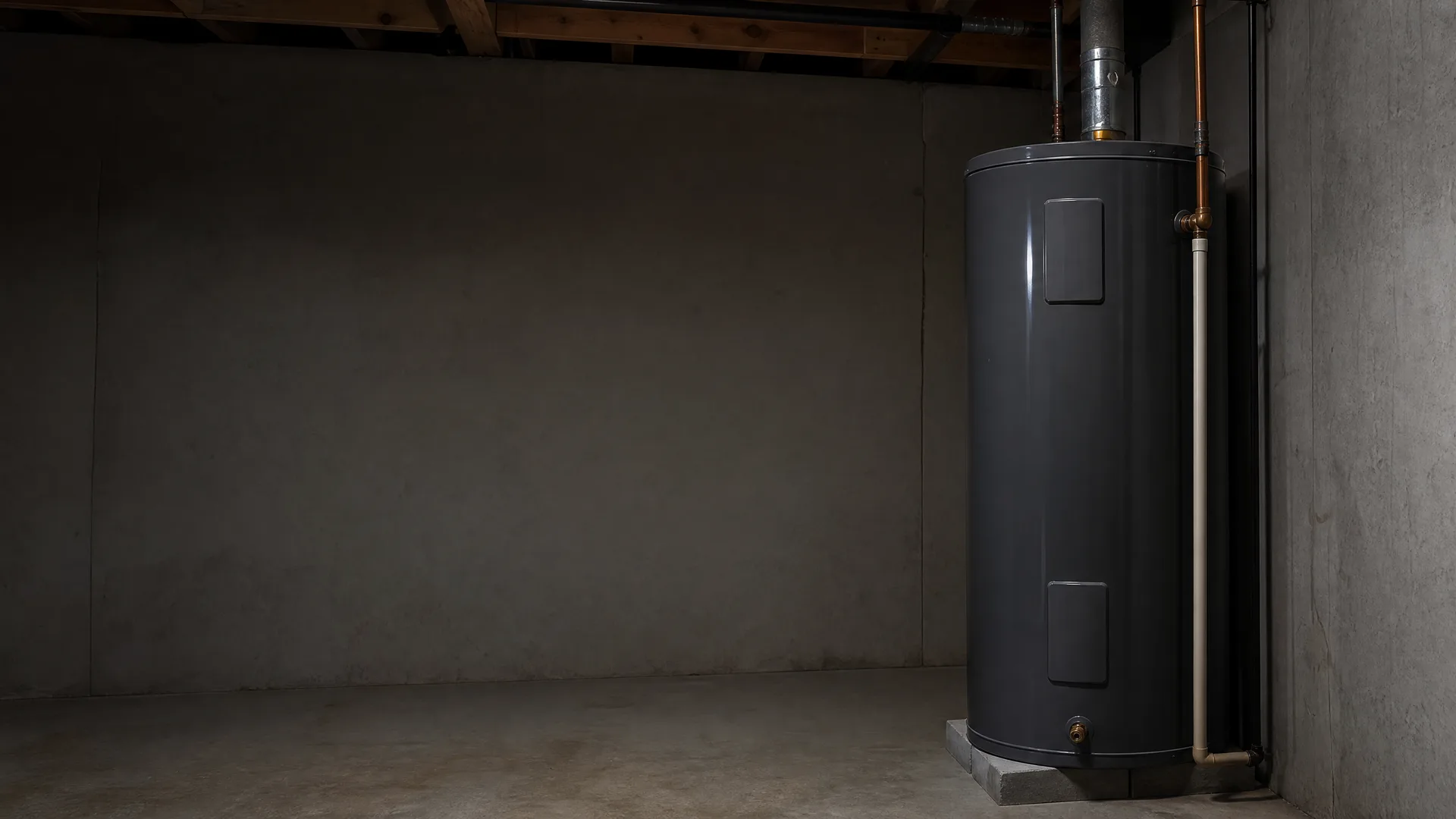
Sending the request puts you in touch with one contractor, local, licensed, and familiar with the kind of tanks running in homes here. Not five companies calling to bid against each other. Just the one who'll actually come look at it. From there, finding someone to do the work isn't something you have to keep managing. That part's handled.
The pro who reaches out is licensed in Arkansas.