Skip calling around
Tank or tankless water heater for an Arkansas home
Deciding between a tank and a tankless water heater comes down to your electric rates, your household's hot water use, and what it costs to install each type in your home. This page walks through how that plays out in Arkansas. Rather than calling around to different plumbers and explaining your setup each time, you can get a local installer's take on which one fits your house.
Skip the callsFor most Arkansas homes, a tank water heater is still the better fit, and the reason comes down to how most of these houses make hot water in the first place. With electricity running most water heaters here, and power priced low compared to much of the country, the running-cost gap that usually pushes homeowners toward tankless in other states barely shows up on your bill. A tank also costs less to put in, since an electric tankless unit often needs upgraded wiring to supply enough power on demand, where a standard electric tank usually doesn't. Tankless still makes sense if your household runs through hot water fast, back to back showers, a tub filling while the dishwasher runs, since a tank can only hold so much before it needs to recover. For a typical house here, though, a tank heats water cheaply enough that the extra upfront cost of tankless rarely pays for itself.






Is your water heater telling you it's time?
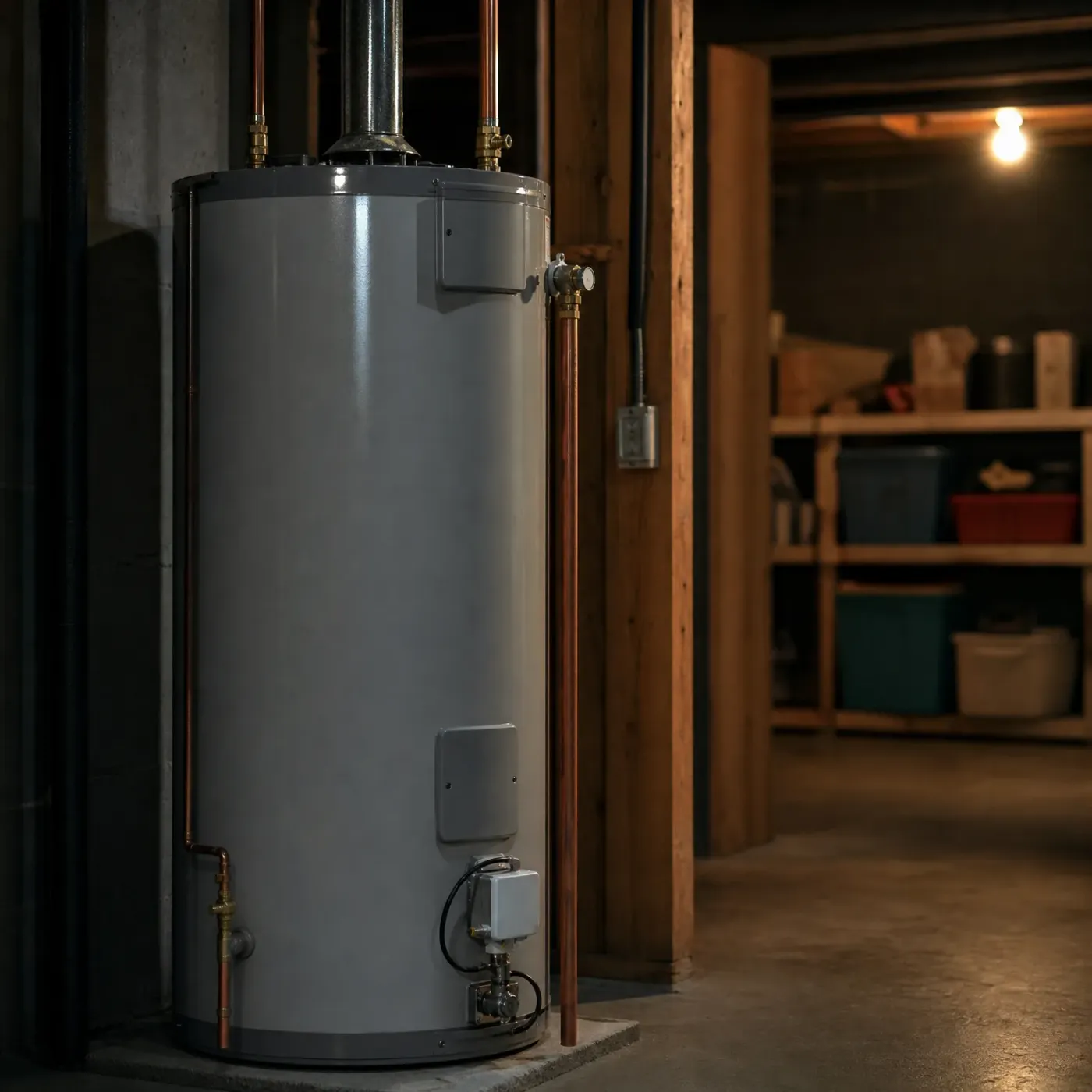
You might notice the water taking longer to heat up, or running out faster than it used to with the same number of showers. A tank that's struggling sometimes makes a low rumbling or popping sound as sediment builds up on the bottom and burns against the metal. Check around the base for dampness or a rust-colored stain working its way down the side. If the water comes out rusty or smells off when it shouldn't, that's the tank corroding from the inside. Left alone, a tank in that state doesn't fail gently. It leaks, and sometimes that happens while nobody's home to catch it.
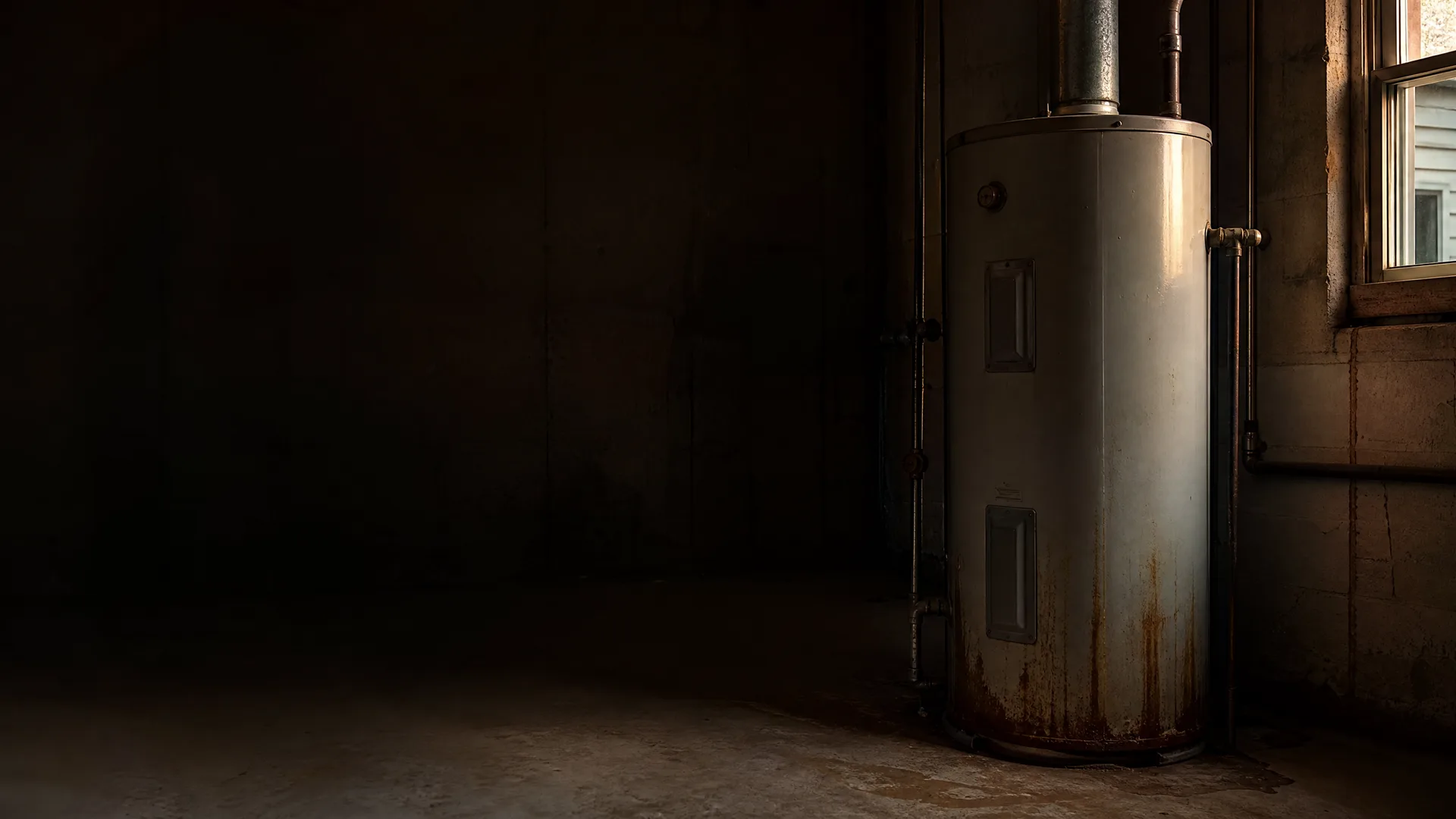
You go down to put a load of laundry in after dinner, and the bulb over the utility room sink flickers before it catches. The tank sits in the corner the way it has for years, and tonight you actually look at it instead of past it. The rust is there at the base, dried streaks running down into a stain on the concrete. You touch the floor near it and it's damp. Outside it's still thick and warm, the kind of evening where the window unit next door hums through the wall, and you stand there a minute doing the math on how long this tank has left, and whether it's going to pick its own time to quit or wait for yours.
Describe it once

Only one pro gets your request, so you hear from one company.
No charge to send it. You decide if you hire them.
How a tank recovers heat
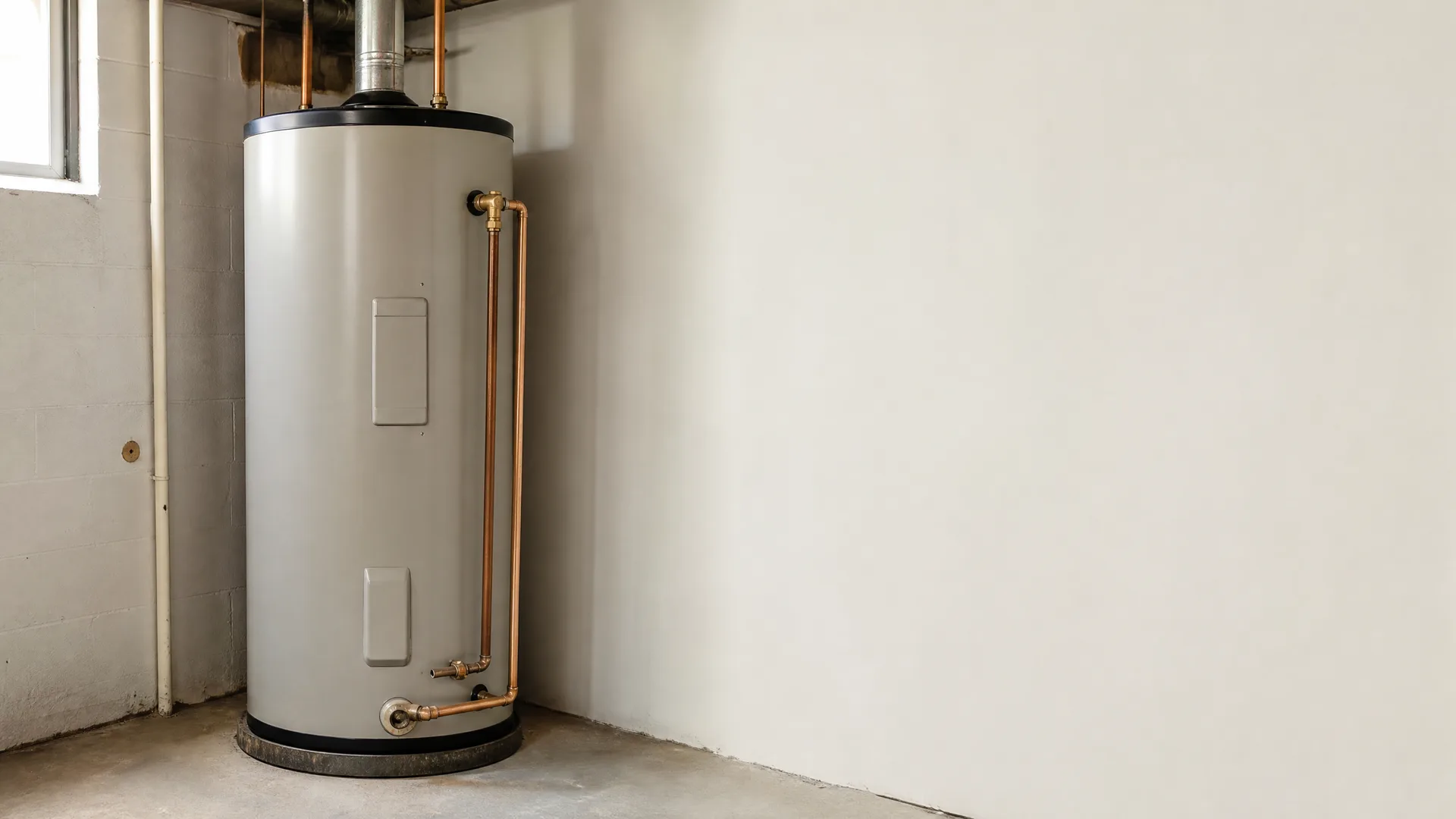
An electric tank keeps forty or fifty gallons hot and ready, so when you turn on the shower it's already there. Once that water runs out, the lower element has to bring cold water back up to temperature before more hot water is available. Recovery time depends on the size of the tank and the element, not on the weather outside. In a house running several showers back to back on a humid evening, that recovery window is the thing that decides whether the last person gets hot water or not.
What tankless changes about that
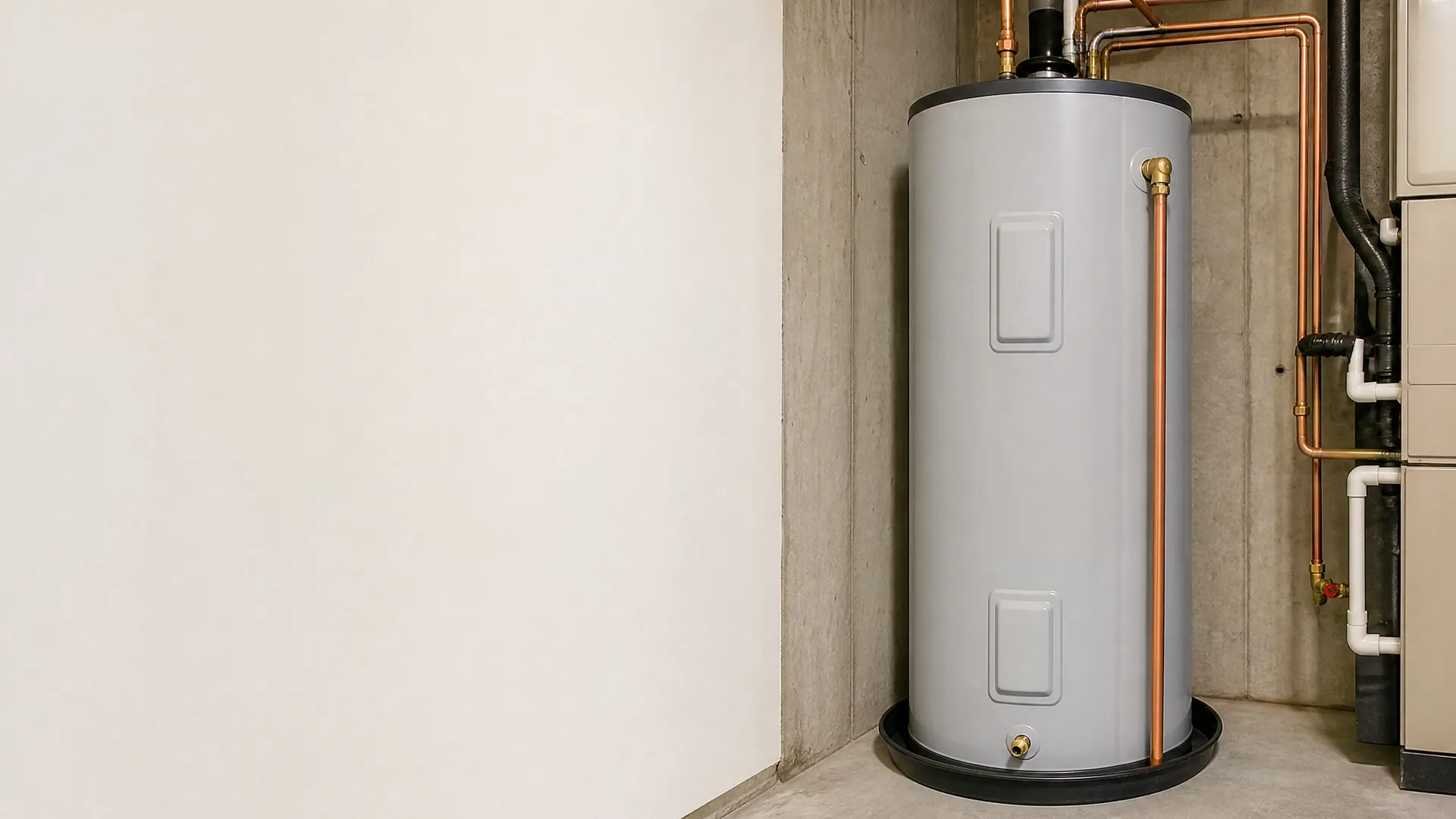
A tankless unit heats water as it passes through, so there's no tank sitting there losing heat and no recovery wait between uses. It has to work harder the moment demand goes up, since it's heating on the spot rather than drawing down a reserve. For a household running water in more than one place at once, that puts more load on the unit at that exact moment, which is part of why sizing it to your home's electric service matters as much as the brand or model you pick.

What installation actually involves
A tank swap sounds simple, but the work depends on what's already there. If the new tank matches the old one in size and the electrical connection is already set up for it, a contractor can often do the swap in a single visit: drain the old tank, disconnect the water lines and the electrical whip, set the new one, and tie it back in. Go up in tank size, or go tankless, and the job changes. Tankless units draw a lot more power to heat water on demand, which can mean a larger breaker and heavier wire run from the panel, sometimes a subpanel if the existing one has no room left.
This is where it helps to have someone local looking at your actual setup instead of guessing over the phone. A contractor who works on these systems all year in Arkansas homes has seen what the panel usually looks like in a house your age, what the water line sizing tends to be, and where the install tends to run into trouble. That's the difference between an estimate and a number you can count on, and it's also why calling around to five companies and explaining your setup five times doesn't actually get you a better answer. One contractor who knows the equipment and can look at the panel in person gets you the real picture faster.

53.7% of homes statewide heat with electricity
With more than half of Arkansas homes running electric heat, your water heater is almost certainly electric too, and that's what keeps a tank the simpler install. An electric tank ties into wiring already sized for it, instead of adding the gas line or venting a tankless unit would need.
ACS 2020-2024 5-year B25040
Tank Still Wins Here
- For most Arkansas homes, a tank water heater is the better fit because most run on electric power priced low here.
- A tank that matches your old one in size and hookup usually installs in a single day.
- Rust at the fittings or a tank losing heat faster than before means it's closer to failing than fixing.
- Tankless units avoid the standby loss of keeping forty or fifty gallons hot around the clock.
- Switching to tankless usually means adding a gas line or upgrading electrical service, which adds real work to the install.
- A local contractor who installs these year-round knows which setup your home can take without rewiring or new venting.
Arkansas homes mostly run on electric heat, and that same wiring is what makes a tank the easier call for hot water too. A tankless unit can run on electricity, but the household demand for instant hot water asks more of your electrical service than a tank does, and that usually means upgrading it before the unit goes in. Gas tankless avoids that but brings its own cost: a gas line where there isn't one, new venting, a place on the wall that can take the unit. None of that is impossible, it's just work your home may not already be set up for, where a tank often is. If your old tank matches the new one in size and the electrical hookup is already there, a contractor can usually get it installed in a day. The tradeoff is standby loss. A tank keeps forty or fifty gallons hot whether you're using it or not, and tankless skips that by heating water only when you turn on the tap. For most homes here, with power priced the way it is and the wiring already in place, that tradeoff still favors the tank. Rust at the fittings, a tank that's slower to recover than it used to be, these are signs worth catching before the tank fails outright rather than after. A contractor who works on these year-round can tell you quickly which setup fits your home without guessing, and without rewiring or new venting you didn't ask for.


Water Heater Installation
No phone calls to make
Your request stays with one local pro.
