Tell us about the job
Takes about a minute. No obligation.
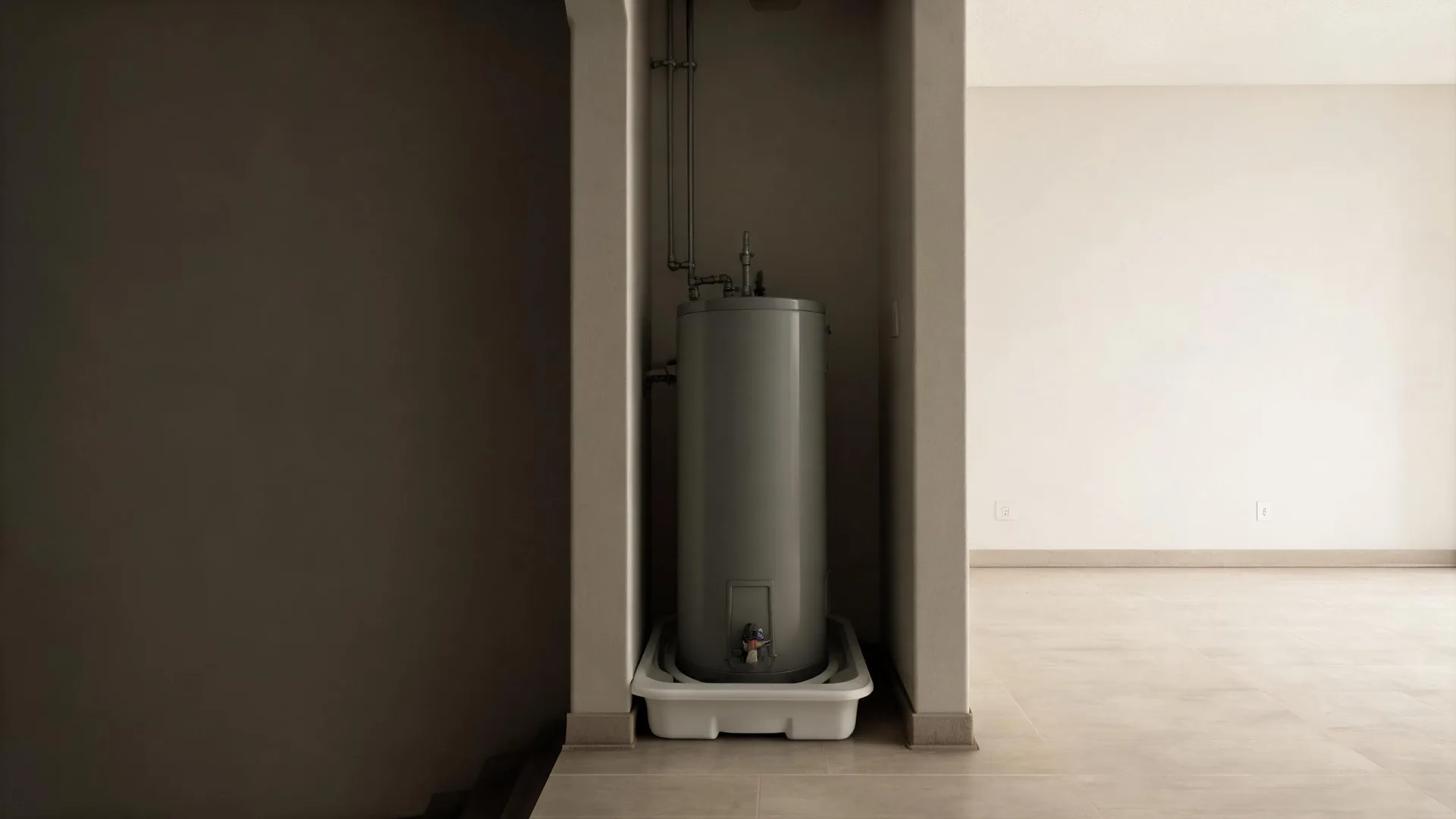
A water heater replacement in Grant County starts with what the house runs on. Electricity heats more occupied homes in Grant County, Arkansas than any other fuel, at 50.9% (2020-2024 ACS 5-year). That share means most contractors here are specifying electric units, and electric water heaters pull a sustained load that the service panel has to support. Before a contractor can quote the right tank size or a tankless unit, they check whether the existing wiring and breaker capacity can carry it. A panel that handled the old resistance element fine can still fall short when a higher-efficiency unit draws differently on startup.
Ductwork matters less on a water heater job than on a whole-home system, but the electrical does. Half the homes in Grant County, Arkansas were built in 1991 or earlier (2020-2024 ACS 5-year). Houses built by that point were wired for loads that modern storage and tankless units routinely exceed, and a service panel from that era often has little room left. A contractor has to open the panel box and check the available capacity before the unit can be quoted accurately, because the wiring and breaker space decide what the installation actually costs.
What a New Water Heater Installation Covers
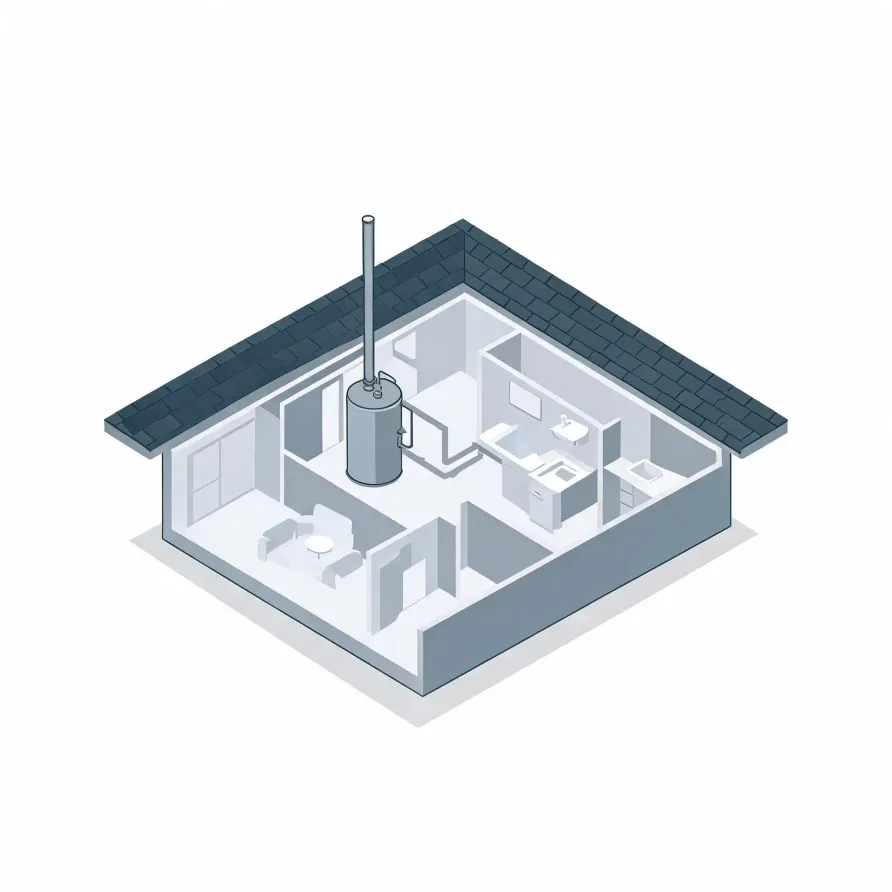
The tank or tankless unit is the piece a homeowner notices first, and it sits in a utility room, basement, garage, or closet depending on the house. That unit is where cold water enters, gets heated, and waits or passes through on demand. A contractor mounts it against a wall or on a platform, connects it to the home's water supply lines, and secures the flue or venting that carries exhaust out of the living space.
The pressure relief valve mounts directly on the unit and is the safety device that opens if heat or pressure inside climbs too high. A drain pan sits beneath the unit to catch any water that escapes. The cold-water inlet and hot-water outlet connections tie into the existing supply and distribution lines already running through the house.
The drawing shows a typical water heater layout, and a licensed contractor determines exactly what the installation requires in your home.
Find a contractor in Grant CountyGrant County, Arkansas, by the numbers
67 severe weather events were recorded in Grant County, Arkansas between 2015 and 2024.
NOAA National Centers for Environmental Information, Storm Events Database, bulk CSV export, events 2015-01-01 through 2024-12-31.Half the homes in Grant County, Arkansas were built in 1991 or earlier (2020-2024 ACS 5-year).
U.S. Census Bureau, 2020-2024 American Community Survey 5-Year EstimatesGrant County, Arkansas holds 7,957 housing units (2020-2024 ACS 5-year).
U.S. Census Bureau, 2020-2024 American Community Survey 5-Year EstimatesOwners occupy 80.7% of the occupied homes in Grant County, Arkansas (2020-2024 ACS 5-year).
U.S. Census Bureau, 2020-2024 American Community Survey 5-Year EstimatesSevere Weather Events in Grant County
Extreme weather puts a steady load on water heating equipment, shortening service life and raising the stakes on every installation decision. What happens in Grant County shapes what a water heater here has to handle, which is why local weather history belongs on this page.
67 severe weather events, 2015–2024. Source: NOAA National Centers for Environmental Information, Storm Events Database.