






Water heater making popping noises in Rogers, AR

Explain the water heater problem once instead of to every shop in Benton County.

Start one form

That popping or rumbling sound is sediment, usually sand and mineral deposits, settled at the bottom of the tank. Rogers water runs hard enough to leave this behind over time, and as the burner or heating element heats the water underneath that layer, pockets of water get trapped in it and boil. The popping is steam forcing its way up through the sediment. It is not dangerous by itself, but it means the heating element or burner is working harder than it needs to, and heat is being wasted on warming sediment instead of your water. Left alone, that layer keeps building, and over months it can shorten the life of the tank or lead to a cracked lining. It is worth having someone flush the tank and check the element or burner before that happens, rather than waiting for the water heater to fail outright some evening when you need hot water most.

Why does sediment build up so fast in my water heater?

  • 2.69 people per household on average

    With 2.69 people in the average Benton County household, the tank cycles on and off all day, and every refill brings in more of the hard water that leaves sediment behind.

  • Half the homes here were built by 2001

    Half the homes here were built in 2001 or earlier, which means plenty of tanks are old enough to have years of sediment built up, not just a few months.

  • Power here costs 12.77 cents per kilowatt-hour

    At 12.77 cents per kilowatt-hour, power here is cheap, but a layer of sediment still makes the element work harder and longer to heat the same water.

ACS 2020-2024 · EIA-861 2025

A white cylindrical water heater with copper pipes and a metal flue stands in the corner of an empty room with bare concrete floor, wood framing at left, and a plain light-colored wall.

Leave it and see what happens

The popping doesn't stop on its own. Sediment keeps collecting under that layer with every tank refill, and the burner or element keeps firing underneath it. Over time that layer insulates the heating surface from the water it's supposed to warm, so the water heater works harder and takes longer to recover between uses. On a gas tank, that trapped heat can scorch the bottom and wear a hole in it. On an electric tank, the element can burn out early.

A white cylindrical water heater with copper and black pipes stands against a plain white wall on a gray floor, beside a concrete wall and metal ductwork.

Have the tank flushed

A contractor can drain the tank and flush the sediment out through the drain valve, and on some units break up what's caked on with a hose or a descaling pass. This won't undo damage already done to a tank that's been popping for years, but it stops the buildup from getting worse and quiets the noise going forward. It's worth asking whether your tank's drain valve still opens freely, since a clogged one is common on tanks that have never been flushed.

Flush It or Replace It

Flush the Tank

  • A contractor drains the tank and runs water through it until the sediment clears out, which quiets the popping in most cases.
  • This works best if the buildup is still loose, not baked hard onto the bottom of the tank from years of heat cycles.
  • It costs less than replacing the unit and can buy a tank several more years of service if the tank itself is sound.
  • A contractor who works on Rogers water heaters every week can tell from the sound and the age of the tank whether a flush will actually fix it.
  • If the element or burner has already been scorching sediment for a long time, a flush clears the noise but won't undo damage already done underneath.

Replace the Unit

  • Once sediment has hardened into a crust, flushing won't remove it, and the popping comes back within weeks.
  • A tank that's been running hot under a thick sediment layer for years is more likely to have a stressed or failing element or burner.
  • Replacement resets the problem: new tank, no sediment, and the chance to start the clock over on buildup.
  • It's the higher upfront move, but it ends the cycle of flushing a tank that keeps re-accumulating sediment faster than it should.
  • A local contractor who's pulled apart plenty of old Rogers tanks can tell you from the tank's age and condition whether it's past the point of flushing.
A smiling woman with dark shoulder-length hair in a cream V-neck sweater sits at a marble counter with a glass of red wine, with a kitchen and softly lit living room behind her.
A woman in a dark green sweater laughs while seated at a marble kitchen island with a glass of red wine, with open shelving, cabinets and a living room visible behind her.
A woman with long dark hair in a cream knit sweater laughs while looking off to the side, seated at a counter with a glass of red wine, in a dimly lit living room with a sofa, lamp, framed pictures and houseplant behind her.
A smiling woman with long dark hair in a beige sweater sits at a marble kitchen counter with a glass of red wine, with a dimly lit living room behind her.

What is that popping actually doing to my water heater?

You probably noticed it in the evening, when the house is quiet and the water heater kicks on. A series of pops or a low rumble coming from the tank, maybe followed by a few minutes of quiet before it starts again. You might also notice the hot water taking a little longer to show up at the tap, or the tank making noise more often than it used to. That popping means the burner or element is working harder to heat water through a layer of sediment instead of heating it directly. Left alone, that extra strain wears on the tank and the heating element underneath it, and can shorten how long the water heater lasts.

A bathroom with a glass-door shower lined in marble-look tile with a recessed niche and showerhead, a white towel hanging on a wall-mounted bar, and a window with green foliage outside.

Monday morning, upstairs bathroom, and you turn the shower on before you've really woken up. You wait for the steam that usually fogs the mirror by now. It doesn't come. The water's lukewarm at best, and from down the hall you can hear the tank popping away like it's working twice as hard for half the heat. The towel's still hanging on the rail, dry, untouched. You stand there a second, hand under the water, doing the math on how late you are and whether this is a cold shower day or a call-someone day. Outside, Rogers is waking up to another ordinary morning. In here, it's just you and a tank that's been trying to tell you something for weeks.

No calling every shop in Benton County

You've heard what it is and what it's doing. Finding someone to deal with it is its own chore: searching for a plumber who works on water heaters, calling around to see who can come out, explaining the popping and the sediment and the age of the tank all over again to each one, then sitting with a stack of quotes trying to guess which is fair. Hand that off instead. A local contractor who works on Rogers water heaters all year has seen this exact sediment problem more times than most homeowners ever will, in houses on the same hard water you're on. That's who looks at your tank, not a call center reading from a script. The popping isn't going to quiet down on its own, and the longer that layer sits under the burner, the more it's working against the tank. Worth getting someone out to look at it while a flush is still likely to be enough.

A gas burner sitting under a layer of sediment has to push its heat through that layer to reach the water, so the burner runs longer each cycle than it would against a clean tank bottom.

That longer run time is the popping you're hearing. It's also wear the burner wasn't built to carry, cycle after cycle, for as long as the sediment stays put.

2.69 people per household on average

With close to three people drawing on the same tank every day, it refills more often, and every refill adds another dose of Rogers' hard water to the sediment already sitting at the bottom. A smaller household would hear that popping start later.

ACS 2020-2024

Call a plumber now

A plumber comes out, flushes the tank or replaces the element or burner if the sediment has already done damage, and the popping stops. If the tank is still sound, a flush now costs less wear than waiting, and the heater keeps working the way it did when it was new. You find out what's actually going on down there instead of guessing from the sound alone. If the anode rod or the heating element needs attention too, a plumber looking at the tank now catches it before it turns into a tank that's leaking or a burner that won't stay lit.


Wait and see

The popping usually doesn't get quieter on its own. Sediment keeps settling with every refill, and the burner or element keeps working harder underneath it to reach the water. Some homeowners wait until the noise gets loud enough to bother them, or until the hot water starts running out faster than it used to. By then the sediment layer is often baked on rather than loose, which makes it harder to flush clean and more likely that something underneath it, the element or the tank lining, has already taken the wear.

A bearded man in a dark navy sweater over a collared shirt smiles and looks off to the side while seated at a dinner table with a glass of red wine, a lit candle, and a plate of food in the foreground of a dimly lit room.
A woman in a dark gray sweater reclines on a couch with her eyes closed and a knit blanket over her lap, an open book resting face-down in front of her, with a lit table lamp and shelving blurred in the background.

What the popping tells you

  • The popping is sediment at the bottom of the tank, built up by Rogers' hard water and years of heat cycles.
  • Left alone, the layer thickens and the burner or element works harder against it, which wears the tank faster.
  • A flush now clears the loose sediment and quiets the tank, while baked-on buildup usually means replacing the heating element or burner.
  • A local plumber who services water heaters all over Benton County has likely opened dozens of tanks with this same sediment problem.
  • One licensed plumber takes the job, so you're not fielding calls from several companies for the same repair.
  • Either way, the sound tells you the tank needs attention, not that it needs to be replaced outright.

The sound coming from your tank is sediment, built up from Rogers' hard water and however many years this heater has been cycling on and off. That part is settled. What happens next depends on how long it's been sitting there. Loose sediment flushes out and the tank goes back to running quiet. Sediment that's been baked onto the bottom through enough heat cycles usually means the element or burner underneath it has already taken damage, and a flush alone won't fix that. A plumber who opens up water heaters across Benton County every week can tell which one you're dealing with by looking at the tank and asking how long the popping has been going on. That's not a guess for someone who sees this same sediment problem on a regular basis in homes around here. You'll work with one licensed plumber for this, not a handful of companies competing for the job, so you explain the problem once and the person who shows up already knows what to check first. The popping itself isn't a verdict on the heater. It's information. It's telling you sediment has built up enough to get between the burner or element and the water, and that it's time to have someone look at the tank before that layer does more wear. Whether that ends in a flush or a part replacement, the tank itself is usually fine. The noise is your signal to act, not a sign the water heater is finished.

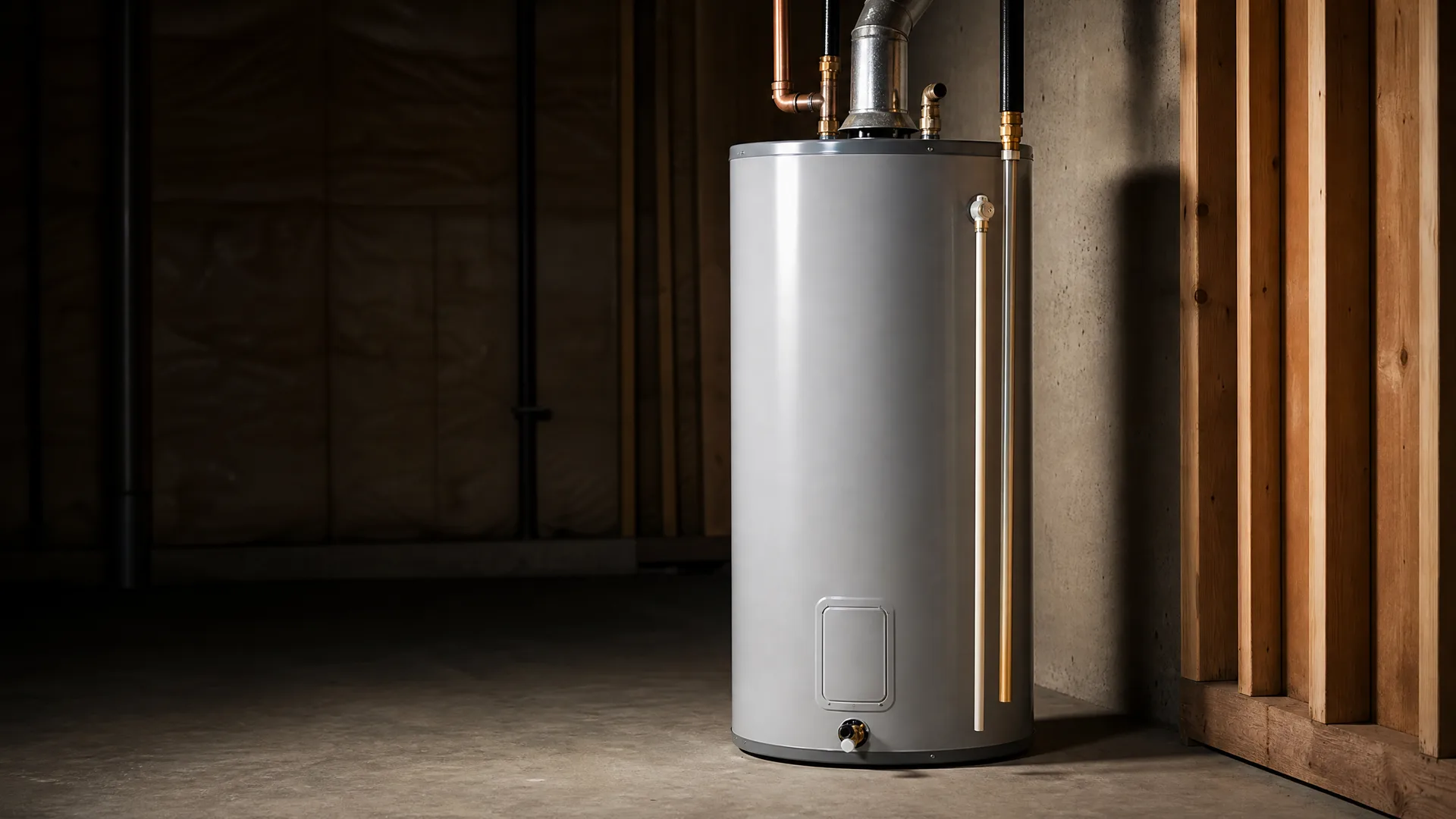
A gray cylindrical tank water heater with copper and metal pipes at its top stands on a concrete floor beside a concrete wall and wooden studs in a dim basement.

Explain it one time

Step 1 of 3: Equipment