Tell us about the job
Takes about a minute. No obligation.
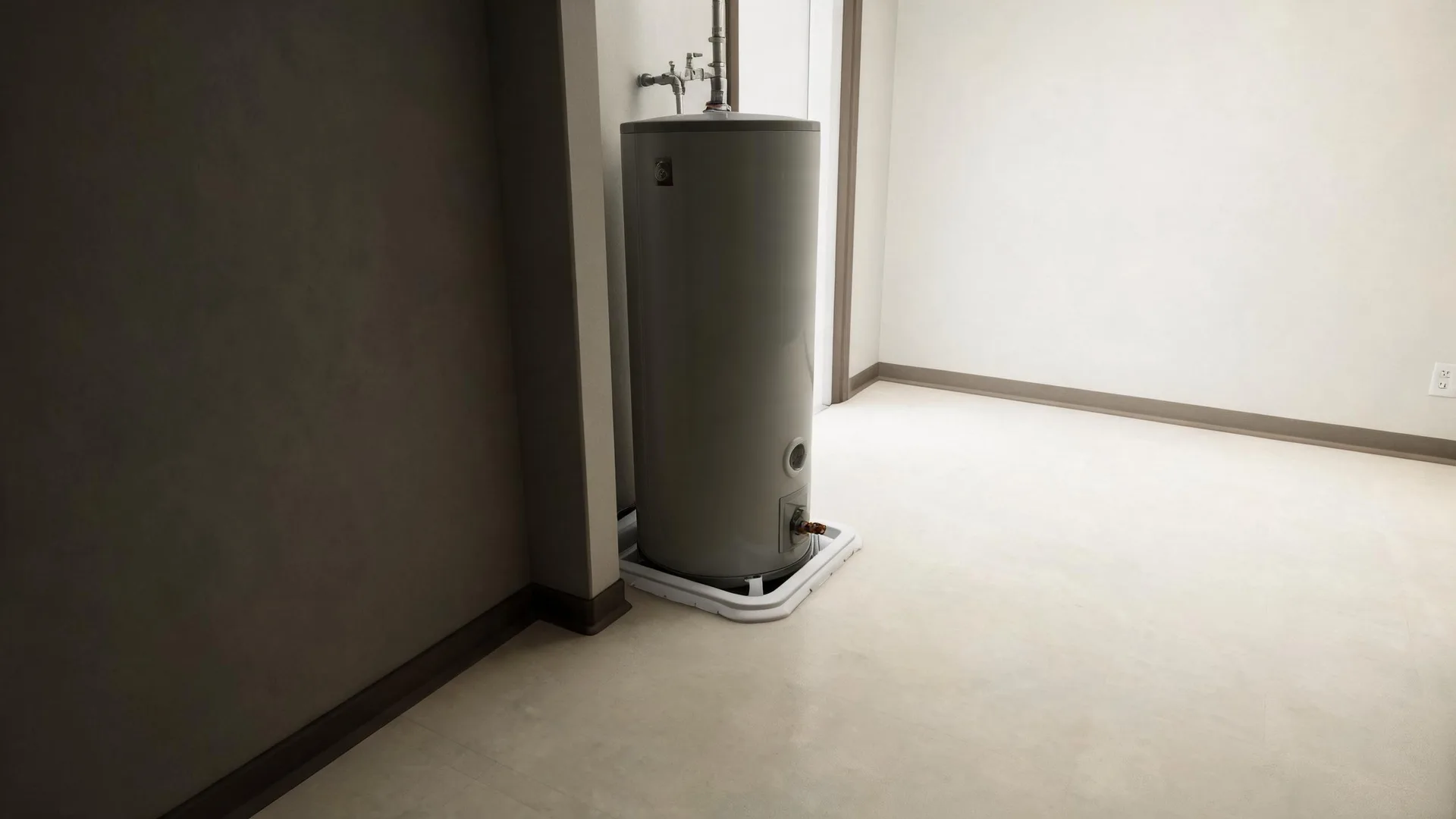
A contractor called out for a water heater repair here starts from what the house is running, because the fuel decides which parts fail and in what order. Electricity heats more occupied homes in St. Francis County, Arkansas than any other fuel, at 56.8% (2020-2024 ACS 5-year). Electric resistance water heaters carry their load on the heating elements and the thermostats, and those components wear against years of daily cycling. When an element burns out, the tank keeps sitting, sediment keeps settling, and the next element follows. A contractor pulling the access panel can see how long that process has been running.
Water heater repairs in housing stock this old tend to hinge on what a contractor finds once the unit is open: sediment-packed tanks, corroded anode rods, and heating elements or control valves on systems whose replacement parts are no longer stocked at supply houses. Half the homes in St. Francis County, Arkansas were built in 1980 or earlier (2020-2024 ACS 5-year). A house built for one generation of water heating equipment and fitted later with another carries that mismatch in the condition of what is inside. When a part is no longer in production, a contractor's finding at the opened unit decides whether the job is a repair or a full replacement.
The Parts of a Water Heater a Contractor Checks First
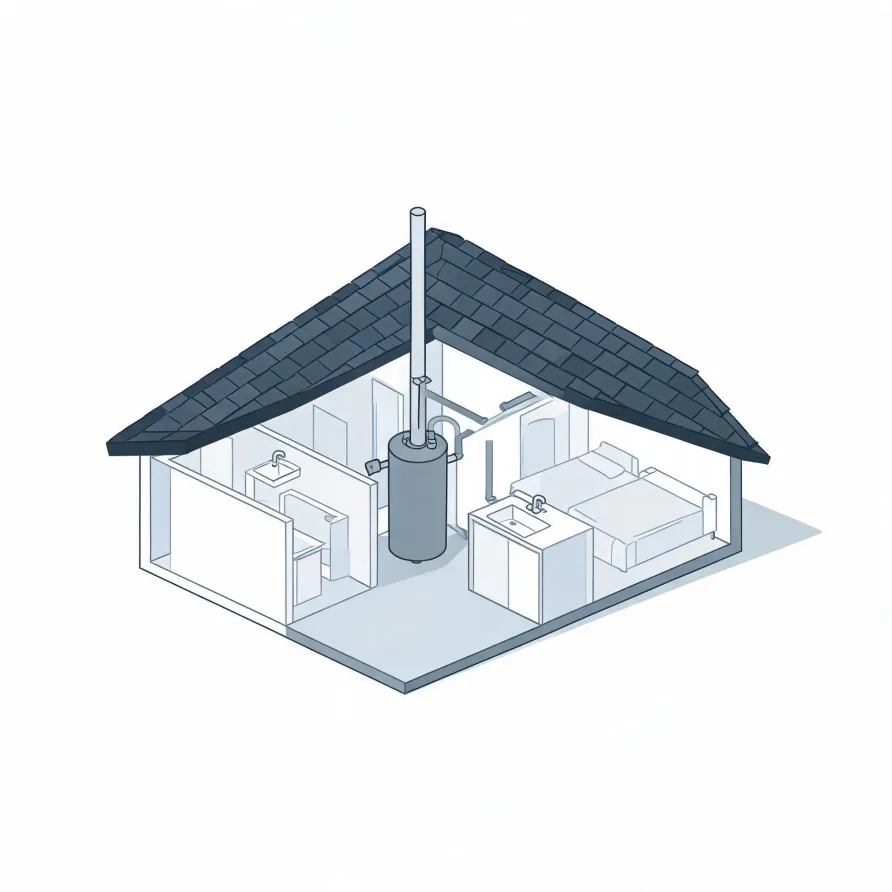
The tank is the center of the system, sitting in a utility space, basement, or closet, and its job is to hold and heat a supply of water ready for use. The heating element or burner assembly sits inside or beneath it and is often the first place a contractor looks when water stops getting hot or heats unevenly.
The pressure relief valve mounts on the side of the tank and opens automatically if pressure inside climbs too high. The anode rod hangs inside the tank to slow corrosion, and the dip tube channels cold incoming water to the bottom so the hottest water rises to the outlet at the top.
The drawing shows a typical layout, and a licensed contractor determines which parts apply to the specific unit and setup in your home.
Find a contractor in St. Francis CountySt. Francis County, by the numbers
39 severe weather events were recorded in St. Francis County, Arkansas between 2015 and 2024.
NOAA National Centers for Environmental Information, Storm Events Database, bulk CSV export, events 2015-01-01 through 2024-12-31.Half the homes in St. Francis County, Arkansas were built in 1980 or earlier (2020-2024 ACS 5-year).
U.S. Census Bureau, 2020-2024 American Community Survey 5-Year EstimatesSt. Francis County, Arkansas holds 9,570 housing units (2020-2024 ACS 5-year).
U.S. Census Bureau, 2020-2024 American Community Survey 5-Year EstimatesOwners occupy 55.5% of the occupied homes in St. Francis County, Arkansas (2020-2024 ACS 5-year).
U.S. Census Bureau, 2020-2024 American Community Survey 5-Year EstimatesSevere Weather Events in St. Francis County
Weather puts real stress on water heaters: temperature swings, power surges, and pressure fluctuations all wear on equipment that runs year-round. How much weather a county sees shapes how hard that equipment works and how often it needs attention.
39 severe weather events, 2015–2024. Source: NOAA National Centers for Environmental Information, Storm Events Database.