Get Hot Water Arkansas
Profile view of a bearded man wearing a black baseball cap and a dark gray T-shirt against a plain light background.

Why you run out of hot water fast in Arkansas

Step 1 of 3: Equipment

Running out of hot water fast usually means the tank can't keep up with what your household is asking of it, not that something is broken outright. Most homes in Arkansas run electric water heaters, and electric units recover slower than gas because the elements heat water more gradually. If a shower, a load of laundry, and the dishwasher all draw from the same tank close together, the lower element can't catch up before someone turns on the next tap. A failing lower heating element or a bad thermostat makes this worse, cutting your usable hot water to just what's left in the top of the tank. Sediment settled at the bottom does the same thing, insulating the element from the water it's supposed to heat. None of this means you need a new water heater. It means something specific inside the one you have is not doing its job, and a look at the tank will usually show which part it is.

A woman with shoulder-length brown hair wearing a beige knit cardigan sits in a gray upholstered armchair near a window, looking off to the side with a slight smile, with bookshelves blurred in the background.
A woman with her hair in a bun holds a sleeping young child against her chest, both wrapped in a textured beige knit blanket on a sofa in a dimly lit room with a lamp, framed picture, and bookshelf behind them.

An electric tank has two elements, one near the top and one near the bottom, and they don't run together. The upper element heats the water closest to the top first. Once that's satisfied, the lower element takes over and works on the rest of the tank. That lower element does most of the job, so when it fails, you still get hot water at first because the top is fine, then it turns cold fast because nothing underneath ever heated. Sediment makes the same problem worse. It collects at the bottom of the tank, right where the lower element sits, and makes it work harder and slower to recover. A thermostat set too low causes a different problem. The elements shut off early, before the tank reaches the temperature you actually want out of the tap. And even with both elements working right and the thermostat set where it should be, a 40-gallon tank still only holds 40 gallons. Once that's used, you're waiting on recovery no matter what.

How Your Electric Water Heater Recovers

  • An electric water heater has two heating elements, an upper and a lower, and only one runs at a time.
  • The upper element heats the top of the tank first, then the lower element takes over to recover the rest.
  • If the lower element fails, the top of the tank still feels hot while the usable water underneath never warms up.
  • Sediment that settles on the bottom of the tank sits right where the lower element has to heat, and it slows recovery.
  • A thermostat set too low makes the elements shut off before the water reaches the temperature you expect at the tap.
  • Tank size sets the limit no matter what else is working right, since a 40-gallon tank only holds 40 gallons of hot water.
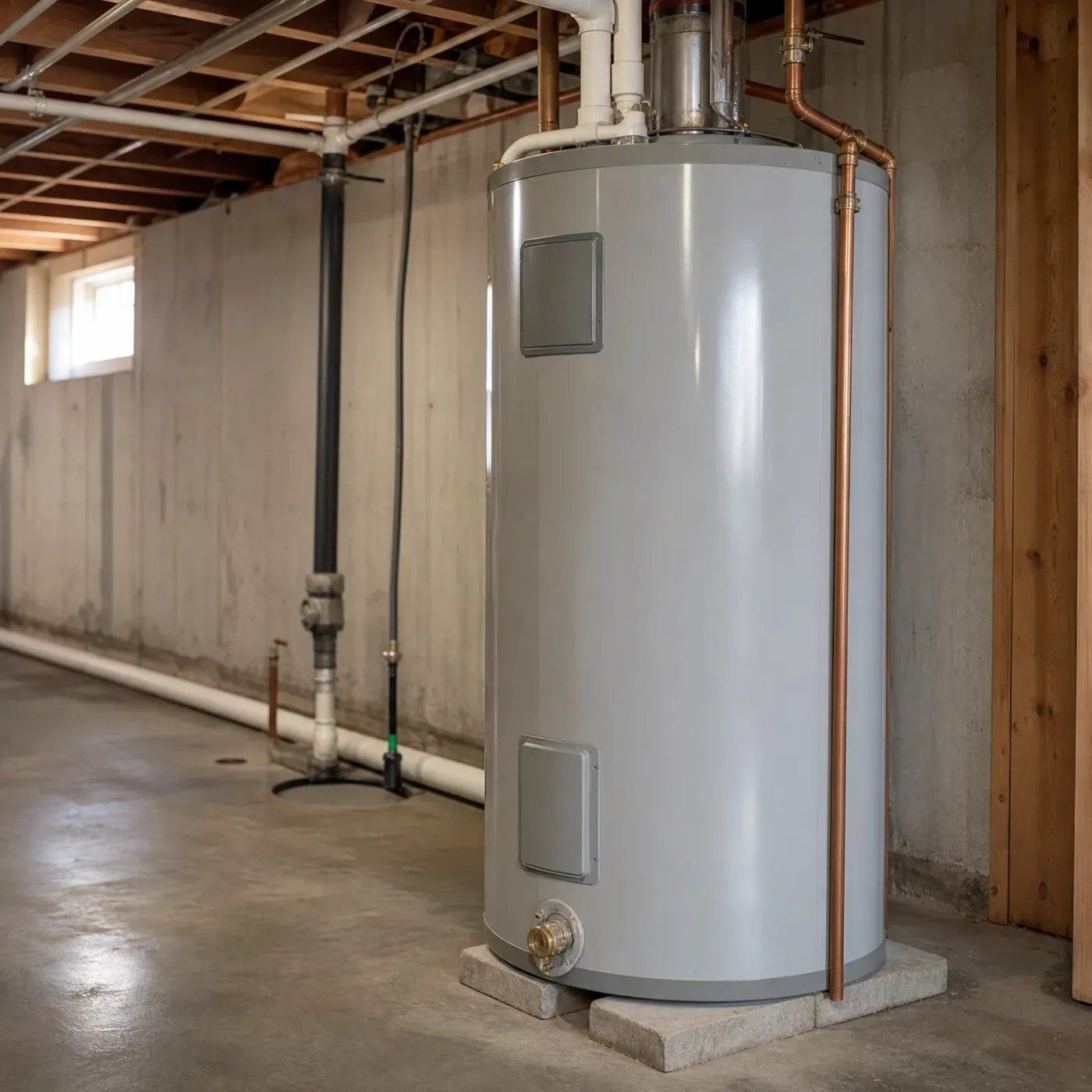
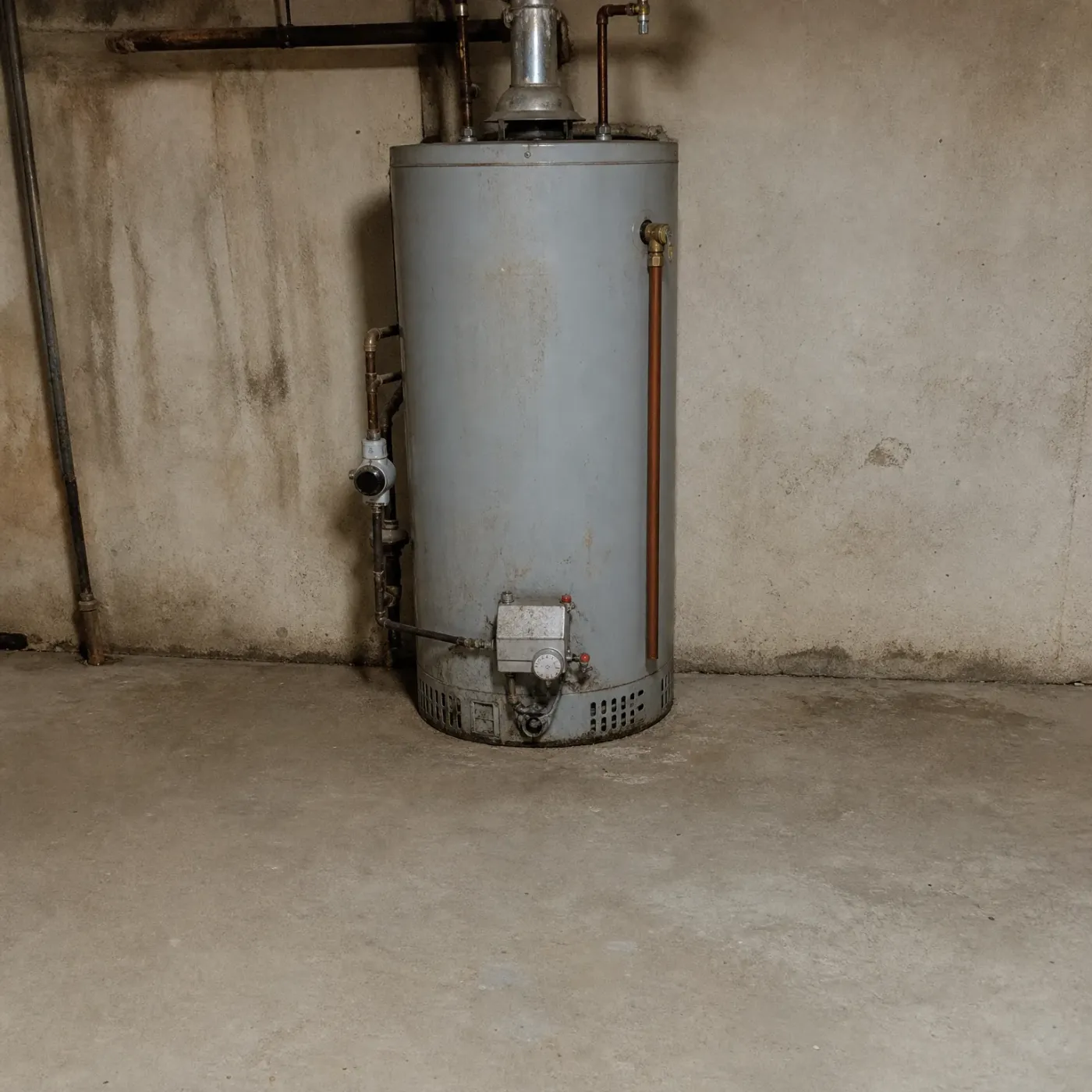
An older gray cylindrical gas water heater with copper and steel piping and a flue, standing on a concrete floor against a stained concrete wall.
Before you get your water heater repair
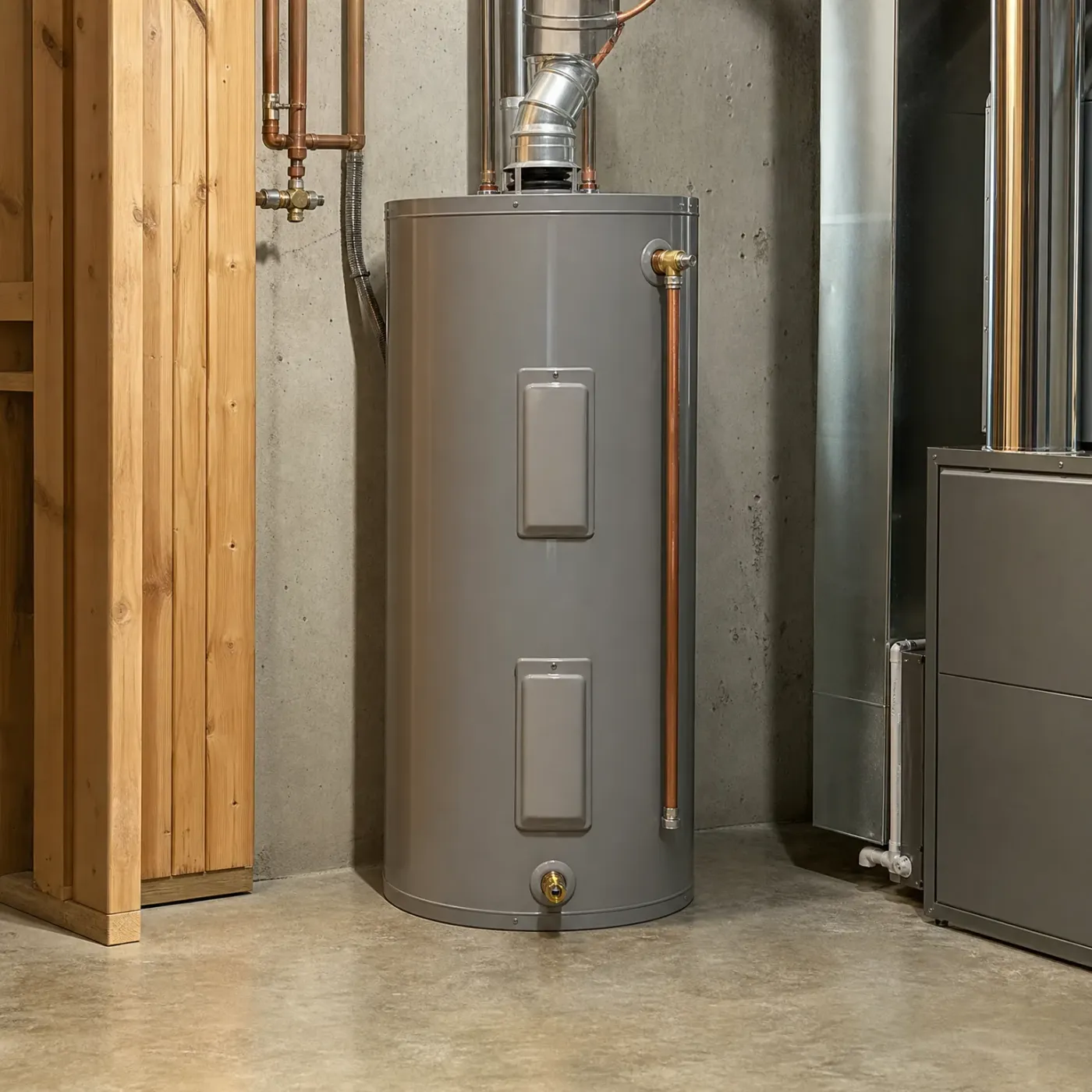
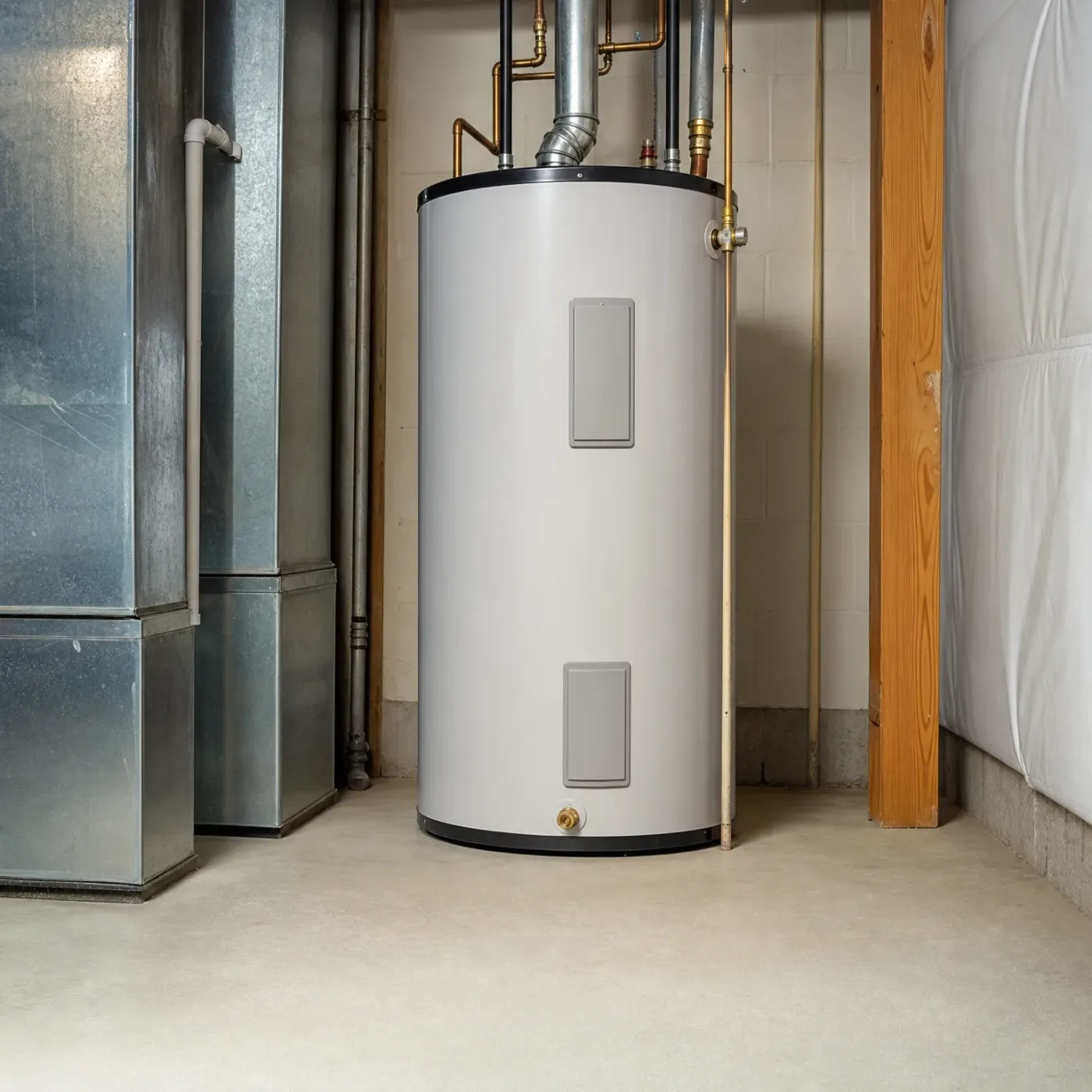
A white cylindrical water heater with two access panels stands on a concrete floor in a basement corner, beside galvanized ductwork, copper and metal pipes, a wooden post, and a concrete block wall.
After you get your water heater repair

What a full tank actually gives you

A 40 gallon tank doesn't give you 40 gallons of hot water to use. It mixes with cold as you draw it down, so a shower, a load of dishes, and someone running the washer can empty the hot side well before the tank reads empty. Add a second shower back to back and the lower element often hasn't had time to recover. The tank isn't undersized for a house on paper, it's undersized for what's being asked of it at that hour.
Why recovery time matters more here

Electric elements heat water slower than a gas burner does, so once the hot water is drawn down, the wait to refill it is longer. A gas tank recovers in roughly half the time an electric one does. That gap doesn't show up on a slow morning when one person showers and leaves. It shows up on the night everyone's home, the dishwasher runs, and the last person in line gets cold water with half the tank still showing warm on the gauge.

53.7% of homes statewide heat with electricity

More than half the homes in Arkansas run on electric heat, and if yours is one of them, your water heater is almost certainly electric too. That means recovery already runs slower than a gas tank, so a failing element or a bad thermostat shows up fast as cold water.

ACS 2020-2024 5-year B25040

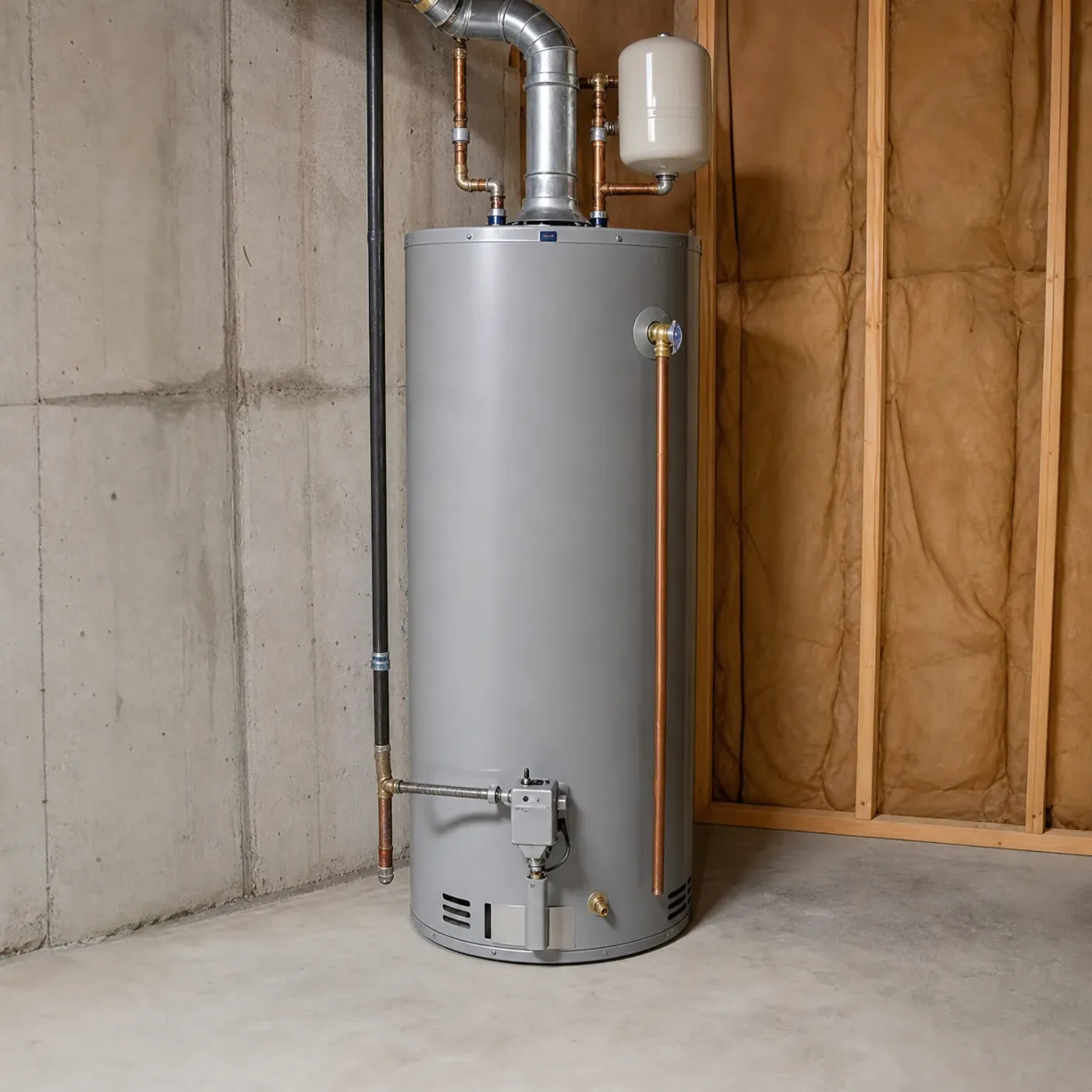
A gray cylindrical gas water heater with copper piping, flue vent, and a small expansion tank stands in a basement corner between a concrete wall and an insulated stud wall.

Working the way it should

A water heater in good shape holds its temperature steady and recovers between uses without you noticing. The pipes and valves stay dry, the flue draws clean, and the dial on the gas control stays put at whatever you set it. You get hot water on the same schedule every day.

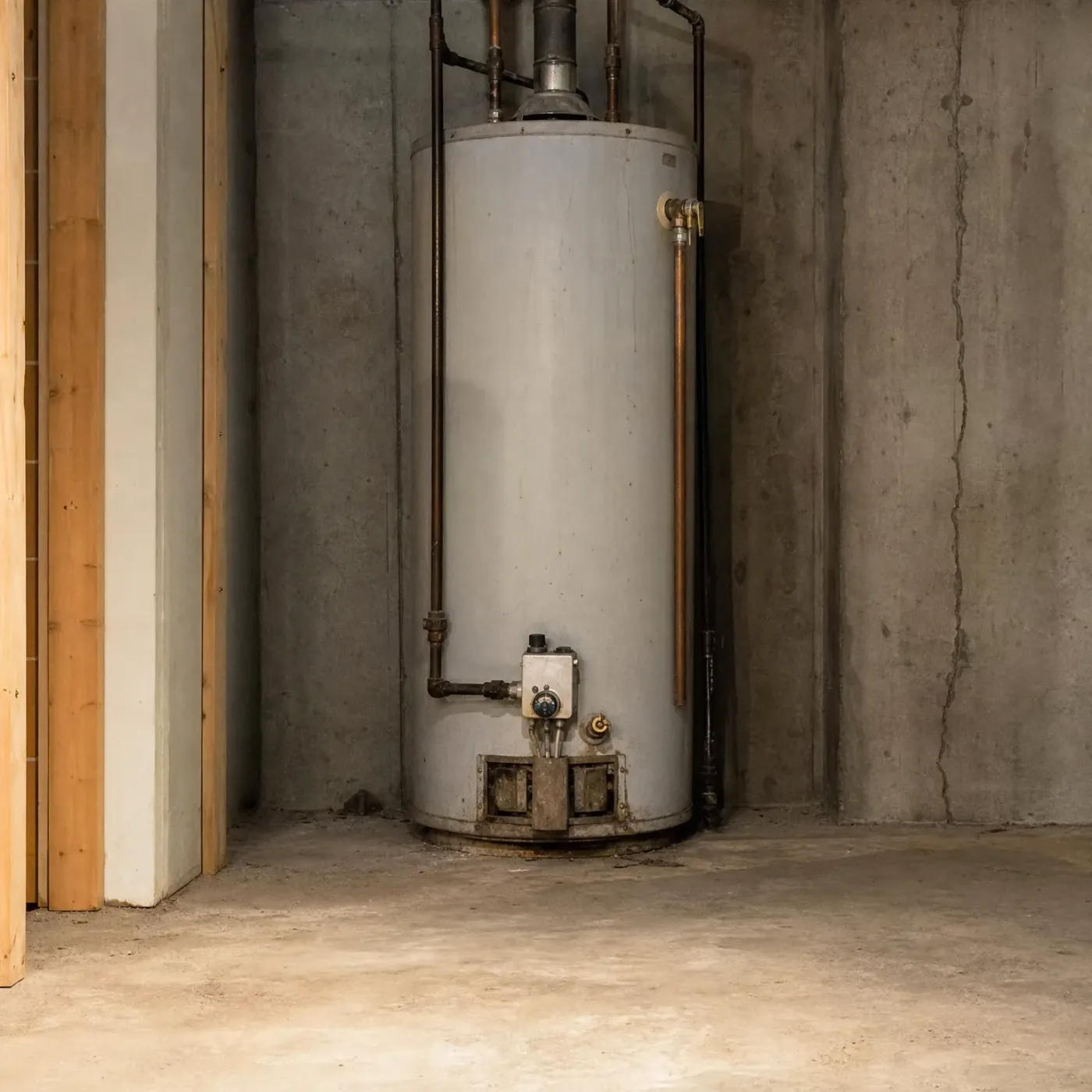
An older gas water heater with copper and black pipes stands in the corner of a bare concrete basement next to a wood-framed partition wall.

A tank losing ground

An older tank tucked in the corner can be working harder than it should just to keep up. If the gas control valve or the pipes feeding it show rust or buildup, recovery slows down before anyone notices a leak. By the time the shower runs cold early, the tank has likely been struggling for a while.

A man with grey hair and stubble in a dark sweater sits on a grey sofa indoors, looking off to the side, with a potted plant and a sunlit window behind him.
A man with gray hair, a beard and glasses, wearing a dark green sweater, sits on a gray sofa in a sunlit living room with a potted plant, table lamp and wooden sideboard behind him.
A middle-aged man with graying hair and a short beard sits on a blue sofa in a living room, looking toward a window, with a bookshelf, lamp and framed picture in the background.
A man with graying curly hair and a dark green sweater sits on a gray sofa in a sunlit living room, looking off to the side, with a framed picture, shelving, an armchair and a window with sheer curtains behind him.
A large white cylindrical water heater on concrete blocks in a basement with poured concrete walls, exposed joists, copper and PVC piping, and a small window.

The right pro for this job

The pro who reaches out is licensed in Arkansas.

Describe your water heater job, and a local pro who handles it gets in touch.

Find a local pro

You're not committing to anything by asking.

A gray cylindrical water heater with two access panels and copper piping stands against a concrete wall in a basement, beside wood framing and metal ductwork.
A water heater working the way it should keeps both elements cycling in order, so hot water holds up through back to back showers.
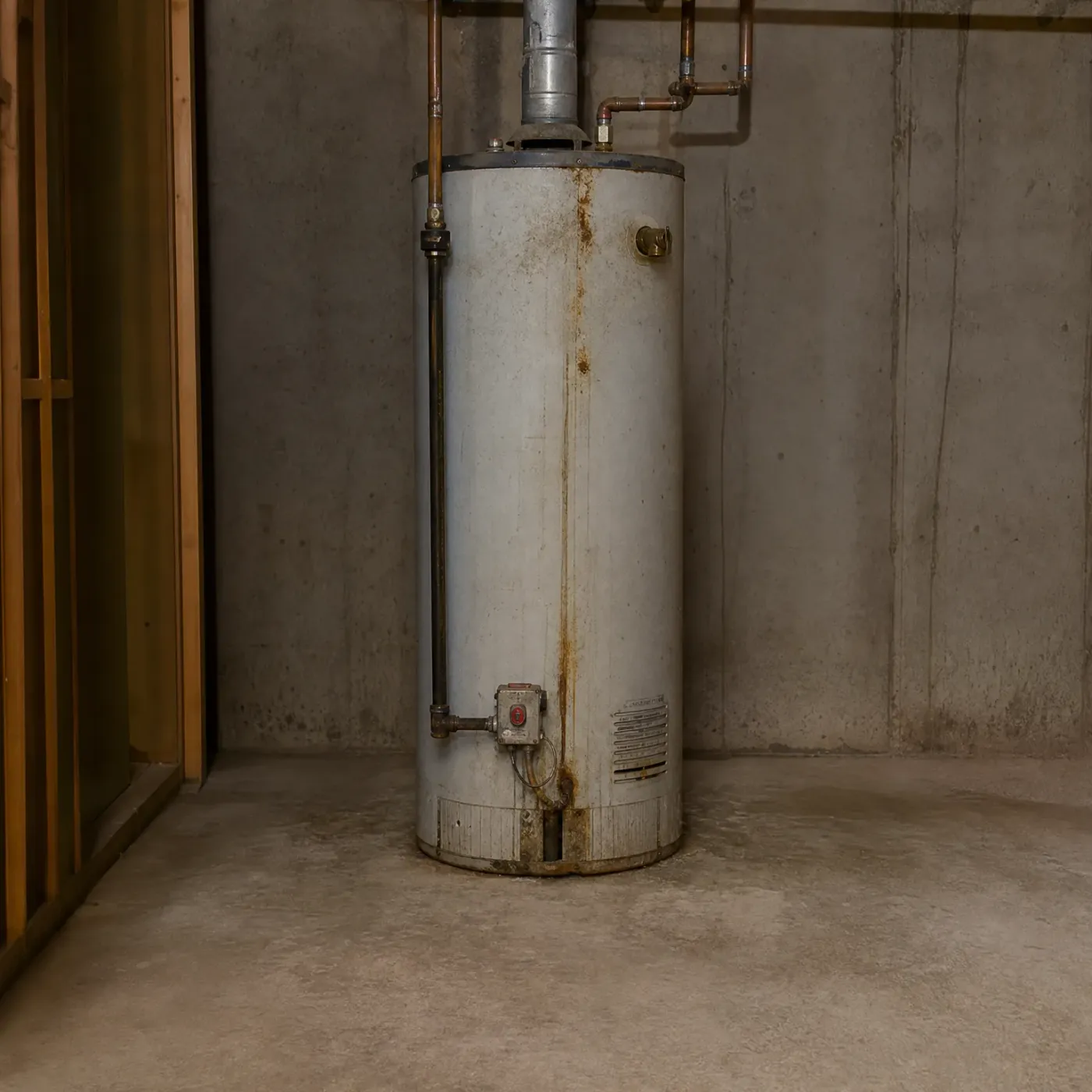
An aging rust-streaked gas water heater with copper and galvanized pipes stands against a bare concrete basement wall beside wooden stud framing.
Rust creeping across the tank and valve means the steel is failing from the inside, and a repair call now is worth more than one after a leak.
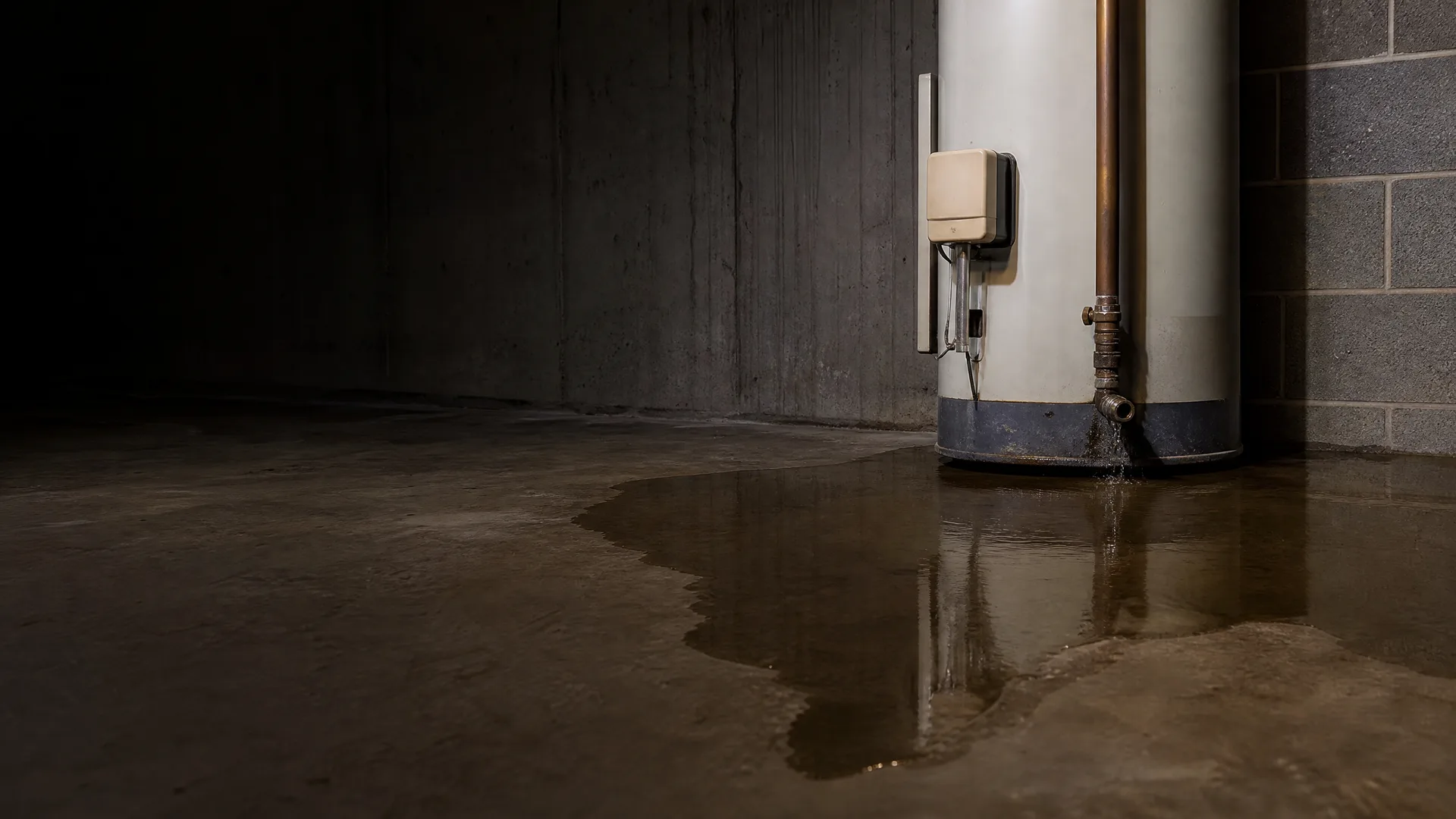
A water heater tank with copper piping and a drain valve stands against a concrete and block wall in a dim basement, with a large puddle of water spreading across the floor.

Saturday morning, and you're down in the basement with a load of towels when your shoe lands in water. It's spread out from the base of the tank, a few feet wide, soaking into the concrete. You crouch down and find it, a thin stream running down the side of the tank and pooling underneath. Not dripping from a fitting or a valve. Coming from the tank itself. You shut off the breaker and the water supply line, then stand there looking at it. The muggy air down here hasn't helped, everything's a little damp already, but this is different. This is the tank telling you it's done.

Get It Fixed or Keep Living With It

Call a repair tech

  • A licensed tech can test both elements and the thermostats in one visit and tell you exactly which one failed.
  • If it's the lower element or thermostat, that's usually a straightforward swap that gets full recovery back.
  • Someone who works on these units all summer in Arkansas has already seen what fails first in electric tanks here.
  • A repair visit also catches a failing anode rod or early rust before it turns into a leak.
  • You get one contractor who looks at your specific tank, not a guess over the phone.

Wait it out

  • Running on one working element means every shower and load of laundry competes for the same limited hot water.
  • A thermostat stuck or drifting out of calibration doesn't fix itself and tends to get less accurate over time.
  • The working element is doing the job of two, so it wears faster and is more likely to fail next.
  • Short hot water now is often the warning sign that comes before a full loss of hot water later.
  • Waiting doesn't tell you whether the problem is a 20 dollar thermostat or a tank that's already rusting through.
  1. Cold water enters the tank through the dip tube at the bottom.

  2. The upper thermostat calls the top element to heat first.

  3. Once the top reaches temperature, the upper thermostat shuts that element off.

  4. Control passes to the lower thermostat, which fires the lower element.

A smiling man in a denim shirt and white t-shirt stands in an open dark doorway of a stucco house, facing a woman with long brown hair and a green jacket seen from behind in the foreground.

Running out fast has a reason, and it's usually fixable

An electric tank that's working right should let you get through back to back showers without the water turning cold halfway. If yours isn't doing that, the cause is almost always one of the two elements or thermostats, and that's a known, testable problem, not a mystery. A tech who works on these tanks regularly has seen the same failure play out in plenty of other homes and knows what to check first.

Getting matched with a licensed tech local to you means someone looks at your specific tank, not a general description of how electric water heaters fail. You'll hear from one contractor, not a handful of companies competing for the job, and that contractor can tell you plainly whether it's a thermostat, an element, or something further along than that. From there you'll know what you're dealing with and what it takes to get full hot water back.

Interior corner of a room with a window and sheer curtain at left, a gray upholstered sofa with a cushion at right, and a round wooden table holding stacked books and a round vase with an olive branch.
Kitchen corner with cream upper cabinets, oak lower cabinets, white marble-look countertop, beige tile backsplash, a ceramic vase of greenery, a wooden cutting board and bowl, and a black-framed window at right.
Interior corner of a room with a white-framed window and wide sill, beige walls with panel molding, a wooden cabinet holding a ceramic vase with a green leafy plant, and blurred shrubs and trees outside.
A wood-framed armchair with beige cushions and a woven lumbar pillow sits in a corner beside a large window overlooking green trees, with a tall ceramic vase holding leafy branches on the left and plaster walls and wood flooring.
Interior corner with a white-framed window above a sill, beige walls with baseboard molding, a greige shaker-style cabinet with brass knobs and a potted plant on top, light wood flooring and a woven jute rug.
A dark-framed six-pane window with white trim and sill set in gray horizontal lap siding, with hydrangea shrubs below and a white column and shingled roof section at left.

Matched to your water heater job

Only one pro gets your request, so you hear from one company.

Get a licensed local pro

It costs nothing to send, and you don't have to hire anyone.