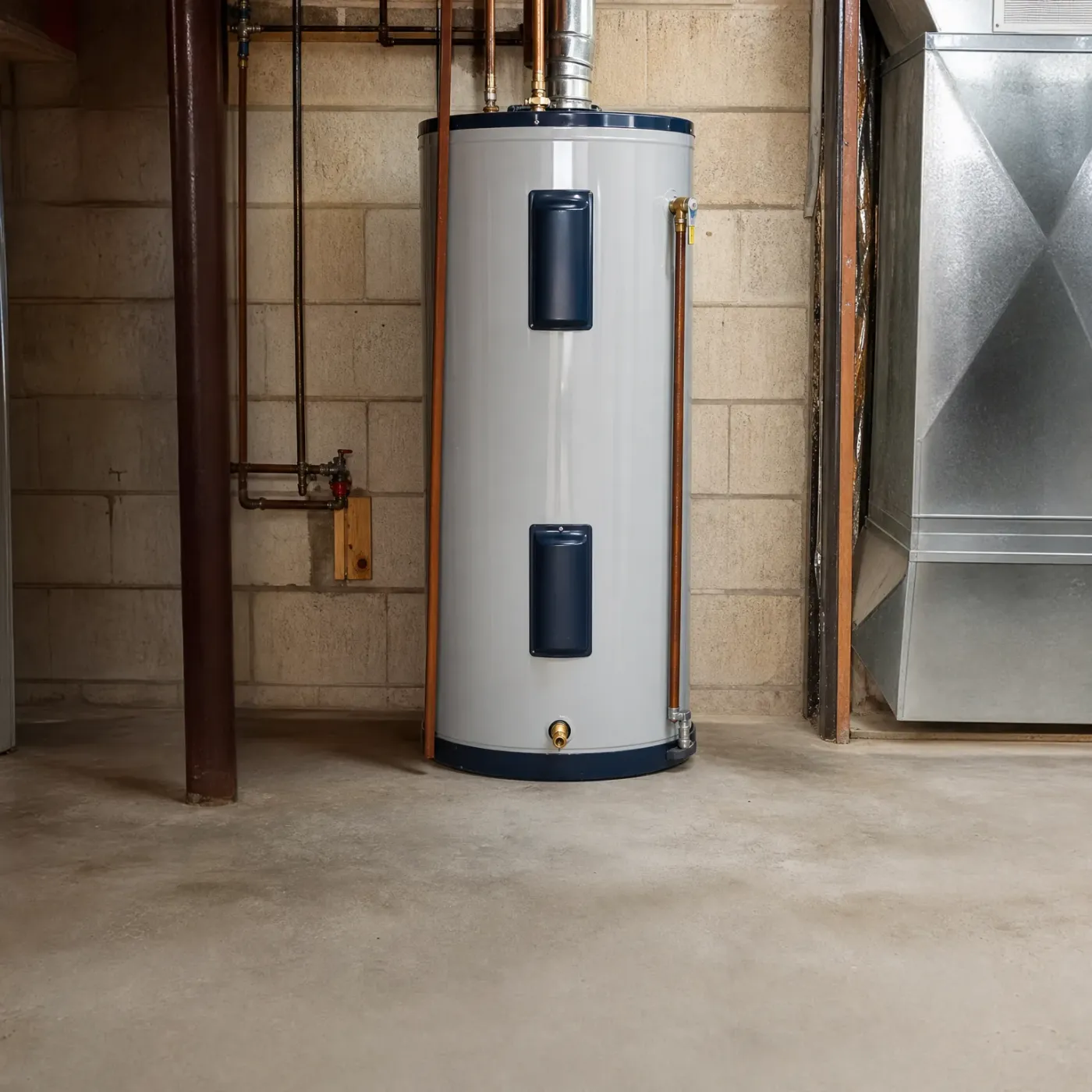
Working as it should
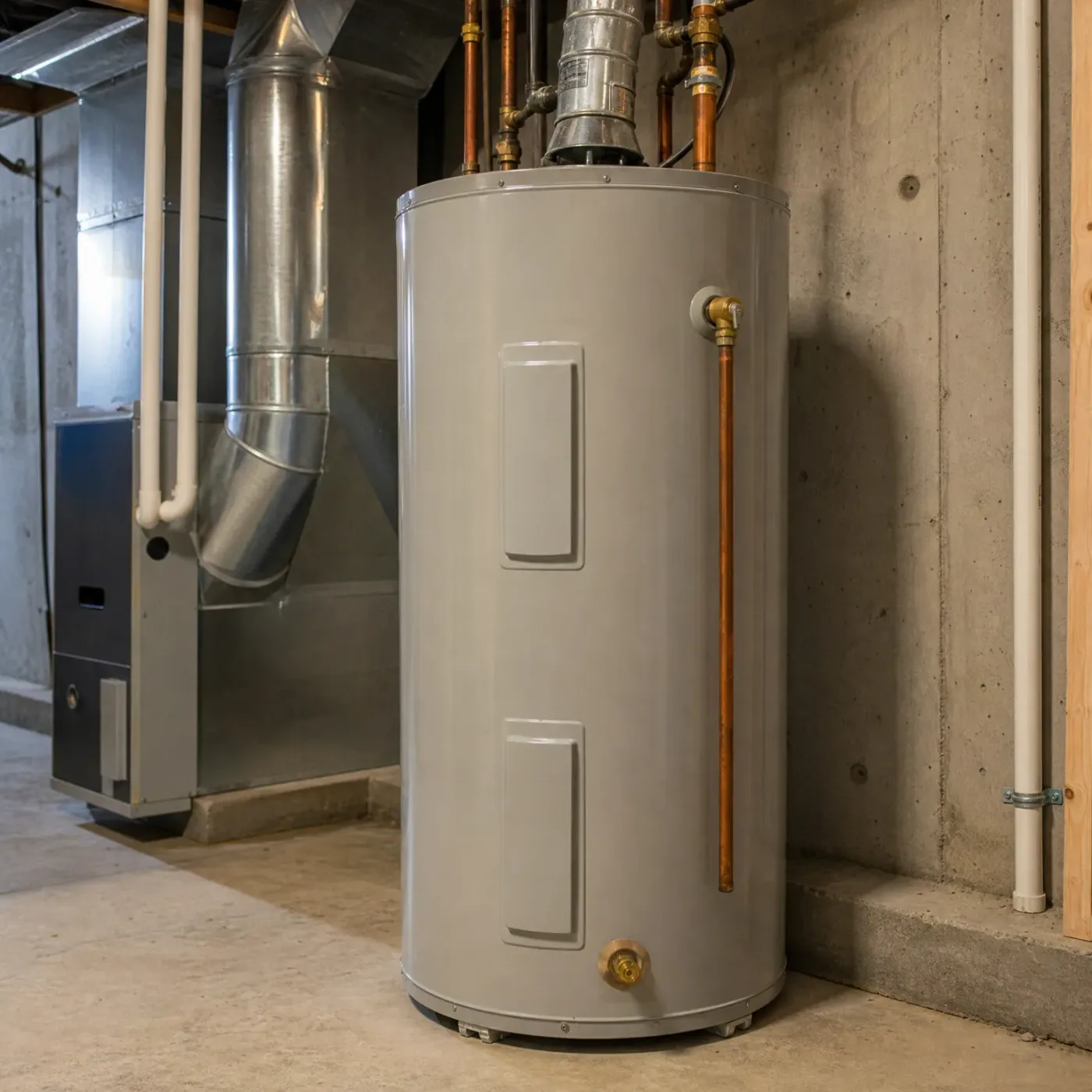
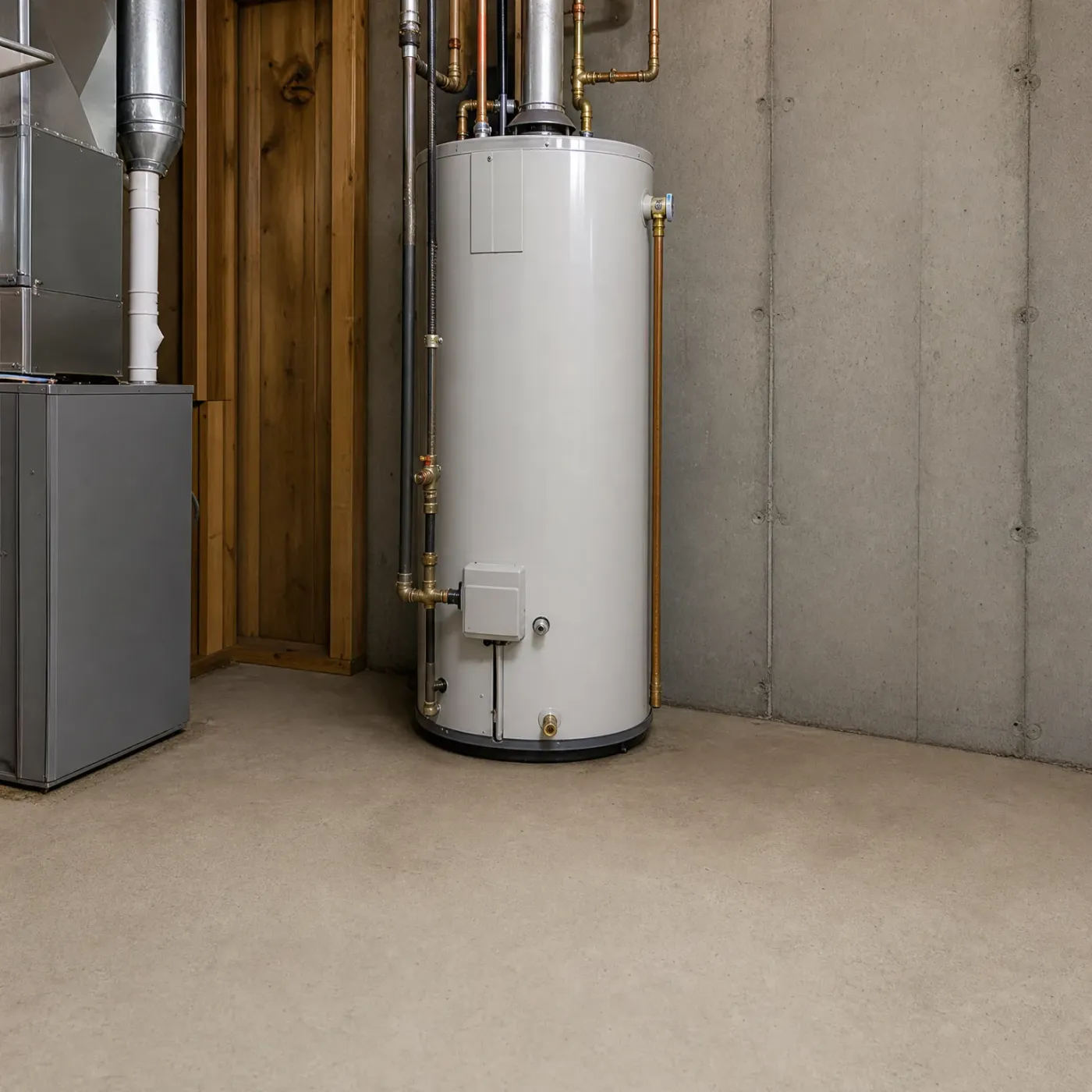
This is a tank doing its job. The connections are tight, the exhaust duct is intact, and there's no rust creeping up the sides. A unit in this shape heats a full tank and holds it, so hot water lasts as long as it's supposed to.
Get matched with a pro who works on water heaters in Pulaski County.
Request a proA couple of showers in and the water's already cold. Maybe it happens every morning now, or it started recently out of nowhere. You're not imagining it, and it's not always a sign the tank needs replacing. Before you plan around smaller showers or a new water heater, it helps to know what actually controls how much hot water you get and why that amount can drop.
A gas water heater makes hot water with a single burner, so once the top of the tank cools, recovery takes a while. An electric one uses two elements, and if the lower one has failed, you still get hot water, just a lot less of it. A thermostat that's drifted out of calibration will shut the burner or element off before the tank is actually full of hot water. Sediment settling at the bottom of the tank does something similar, since it sits between the burner and the water and cuts how much the tank can heat and hold. Any of these can look the same from the shower: less hot water than there used to be, with no change to the tank itself.
2.27 people per household on average
Households here average 2.27 people, so a tank sized for fewer tends to run short once everyone's showered.
Half the homes here were built by 1981
Half the homes in Pulaski County went up in 1981 or earlier, old enough that the original tank or its replacement may be near the end of its run.
50.2% of homes heat with gas
Just over half of homes here heat water with gas, and a gas tank that runs out fast often points to a failing burner or a dip tube, not always the whole unit.
ACS 2020-2024
A failing heating element or a thermostat set lower than you think will cut a tank's hot water supply well before the tank itself is old or undersized.
Both are things a contractor can check and fix without touching the tank, so running out fast doesn't always mean a new water heater.




A gas water heater works from the bottom up. Cold water comes in through the dip tube, which carries it down to the bottom of the tank where the burner sits. The burner heats that water and it rises, so the hottest water is always waiting at the top near the outlet. If the dip tube cracks, cold water dumps in near the top instead of the bottom, and it mixes with the hot water before it ever gets used. Sediment causes a different problem. It settles on the bottom of the tank and sits between the burner and the water, so the burner has to work longer to do the same job. A thermostat that has drifted low will cut the burner off early, before the water's actually hot. And the thermocouple or igniter has to read the flame correctly, because a weak signal there shortens the burner's run time too. Any one of these limits how long the burner runs, and that's what determines how much hot water the tank can keep up with, not the size of the tank itself.


Explain the water heater problem once instead of to every shop in Pulaski County.
A Pulaski County pro who repairs water heaters gets your request.
You're not committing to anything by asking.
Maybe the shower runs cold halfway through, or the dishwasher won't finish a cycle without a cold rinse. The water might take longer to heat back up between uses than it used to, or it never quite gets as hot as it did last year. You might hear the tank ticking or rumbling when it's running, which can mean sediment has built up on the bottom. If the water looks rusty or smells off when it first runs hot, that's worth noting too. None of this means the tank is done for, but ignoring it long enough can mean a small fix turns into a tank that fails and leaks into whatever room it sits in.
Turning the thermostat up so the water stays hotter longer just means you're drawing from a smaller usable supply before it turns lukewarm. It can feel like it buys you a few extra minutes in the shower, but it also means water coming out of the tap is hot enough to scald, especially for kids. A contractor can check whether the thermostat or the heating element is the real problem without you having to guess at settings.
Running the dishwasher, a shower, and the washing machine back to back pulls from the same limited supply, so the last one in line gets what's left. Spacing those out gives the tank time to recover between uses, which helps in the short term but doesn't fix why recovery is slow in the first place. If the gap between uses keeps getting longer before hot water returns, that's worth having looked at rather than worked around.

It's usually the same pattern. The first shower is fine, the second one is a gamble, and whoever showers third is washing their hair in cold water. If you've got a household of four or more in Little Rock, that third shower might just be the normal order of things, not a sign anything's wrong. But if it's happening with one or two people in the house, or if it's new and nobody's routine changed, something in the tank shifted.
Either way it's worth getting someone to look before it turns into a tank that won't heat at all, especially with how cheap power runs here and how little sense it makes to keep paying for a water heater that's quietly failing. You don't have to figure out whether it's the element, the thermostat, or the tank itself. Answer a few questions about what you're seeing and a contractor who handles this in your area will reach out and take it from there.

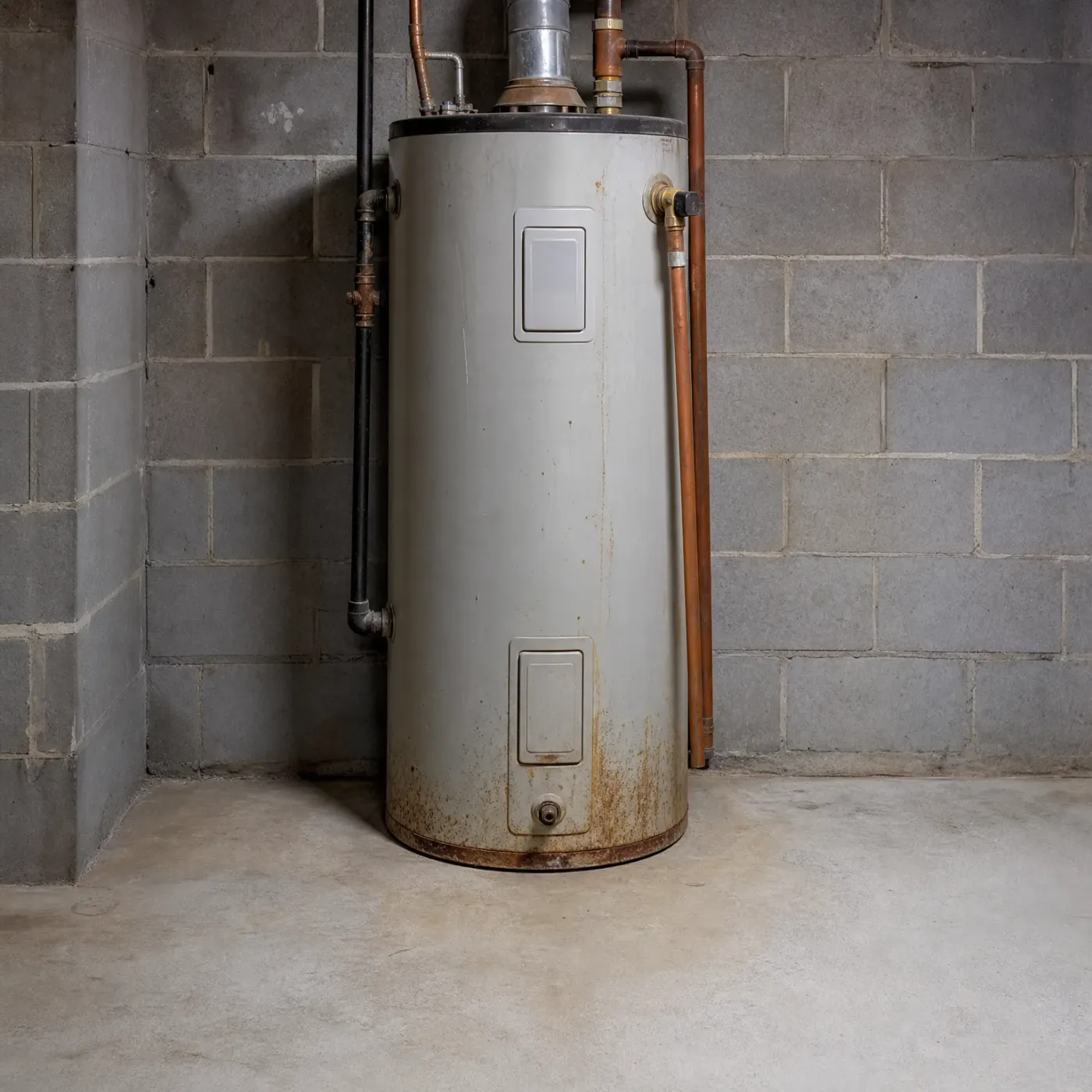
This is a tank doing its job. The connections are tight, the exhaust duct is intact, and there's no rust creeping up the sides. A unit in this shape heats a full tank and holds it, so hot water lasts as long as it's supposed to.
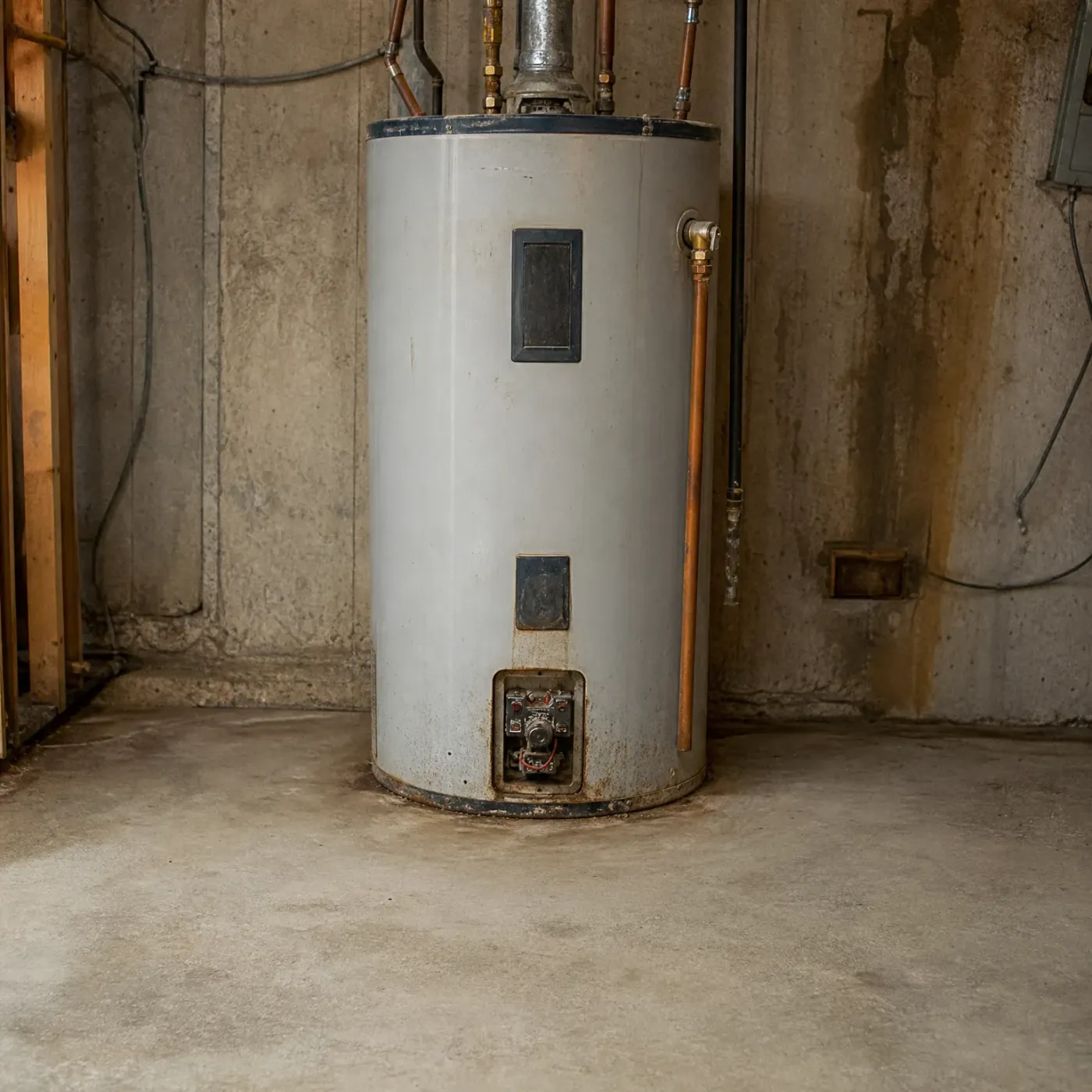
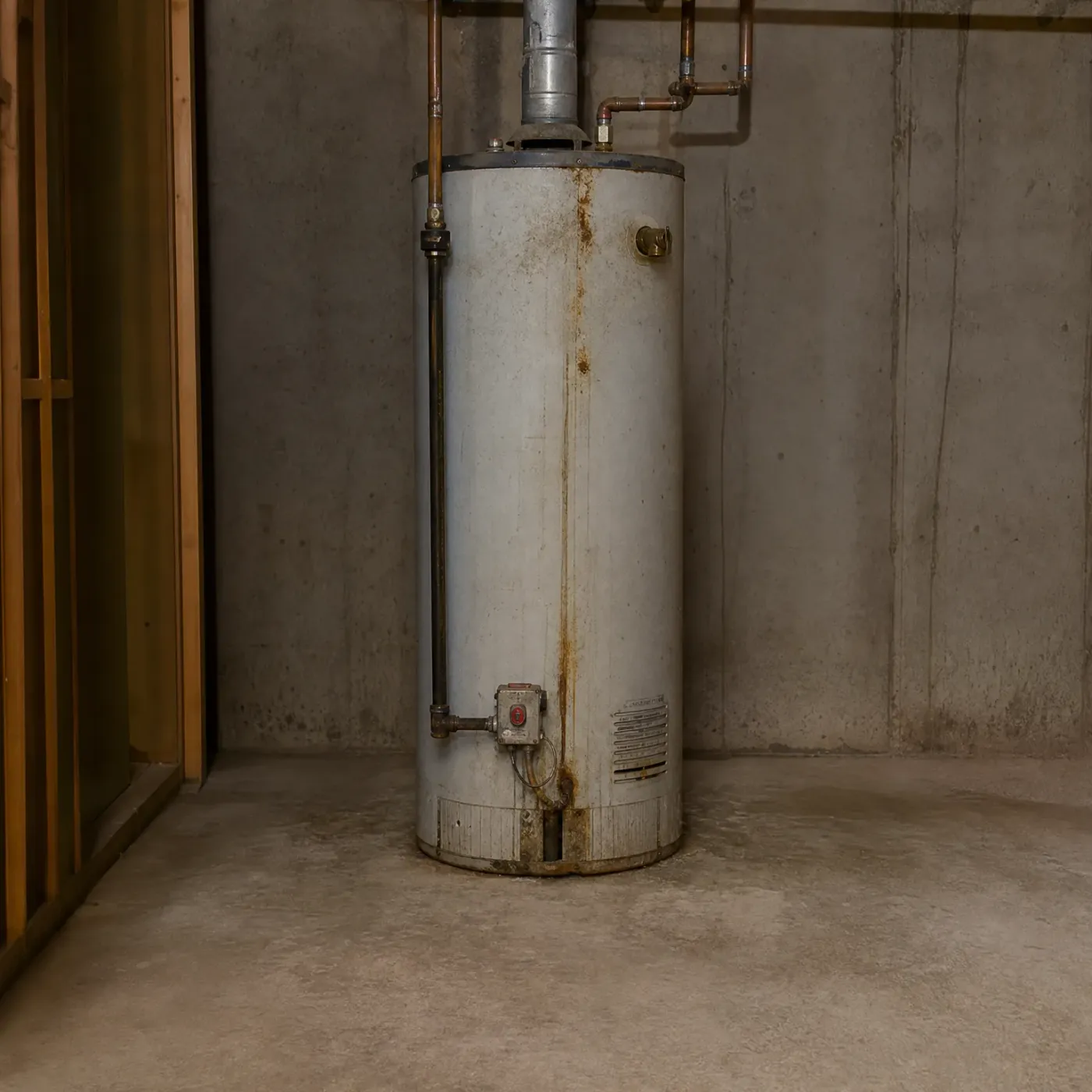
Rust on the panels and tank body like this usually means the inside is going the same way. Once a tank starts failing internally, it can't hold a full heat charge, and hot water runs out faster than it used to even with nothing else changed in the house.
Some households just work around a tank that can't keep up. Showers get shorter, laundry gets spaced out, dishes wait until the water's hot again. It can go on like this for months, because none of it stops the house from functioning day to day. But a tank that's running short usually has a reason, whether that's a failing element, a bad thermostat, or sediment built up on the bottom, and none of those get better by themselves. The workaround becomes the routine, and the routine hides a problem that's still there every time the water runs cold.
A contractor can check the thermostat setting, test the heating element, and see whether sediment is choking off the tank's capacity, usually in one visit. That tells you whether you're dealing with a quick fix or something that points to the tank itself. Instead of calling around Little Rock for someone who services water heaters, explaining the same symptoms more than once, and sorting through quotes on your own, you get matched with a contractor suited to the job and they reach out to you. From there you know what's actually wrong, instead of guessing at it every time the water runs cold.
At 13.15 cents per kilowatt-hour, running an electric water heater harder than it should work doesn't hit your bill the way it would elsewhere. That's worth knowing before you assume a bigger tank or a higher thermostat setting is going to cost you. If the tank's struggling, the fix is more likely the element or the thermostat than the power it's drawing.
EIA-861 2025
A tank that runs out of hot water fast usually comes down to one thing: a worn heating element, a thermostat set wrong, sediment built up in the bottom, or a tank that was never sized for the people using it. None of those need guesswork to sort out, just someone who can look at the tank and tell you which one it is. That's the part that's hard to do on your own, calling around to find a contractor who works on water heaters, explaining the cold showers and the timing of it all over again to each one, then sitting with a stack of quotes trying to figure out who actually knows what they're looking at. You don't have to run that down yourself. Once you're matched with a contractor who handles this kind of repair in Little Rock, they'll reach out and take it from there. The cold showers aren't a life sentence for the tank, and they're not something you have to keep working around either.
One form replaces the calls you'd make to find a water heater pro.